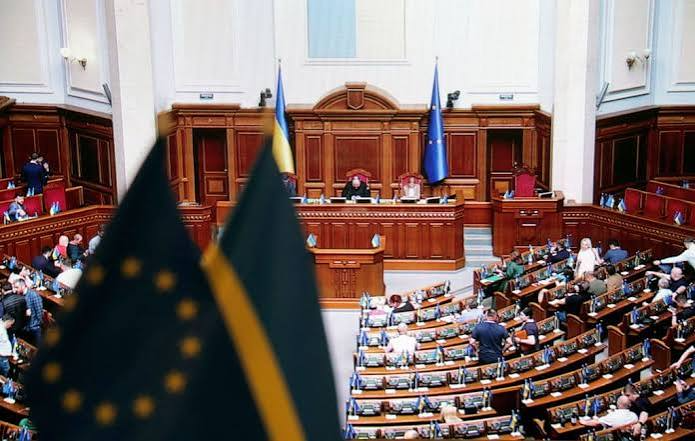
Ukraine has taken a major step toward bringing its cryptocurrency market under formal government oversight. On November 25, 2026, the Verkhovna Rada voted to approve Bill No. 10225 d, a measure establishing rules for virtual assets, crypto service providers and taxation. The bill received 271 votes in favour, giving the country a framework intended to replace uncertainty with regulated market activity. Its planned start date is July 1, 2027, leaving businesses, investors and regulators several months to prepare. The vote is significant, but the legislation still needs to complete the formal steps required before it enters into force.
A decisive parliamentary vote after years of debate
The legislation, formally focused on amendments to Ukraine’s Tax Code and other laws governing the circulation of virtual assets, passed its second reading and was approved as a whole. The parliamentary record shows 271 lawmakers voting in favour, eight against and four abstaining. Thirty two members did not vote.
The measure has been under development for several years. Parliament supported it in principle at its first reading in September 2025, but the text then required further work on taxation, supervision and the responsibilities of companies operating in the sector. The finance committee recommended adoption ahead of the final vote, following additional consultations and technical revisions.
For Ukraine, the decision is about more than recognizing cryptocurrency trading. It is an attempt to establish a legal structure for a market that has grown faster than the rules governing it. People and businesses need to know which services can operate, what protections apply to customers and how profits from virtual assets should be reported.
What the new framework is designed to regulate
Bill No. 10225 d sets out requirements for businesses providing services involving virtual assets. These include crypto exchanges and companies that hold or safeguard assets for customers. Rather than allowing providers to operate without a clearly defined regulatory route, the framework introduces authorization requirements and obligations connected to registration, reporting and customer protection.
Service providers will be expected to meet standards intended to improve transparency and protect client assets. The framework also provides for oversight of market conduct and mechanisms to address abuses. Companies entering the Ukrainian market will need to understand the authorization process and the detailed rules regulators develop before the planned commencement date.
The distinction matters to ordinary users. A person buying cryptocurrency through an exchange is not only exposed to changes in market prices. They also depend on the platform’s security, custody arrangements, complaint procedures and ability to handle customer funds responsibly. Formal supervision can give users clearer routes to seek protection when something goes wrong, although regulation cannot remove the financial risks of cryptocurrency itself.
How cryptocurrency profits will be taxed
Taxation is one of the most consequential parts of the legislation. Under the reported framework, individuals will generally be taxed on their positive financial result from virtual asset transactions. In practical terms, this means the calculation is based on profit rather than automatically treating the full sale proceeds as taxable income. Documented acquisition or creation costs can be taken into account when calculating the result.
The standard rates reported for individuals are 18 percent personal income tax and a five percent military levy. The legislation also provides transitional treatment for certain assets already held by taxpayers, with a preferential rate of five percent personal income tax plus the five percent military levy during the transition period through the end of 2028.
Several provisions are intended to clarify how common transactions will be treated. Exchanges of one virtual asset for another are not expected to trigger tax under the reported rules. The framework also provides for losses to be carried forward, subject to the applicable requirements. These details matter because crypto investors may make many transactions in a year without converting every holding into traditional currency.
Why the distinction between revenue and profit matters
Consider an individual who buys a digital asset and later sells it for more than the original purchase cost. A tax system based on profit would consider the documented cost when calculating the taxable result. A system that taxed the entire sale amount could produce a very different bill, even when the investor’s actual gain was relatively small.
Record keeping will therefore become essential. Investors should retain transaction histories, purchase records, sale confirmations, exchange statements and documentation showing fees or other eligible costs. People who use several platforms or move assets between wallets may need to organize records carefully so that they can explain the origin and value of their holdings.
Two regulators will share responsibility
The proposed regulatory structure divides responsibilities between the National Securities and Stock Market Commission and the National Bank of Ukraine. The securities commission is expected to take the leading role in authorizing and supervising virtual asset service providers. The central bank will oversee areas involving stablecoins and monetary or financial stability within its legal authority.
This division reflects the fact that virtual assets do not all operate in the same way. Some are traded primarily as investment assets, while stablecoins are designed to maintain a relatively stable value, often by referencing a traditional currency. Their use can raise different questions about reserves, redemption, payments and financial stability.
Coordination between the two regulators will be important. Businesses need consistent requirements, while customers need to know which authority is responsible for a particular service or problem. The detailed secondary regulations will determine how these responsibilities work in practice.
Why the July 2027 date matters
The planned commencement date gives regulators and market participants a transition period to prepare. The National Securities and Stock Market Commission will need to develop detailed rules and procedures for authorizing providers, supervising their activity and handling compliance. Exchanges, custodians and other businesses will need to assess whether their operations meet the new requirements and prepare the documentation necessary to apply.
It is also important to distinguish parliamentary approval from the law becoming operational. The Verkhovna Rada has passed the bill, but the formal signature and publication process remains relevant before it can take effect. The July 1, 2027 date is the scheduled start under the approved framework, not evidence that every provision is already being enforced. The Verkhovna Rada’s official website provides the parliamentary record and legislative updates.
Ukraine’s European integration and international commitments
The vote also carries significance for Ukraine’s relationship with international partners. Establishing a regulated virtual asset market has been connected to the country’s European integration agenda and commitments under support arrangements involving the European Union and the International Monetary Fund. Bringing national rules closer to European standards could make it easier for legitimate businesses to understand the requirements for operating across jurisdictions.
The European Union’s Markets in Crypto Assets framework, commonly known as MiCA, provides a regional model for regulating crypto asset issuers and service providers. Ukraine’s legislation has been developed with European rules in mind, although the exact obligations will depend on the final Ukrainian text and the implementing regulations. Alignment does not mean that Ukrainian and European requirements will automatically be identical.
For international companies, a clearer authorization system could make the Ukrainian market easier to assess. For local businesses, it could provide a more predictable basis for investment, partnerships and customer services. However, compliance will also bring costs. Smaller providers may need to spend more on legal advice, security controls, reporting systems and staff training.
Potential benefits for public finances and market confidence
Lawmakers have presented the framework as a possible source of additional revenue for the state. Yaroslav Zhelezniak, deputy chair of the parliamentary finance committee, has estimated that formalizing the market could generate around 15 billion hryvnias in additional budget revenue. That figure is an expectation, not a guaranteed result. Actual collections will depend on market activity, compliance, enforcement and the number of people and businesses reporting taxable gains.
The military levy also gives the tax provisions a particular significance during wartime. Ukraine continues to face substantial public spending needs, and the government has an interest in bringing economic activity into a system where income can be identified and taxed under defined rules. At the same time, excessive or unclear taxation could discourage legitimate activity or push users toward services outside the regulated market.
Finding the right balance will be central to the law’s success. A framework that is too weak may fail to protect customers or prevent financial misconduct. A framework that is too burdensome may make it difficult for responsible companies to compete and operate. Clear rules, proportionate supervision and consistent enforcement will matter as much as the headline tax rates.
Risks and questions that remain
Not every concern surrounding cryptocurrency disappears when a market becomes regulated. Digital asset prices can fluctuate sharply, customers can lose access to wallets, and fraudulent schemes can continue to target inexperienced investors. Authorization requirements may help identify responsible providers, but they cannot guarantee that an investment will retain its value or that every platform will remain financially sound.
The National Bank of Ukraine had previously raised concerns about aspects of the draft, including the admission of foreign tokens, regulatory gaps and the possibility of excessive discretion in authorization decisions. Those concerns underline the importance of transparent procedures and clear divisions of responsibility. Regulators will need to explain how they assess applications, supervise foreign linked services and respond when providers breach their obligations.
Another practical challenge will be the treatment of assets acquired before the new framework begins. Transitional tax provisions may help existing holders move into the regulated system, but taxpayers will still need reliable evidence of when and how those assets were obtained. People who have used informal exchanges, overseas platforms or self hosted wallets may find historical record keeping particularly important.
What cryptocurrency users and businesses should do now
With the planned start more than six months away, investors and service providers have time to prepare. The most useful steps are practical rather than speculative:
- Keep complete records: Save purchase and sale histories, wallet transfers, exchange statements and evidence of acquisition costs.
- Review service providers: Follow announcements about authorization requirements and check whether the platforms you use intend to meet them.
- Understand the tax calculation: Distinguish taxable profits from total sale proceeds and seek qualified advice where transactions are complex.
- Watch for official guidance: Monitor announcements from the securities commission and the National Bank as detailed rules are prepared.
- Assess investment risks: Do not treat legal recognition as a guarantee against losses, fraud or market volatility.
Businesses should also begin reviewing their internal compliance systems. Customer identification, transaction monitoring, custody arrangements, financial reporting and complaint handling may all become more significant under the new regime. Waiting until the commencement date approaches could leave providers with too little time to make necessary changes.
A new chapter for Ukraine’s virtual asset market
The approval of Bill No. 10225 d marks a significant change in Ukraine’s approach to cryptocurrency. Instead of leaving the market dependent on uncertain rules, lawmakers have voted for a structure that addresses taxation, service provider authorization, supervision and customer safeguards. The measure also signals an effort to bring the country’s financial rules closer to European standards and make virtual asset activity more visible to public authorities.
The real test will begin after the parliamentary vote. The legislation must complete the remaining formal steps, regulators must publish workable rules, and businesses must demonstrate that they can meet the new standards. Investors will need to adapt to clearer tax responsibilities while remaining alert to the risks inherent in digital assets.
If the July 2027 timetable holds and the framework is implemented effectively, Ukraine could gain a more accountable cryptocurrency market and a clearer route for legitimate businesses to operate. The 271 votes have established the political direction. Whether the new system delivers stronger consumer protection, reliable tax collection and lasting market confidence will depend on the quality of the rules and how consistently they are enforced.