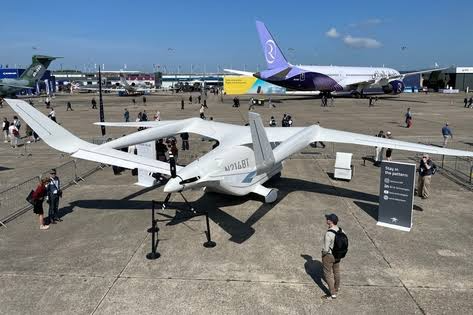
Airline executives and aviation specialists gathered in Monaco in early November to confront two questions that will shape the future of flying: how far cockpit automation can go, and how quickly the industry can reduce its environmental impact. At APG World Connect, speakers considered the possibility of passenger aircraft operating without pilots on board, the economics of long haul routes, and a sobering fleet forecast: next generation aircraft may not account for 80 percent of airline fleets until 2060.
Aviation’s future is arriving in stages
The 17th edition of APG World Connect took place at the Fairmont Monte Carlo from November 4 to 6, 2026. The event brought together airline leaders, aviation specialists and travel industry representatives under the theme “Navigating Change, Unlocking Growth.” The discussions ranged from commercial resilience to technology, fleet planning and sustainability.
The conference’s final day included a panel titled “Innovation in the Sky: How Technology Is Shaping the Future of Aviation.” Its participants included Eric Schulz, former chief commercial officer of Airbus; Yannick Assouad, chief executive of Thales Avionics; and Esayas Hailu, chief executive of ASKY Airlines. Marc Rochet, chief executive of Aerogestion, moderated the discussion.
The central issue was not simply whether new aircraft and systems can be developed. It was whether airlines can afford to adopt them, regulators can certify them, and passengers can trust them. In aviation, a promising technology must prove itself across an entire system of aircraft, crews, airports, procedures and safety rules.
Pilotless passenger aircraft remain a distant prospect
Automation already plays a major role in commercial aviation. Modern aircraft use sophisticated systems to support navigation, flight management and other tasks. But automation does not remove the responsibility of pilots, who monitor systems, assess changing conditions and respond when events fall outside normal operating procedures.
At the Monaco gathering, the conversation considered a possible progression from today’s two pilot cockpit toward reduced crew operations and, eventually, aircraft without pilots on board. The discussion did not establish a launch date for pilotless passenger flights. Instead, it highlighted the regulatory and operational work that would have to come first.
Any move toward fewer pilots would require a safety case that demonstrates performance at least equivalent to current operations. That means accounting for emergencies, system failures, communications, crew workload and the consequences of unexpected events. Regulators in different regions would also need compatible standards, while airlines would have to consider training, staffing and public confidence.
For passengers, the question is likely to be less about the sophistication of the technology than about whether they feel safe boarding the aircraft. A gradual path, with clear evidence and transparent communication, may be necessary before the public accepts a more automated cockpit.
Why new aircraft could take decades to dominate fleets
The fleet forecast discussed at the conference underlines a basic reality of aviation: designing a more efficient aircraft and replacing the global fleet are two very different undertakings. Even if a new model enters service successfully, airlines cannot replace thousands of aircraft at once.
Aircraft are expensive assets expected to operate for many years. Airlines must weigh fuel savings against purchase costs, financing, maintenance, training and the practical availability of new models. Manufacturers, meanwhile, must develop and certify aircraft, build production capacity and deliver them to customers. These processes take time, and the benefits of new technology spread through fleets gradually.
The projection that next generation aircraft might not represent 80 percent of fleets until 2060 is therefore a warning against assuming that innovation will produce immediate industrywide change. It also raises a difficult question for climate planning: how can aviation reduce emissions over the next two decades if much of its fleet remains in service for far longer?
Decarbonization requires more than a new aircraft
Aircraft innovation is only one part of aviation’s effort to lower emissions. Sustainable aviation fuel, operational improvements, new propulsion systems and public policy all have a role to play. But each faces its own limits, including cost, supply, infrastructure and the time required to bring technology into commercial use.
Sustainable aviation fuel is especially important because it can be used in existing aircraft when it meets the required specifications. Yet production remains small compared with total jet fuel demand. The International Air Transport Association says global sustainable aviation fuel production is expected to reach about 2.4 million tonnes in 2026, equivalent to roughly 0.8 percent of annual jet fuel consumption. Reaching aviation’s net zero ambitions will require a dramatic increase in supply.
New aircraft could reduce fuel use, while alternative propulsion systems may eventually serve some routes. However, no single option is likely to solve the whole problem. Long haul flying presents particular challenges because aircraft must carry enough energy for extended journeys, and the infrastructure required for new fuels or propulsion systems must be developed alongside the aircraft.
Airlines and governments therefore face a coordination challenge. Investment in cleaner fuels, aircraft development, airport infrastructure and operational efficiency must move forward together. Delays in one area can slow progress across the wider system.
Long haul routes bring commercial and climate pressures together
Route planning is another part of the equation. Airlines must decide where demand is strong enough to support new services, how to connect passengers through major hubs, and whether new aircraft can make previously difficult routes commercially viable. Those decisions are shaped by fuel prices, geopolitical conditions, airport capacity and the cost of operating long distance flights.
More efficient aircraft may allow airlines to serve some routes with lower operating costs or offer direct connections that were previously impractical. But efficiency does not automatically mean lower total emissions if passenger traffic continues to grow. Airlines must balance the value of connectivity with the environmental cost of expanding service.
At the same time, long haul routes connect families, businesses and communities across continents. Any strategy for reducing aviation’s impact must account for that human value as well as the industry’s commercial realities. The challenge is to make air travel cleaner and more resilient without treating connectivity as an afterthought.
What the debate means for passengers
For travelers, the changes discussed in Monaco are likely to arrive incrementally. Aircraft may become more fuel efficient before passengers see a fully new fleet. Cockpit systems may gain more automation while pilots remain responsible for the flight. Cleaner fuels may become more common only as production and distribution expand.
That gradual pace can be frustrating when the need to cut emissions is urgent. It is also a reminder that aviation safety and environmental progress depend on reliable implementation, not promises alone. Passengers can reasonably expect airlines and manufacturers to explain what new technologies do, how they are tested, and what evidence supports claims about efficiency and safety.
A long horizon, with decisions required now
APG World Connect did not resolve the future of pilotless passenger travel or offer a quick route to greener aviation. Its discussions instead exposed the distance between technological possibility and widespread adoption. A forecast reaching 2060 makes the timeline especially clear: decisions made today about aircraft orders, fuel supply, regulation and infrastructure will shape the fleets passengers use for decades.
The industry’s task is to make progress on several fronts at once. That means improving current operations while preparing for new aircraft, expanding cleaner fuel supplies and building public confidence through transparent safety standards. The future of aviation will not be determined by a single breakthrough, but by how effectively the sector turns many advances into dependable everyday service.
Readers can follow the broader sustainability effort through the International Air Transport Association, which publishes industry information on fuel and emissions, and learn about international aviation standards through the International Civil Aviation Organization.