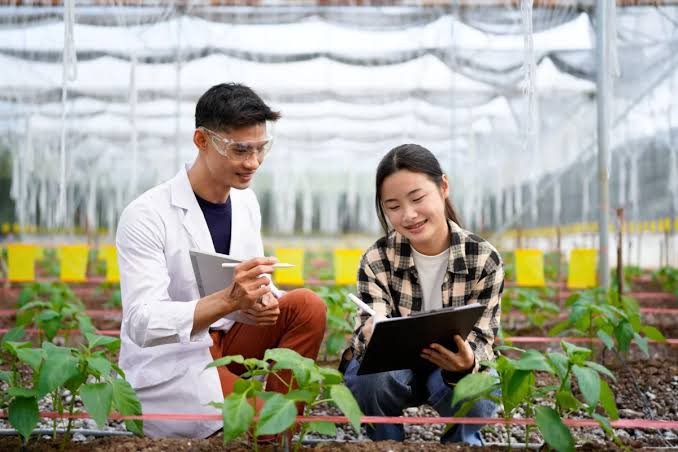
Science does not begin and end inside a laboratory. It is present in the water people drink, the food they grow, the air they breathe and the decisions communities make about their future. On November 27, 2026, the United Nations Educational, Scientific and Cultural Organization (UNESCO) marked the first International Day of Engagement in Science for Sustainable Development with a global webinar and a call for people around the world to take a more active role in scientific discovery. The inaugural observance placed public participation, citizen science and accessible education at the center of a broader effort to connect research with everyday life.
A New International Day Connects Science With Society
The first International Day of Engagement in Science for Sustainable Development was proclaimed by the UNESCO General Conference in 2025. Its annual observance on November 27 is intended to strengthen the relationship between scientific institutions and the communities their work serves. Rather than treating science as an activity reserved for specialists, the initiative recognizes that people from different backgrounds can contribute to knowledge, ask meaningful questions and participate in finding solutions to shared challenges.
UNESCO’s message is particularly relevant as countries face interconnected pressures involving climate change, public health, food security, water shortages, environmental protection and technological development. Scientific research can help address these issues, but its benefits depend partly on whether people understand the findings and can use them in their own communities.
The new observance also supports the International Decade of Sciences for Sustainable Development, covering 2024 to 2033. The decade seeks to encourage scientific cooperation and the use of knowledge in addressing major global challenges. The International Day gives that wider effort an annual public platform, creating opportunities for schools, researchers, governments and community organizations to share activities and strengthen public involvement.
UNESCO Hosts a Global Webinar for the Inaugural Celebration
A central event on November 27 was a virtual webinar organized by UNESCO from its Paris headquarters. Scheduled from 2:00 p.m. to 3:15 p.m. Paris time, the session brought together perspectives from research, public policy, youth participation and community science. Its purpose was to explore how stronger public engagement can help build societies that are more inclusive and sustainable.
The program opened with remarks from Shaofeng Hu, Director of UNESCO’s Division of Ethics, Research and Technology. Professor Stanislav Dovgyi, President of the Junior Academy of Sciences of Ukraine, delivered the keynote address. A panel discussion titled “Science speaks here: Voices marking a sustainable future” followed, with participants examining how science can become more accessible and connected to public needs.
The panel included researchers and representatives from several parts of the science community. Dr. Direk Limmathurotsakul of Mahidol University in Thailand contributed a research perspective. María Alejandra Sierra Aguilera, Director of Cooperation at Guatemala’s National Secretariat of Science and Technology, represented the policy perspective. Gameli Adzaho, founder of the Global Lab Network in Ghana, brought experience in science, technology, engineering, arts and mathematics education. Dr. Kateryna Terletska, a senior researcher at Ukraine’s Junior Academy of Sciences, contributed a perspective on museums and youth engagement.
Yang Feng, a UNESCO Programme Specialist, moderated the discussion. The range of participants reflected an important principle behind the observance: meaningful science engagement requires cooperation among researchers, educators, public officials, young people and the organizations that connect scientific work with local communities.
Citizen Science Gives Communities a Role in Discovery
One of the central themes of the International Day is citizen science. The term describes scientific activities in which members of the public help collect observations, record information, analyze findings or contribute to research projects. Participants do not necessarily need advanced qualifications. With suitable guidance and reliable methods, people can help researchers gather information across locations and over periods that may be difficult for small research teams to cover alone.
For example, residents can record local temperatures, document changes in nearby wildlife, observe the condition of rivers or help monitor air quality. Students can take part in supervised experiments, while community groups can contribute observations about flooding, soil conditions or changes in local ecosystems. These activities can help researchers understand conditions on the ground while giving participants a clearer view of how evidence is collected and evaluated.
Citizen science is not a substitute for professional research. Projects need clear instructions, appropriate methods, data protection and scientific oversight. Observations must be checked carefully, and participants should understand how their contributions will be used. When these safeguards are in place, public participation can expand research capacity and strengthen trust between scientific institutions and the people they serve.
For communities, the value can be immediate. A school project that records rainfall, for instance, may help students understand local weather patterns while building practical skills in measurement and data interpretation. A neighborhood environmental project can encourage residents to discuss pollution concerns using observations rather than relying only on assumptions. Such experiences make science tangible and show how careful investigation can inform decisions.
Schools and Educators Are Essential to Public Science Engagement
Science education is another major priority behind the new International Day. Schools are often the first places where children learn to ask questions, test explanations and distinguish evidence from opinion. However, science education becomes more meaningful when students can connect classroom lessons with the world around them.
Teachers can support this connection through simple experiments, outdoor observations, science clubs, public demonstrations and discussions with researchers. A lesson about water quality can include a supervised examination of local water sources. A unit on biodiversity can encourage students to document plants and insects in their surroundings. Activities like these help learners see that scientific thinking is not limited to textbooks or examinations.
Access remains a major concern. Schools in rural areas and underfunded communities may have fewer laboratories, equipment and specialist teachers. Students with disabilities may also face barriers when learning materials and activities are not designed inclusively. UNESCO’s call for broader participation therefore raises an important question for education systems: how can science learning opportunities reach children and young people regardless of their location, income or circumstances?
Digital tools can help widen access through virtual demonstrations, online learning resources and collaboration between schools. Yet technology cannot replace the need for trained educators, safe learning environments and practical opportunities to investigate the world. A strong science education system needs both accessible information and the support that helps learners use it critically.
Local Activities Turn a Global Message Into Community Action
UNESCO’s inaugural celebration was designed to extend beyond the online webinar. The organization invited researchers, educators, science clubs, institutions and individuals to organize activities on or around November 27. These could take place in laboratories, museums, schools, public spaces or online, allowing communities to choose formats that reflect their interests and resources.
Suggested activities included public talks, workshops, science cafes, school experiments, exhibitions and citizen science projects. Participants were encouraged to share their initiatives using the hashtag #ScienceSpeaksHere and submit photographs with a short testimonial after the event. UNESCO said selected initiatives could be featured to highlight useful examples of science engagement.
This local approach is significant because the relationship between science and society differs from one community to another. A coastal community may be particularly interested in marine ecosystems, rising sea levels or water quality. An agricultural region may focus on soil health, crop resilience and changing rainfall. Urban residents may be more concerned with air pollution, waste management and access to clean water.
Allowing communities to choose their own activities can make scientific participation more relevant. It also gives local educators and researchers an opportunity to listen to questions that may not always receive attention in national policy discussions.
Science Engagement Supports Sustainable Development
The International Day is closely connected to the United Nations Sustainable Development Goals, which address issues including poverty, health, education, clean water, affordable energy, responsible consumption and climate action. Progress in these areas depends on reliable information and the ability to turn evidence into effective decisions.
Scientific knowledge can help farmers respond to changing weather, health authorities monitor disease risks and communities prepare for natural disasters. Research can also guide decisions about renewable energy, pollution control and the responsible use of natural resources. However, scientific findings have greater practical value when they are communicated clearly and considered alongside the experiences of the people affected.
Public engagement can also improve the quality of policy discussions. When communities understand the evidence behind a proposed measure, they are better placed to ask questions, identify local concerns and participate in decisions. Scientists, in turn, can gain a clearer understanding of public needs and explain uncertainty more openly.
UNESCO’s broader work in open science supports this direction by encouraging wider access to scientific knowledge, collaboration and the sharing of research. More information about the organization’s science programs and international priorities is available through the official UNESCO website. The wider development framework can also be explored through the United Nations Sustainable Development Goals.
Building Trust Through Clear and Inclusive Science Communication
Making science accessible involves more than publishing research online or holding occasional public events. Scientific information must be communicated in languages and formats that people can understand. Researchers and institutions also need to explain how conclusions were reached, what remains uncertain and where further investigation is needed.
This matters when communities encounter conflicting claims about health, the environment or emerging technologies. Clear communication can help people evaluate evidence and recognize the difference between established findings, preliminary results and unsupported claims. It can also reduce the distance between scientific institutions and groups that may feel excluded from formal research discussions.
Inclusion must be practical as well as symbolic. Women, young people, rural communities, people with disabilities and groups with limited access to digital resources should have genuine opportunities to participate. Their experiences can reveal problems that researchers may otherwise overlook and help ensure that scientific solutions respond to a wider range of needs.
What the First Observance Means for the Future
The inaugural International Day of Engagement in Science for Sustainable Development gives governments, universities, schools and community organizations a recurring opportunity to make public participation part of their work. Its lasting value will depend not only on the visibility of the annual celebration but also on whether activities continue throughout the year.
Schools can establish science clubs and community projects. Universities can create more opportunities for residents to meet researchers and contribute to supervised studies. Public institutions can make scientific information easier to access and invite communities into discussions about local challenges. Governments can support science education, research infrastructure and programs that connect scientific institutions with the public.
For individuals, participation does not require expensive equipment or specialist knowledge. Attending a public lecture, joining a local environmental observation project, asking questions at a science exhibition or helping students conduct a supervised experiment can all contribute to a stronger culture of scientific curiosity.
UNESCO’s first observance on November 27 placed a clear message before the international community: science is most valuable when its knowledge can be shared, questioned and used by society. Research institutions remain essential, but the public also has a role in identifying problems, contributing observations and shaping decisions that affect daily life.
As the International Decade of Sciences for Sustainable Development continues, the challenge will be to turn that message into sustained action. A single webinar cannot close the gap between research and public understanding. Continued investment in education, open knowledge, citizen science and inclusive participation can, however, help make scientific discovery a shared resource and support more informed decisions for a sustainable future.