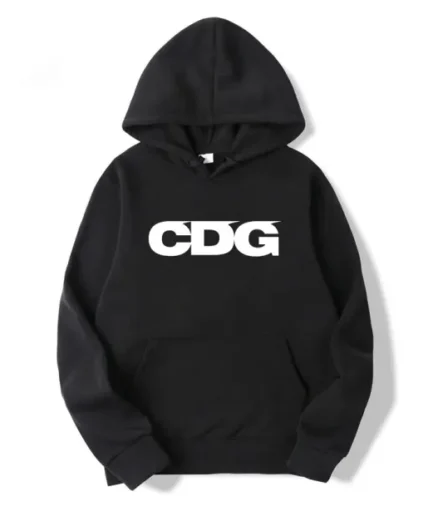
In the ever-evolving landscape of fashion, few names evoke the same blend of reverence, curiosity, and disruption as Comme des Garçons. comme des garcon.uk Established by Japanese designer Rei Kawakubo in 1969, Comme des Garçons (often abbreviated as CdG) has grown into one of the most influential fashion labels in the world. From its avant-garde silhouettes to its anti-fashion philosophy, the brand has challenged industry norms, reshaped aesthetic boundaries, and inspired generations of designers, artists, and fashion lovers.
Origins of a Revolution
Rei Kawakubo, born in Tokyo in 1942, did not originally set out to become a fashion designer. She studied fine arts and literature cdg hoodie at Keio University before gravitating toward fashion through her work in advertising and textiles. In 1969, she founded Comme des Garçons, which means “like boys” in French, reflecting her early commitment to gender fluidity and challenging traditional norms of beauty.
The brand officially debuted in 1973, and by the end of the decade, it was already causing ripples in the Japanese fashion scene. However, it was in 1981—when Kawakubo presented her first Paris collection—that Comme des Garçons became a truly global phenomenon.
Paris, 1981: The Fashion World is Shaken
Kawakubo’s 1981 debut in Paris was nothing short of revolutionary. At a time when fashion was dominated by glamor, symmetry, and form-fitting silhouettes, CdG sent models down the runway in black, deconstructed, asymmetrical garments. Critics were stunned. The press called the collection “Hiroshima chic,” referencing the ragged, somber designs that appeared torn and undone. It was a controversial comment but it also solidified CdG’s status as the brand that would challenge the very definition of fashion.
These clothes weren’t simply garments; they were critiques of Western beauty standards, consumerism, and conformity. In an era preoccupied with surface-level beauty, Kawakubo offered complexity, discomfort, and introspection.
Philosophy Over Trends
Comme des Garçons is not a brand that follows trends—it creates its own rules. Kawakubo rarely designs with commercial appeal in mind. Instead, she sees fashion as a medium for intellectual and artistic expression. Each collection is a conceptual journey, often addressing themes like gender, identity, aging, imperfection, and mortality.
For Kawakubo, fashion is not merely about making something “wearable”; it’s about storytelling and emotion. In fact, many of her collections feature pieces that are intentionally unwearable by traditional standards. Exaggerated shoulders, misshapen forms, and garments that distort the body challenge the viewer to reconsider their relationship with clothing and the human form itself.
Breaking Gender Norms
Comme des Garçons has long explored the fluidity of gender. From its inception, the brand’s designs have blended masculine and feminine elements, disrupting binary notions. Kawakubo’s vision erases boundaries—her clothing is often androgynous, non-conforming, and open to interpretation.
In a 1993 interview, she stated: “I want to make clothes that a man or a woman could wear… Clothes that aren’t about beauty or prettiness.” This statement encapsulates her intent to strip fashion of superficiality and imbue it with deeper meaning.
The Power of Collaboration
Despite its avant-garde ethos, Comme des Garçons has surprisingly become a major force in streetwear and mainstream culture, largely thanks to its collaborations. Under the guidance of CEO Adrian Joffe (Kawakubo’s husband), the brand has expanded into new territories without compromising its core identity.
CdG has collaborated with brands ranging from Nike and Converse to Louis Vuitton and Supreme. The Comme des Garçons Play sub-label, marked by its iconic heart-with-eyes logo designed by Filip Pagowski, has become a staple in global streetwear culture.
These collaborations have helped bridge the gap between high fashion and youth culture, proving that even the most conceptual label can have mass appeal—when done on its own terms.
Sub-Labels and Expansions
Comme des Garçons is not just a brand; it’s an empire of experimentation. Over the years, it has launched numerous sub-labels and diffusion lines, including:
- Comme des Garçons Homme – more traditional menswear line.
- Comme des Garçons Shirt – a play on classic shirting with unusual twists.
- Comme des Garçons Noir – a line focused on black garments, often with gothic or romantic aesthetics.
- Comme des Garçons Play – casual and accessible, known for its playful motifs.
Each sub-label serves as a canvas for different facets of the CdG identity, from wearable pieces to conceptual art objects.
The Role of Dover Street Market
In 2004, CdG launched Dover Street Market, a multi-brand retailer curated by Kawakubo herself. Far from a conventional fashion store, DSM is a dynamic space where art, fashion, and architecture collide. Brands like Gucci, Raf Simons, Vetements, and emerging designers share space with CdG collections in an environment that’s constantly changing.
Dover Street Market has become a physical manifestation of the CdG ethos: challenging, collaborative, and ever-evolving. With locations in London, Tokyo, New York, Los Angeles, and Beijing, DSM has become a global hub for fashion innovation.
Cultural Impact
Comme des Garçons’ influence extends well beyond the runway. The brand has inspired countless designers—from Alexander McQueen and Martin Margiela to new-wave disruptors like Rick Owens and Demna Gvasalia. In 2017, the Metropolitan Museum of Art in New York honored Kawakubo with a retrospective titled “Rei Kawakubo/Comme des Garçons: Art of the In-Between.” It was only the second time in history that the Met dedicated a solo exhibit to a living designer (the first being Yves Saint Laurent).
The exhibit celebrated Kawakubo’s radical aesthetic and her contribution to fashion as an art form, cementing her legacy as one of the most important visionaries of our time.
Conclusion Fashion as Freedom
Comme des Garçons stands apart because it doesn’t just make clothes—it provokes thought. Rei Kawakubo has built a world where fashion is free from rules, expectations, and even logic. It is a brand that embraces contradiction: ugly and beautiful, structured and chaotic, masculine and feminine.
In a world increasingly driven by trends and commercialism, CdG remains a bastion of authenticity and creative rebellion. For those who see fashion not just as clothing but as a cultural statement, Comme des Garçons is more than a label—it is a philosophy.