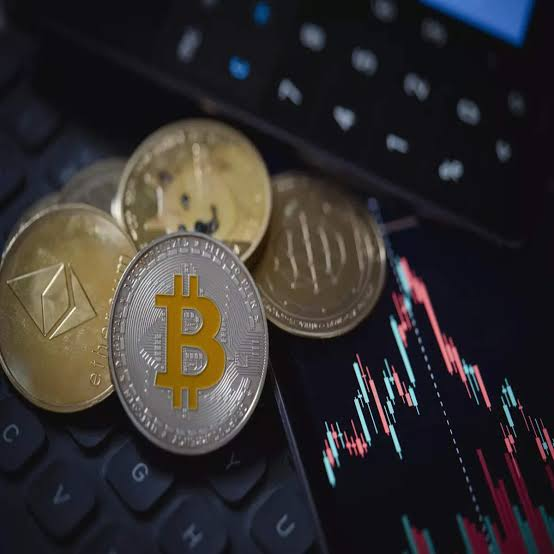
Bitcoin fell sharply toward $83,500 on October 6 and 7 as a powerful wave of forced liquidations swept through cryptocurrency derivatives markets, exposing how quickly leverage can amplify an ordinary price decline. More than $550 million in crypto positions were liquidated over a 24 hour period, with long positions accounting for the overwhelming majority of forced closures. Bitcoin briefly traded near $83,300 to $83,600 during the decline, while Ether and several major altcoins suffered deeper percentage losses. The move arrived alongside rising Treasury yields, a stronger dollar, higher oil prices, and renewed concern about the broader appetite for risk.
Bitcoin’s Sharp Decline Was Amplified by Leverage
The immediate market story was not simply that Bitcoin lost several thousand dollars from its recent range. The speed of the decline mattered just as much. Bitcoin had been trading above $85,000 before sellers pushed the cryptocurrency below $84,000. Market data reported by The Block showed that crypto liquidations reached approximately $555.6 million over 24 hours, including about $487.2 million in long positions.
That distinction helps explain why the market moved so quickly. A long position is a trade that benefits when an asset rises. When such a position uses borrowed funds, even a relatively modest decline can push the trader’s margin below the required level. The exchange then closes the position automatically. Those forced sales add supply to the market at a moment when prices are already falling.
The process can create a chain reaction. One liquidation pushes prices lower, another leveraged trader reaches a liquidation threshold, and another forced sale follows. What begins as a normal correction can therefore become a much sharper move within minutes.
More Than $550 Million in Positions Were Forced Out
CoinGlass data cited by multiple market reports showed more than $550 million in cryptocurrency derivatives positions liquidated during the period. The Block reported $555.6 million in total liquidations and $487.2 million from long positions, while other market updates placed the total near $550 million as the liquidation wave continued.
CoinDesk reported that approximately $550 million in leveraged positions were wiped out as Bitcoin moved below $84,000, with traders betting on higher prices absorbing most of the losses. The concentration on the long side is significant because it indicates that traders had positioned for continued strength after Bitcoin’s recent recovery.
The losses were not limited to Bitcoin. Ether dropped below $2,600 during the selloff, while XRP and Solana also declined. Smaller digital assets generally experienced larger percentage moves, illustrating the familiar pattern in which liquidity becomes thinner and volatility becomes more severe outside the largest cryptocurrencies.
Why the $84,000 Area Matters to Traders
Bitcoin’s move toward the low $83,000 area has placed renewed attention on technical support levels. Market analysts have been watching the $83,000 to $84,000 region because Bitcoin had spent recent sessions attempting to hold above it after failing to establish a durable move beyond the $87,000 area.
The distinction between an intraday move and a sustained breakdown is important. A brief move below support can occur during a liquidation event without establishing a lasting bearish trend. A series of daily closes below important support, combined with weakening demand and declining liquidity, would present a different picture.
CoinTelegraph reported that Bitcoin briefly reached about $83,560 and was testing its 21 day moving average around $83,850. Technical analysts were also watching the area near $86,700 as a level that Bitcoin would need to reclaim to strengthen the case for renewed upside momentum.
We should therefore resist treating one violent trading session as proof that the entire Bitcoin market has changed direction. The liquidation event clearly demonstrates that leverage was excessive in parts of the market, but price direction over the coming sessions will depend on whether buyers return and whether the wider macroeconomic environment remains hostile to speculative assets.
Macro Pressure Is Making Crypto Traders More Cautious
The liquidation wave arrived at a difficult moment for global risk assets. U.S. Treasury yields moved sharply higher, with the 10 year Treasury yield approaching or exceeding 5.3 percent during the October 7 trading session. The U.S. dollar also strengthened, while oil prices climbed amid renewed concerns involving shipping and geopolitical tensions in the Middle East.
These developments matter for cryptocurrency because Bitcoin increasingly trades within the same broad risk environment as technology stocks and other speculative assets. When investors can earn comparatively attractive returns from government bonds while inflation and geopolitical risks remain elevated, the incentive to maintain highly leveraged positions in volatile assets can weaken.
MarketWatch reported that Bitcoin’s decline occurred alongside higher oil prices and Treasury yields, with traders also watching the Federal Reserve’s upcoming meeting minutes for clues about the central bank’s policy direction. Barron’s similarly described a combination of rising oil prices, Treasury yields, and a stronger dollar as a difficult backdrop for digital assets.
The Federal Reserve minutes therefore became an important near term event for traders. A more cautious policy message could ease pressure on yields, while a more restrictive tone could reinforce the perception that financial conditions may remain tight.
Oil Prices Are Adding Another Layer of Uncertainty
Oil has become an important part of the market narrative because higher energy prices can complicate the inflation outlook. When crude prices rise sharply, investors may worry that inflation will remain elevated for longer, potentially limiting the room central banks have to reduce interest rates.
CoinDesk reported that renewed concerns surrounding Iranian tanker attacks pushed oil higher as Bitcoin fell below $84,000. Brent crude moved above $100 a barrel during the period, adding another source of uncertainty for investors already watching bond yields and currency markets.
For cryptocurrency traders, the issue is less about oil itself and more about what expensive energy can signal for monetary policy and economic expectations. If higher energy costs contribute to persistent inflation, investors may expect interest rates to remain restrictive. That can reduce demand for assets whose valuations depend heavily on abundant liquidity and strong risk appetite.
Altcoins Are Feeling the Pressure More Intensely
Bitcoin remains the largest and most liquid cryptocurrency, but its movements often establish the direction for the wider digital asset market. When Bitcoin falls rapidly, traders frequently reduce exposure to smaller tokens because their liquidity is generally weaker and their price swings can be considerably larger.
Ether fell several percentage points during the latest move, while XRP and Solana also recorded significant declines. Smaller tokens faced even greater pressure as investors reduced positions and leveraged traders were forced to close losing bets.
This is where the difference between spot holdings and derivatives becomes particularly important. Someone holding an asset without borrowing money may experience a decline in portfolio value but is not automatically forced to sell simply because the market falls. A highly leveraged derivatives trader has much less flexibility. Once the liquidation threshold is reached, the exchange can close the position regardless of the trader’s long term view.
What the Liquidation Wave Says About Market Positioning
The most useful lesson from the latest move may be what it reveals about positioning rather than the exact Bitcoin price at the bottom of the decline. When hundreds of millions of dollars in long positions are liquidated within a short period, it suggests that a meaningful portion of the market was positioned for prices to continue rising.
That crowded positioning can make a market vulnerable even when the underlying investment thesis has not fundamentally changed. A trader can be correct about Bitcoin’s long term potential and still suffer a devastating loss if excessive leverage forces the position closed during a temporary correction.
For individual investors, the episode offers a practical reminder that volatility and leverage are not the same thing. Bitcoin can be volatile without leverage causing a liquidation. Borrowed exposure magnifies both gains and losses, leaving traders with less room to wait for a recovery.
What Traders Are Watching Next
Several factors are likely to determine whether the latest decline develops into a deeper correction or becomes a short lived leverage reset.
- Bitcoin’s ability to hold the low $83,000 area will remain closely watched.
- A sustained recovery above the mid $86,000 range could improve short term sentiment.
- U.S. Treasury yields and the dollar will remain important indicators of financial conditions.
- Oil prices could influence expectations for inflation and future central bank policy.
- Federal Reserve meeting minutes could affect expectations for the next interest rate decision.
- Derivatives funding rates and open interest may reveal whether traders are rebuilding aggressive leveraged positions.
The relationship between these factors is more important than any single chart level. If Bitcoin stabilizes while yields and the dollar retreat, the liquidation wave may ultimately look like a leverage reset. If yields continue climbing and risk assets weaken together, cryptocurrency could remain under pressure even after the immediate forced selling ends.
Why Investors Should Separate Liquidations From Fundamental News
Large liquidation figures can appear frightening because they represent real positions being forcibly closed. But liquidation data does not automatically tell us that the underlying asset has suffered an equivalent fundamental deterioration.
A liquidation is a consequence of market structure. It tells us that a leveraged trader could no longer maintain a position under the exchange’s margin requirements. It does not by itself prove that Bitcoin’s network activity, adoption, institutional demand, or long term investment case has changed.
That distinction can help investors interpret sudden headlines more calmly. The market may move thousands of dollars in a matter of hours, particularly when leverage is crowded on one side. The appropriate response for an individual investor depends on their time horizon, financial circumstances, risk tolerance, and exposure rather than the headline liquidation figure alone.
Bitcoin Enters a More Fragile Phase
The October liquidation wave has placed Bitcoin at a sensitive point. The cryptocurrency remains far above the levels seen during its earlier summer recovery, but its inability to establish a convincing move above $87,000 has left traders vulnerable to another test of support.
We should also remember that the market is operating within a much broader financial environment. Bond yields, oil prices, currency movements, central bank expectations, geopolitical developments, and equity market sentiment are all influencing the willingness of investors to take risk.
The $550 million liquidation event is therefore more than a dramatic cryptocurrency statistic. It is a reminder of how closely digital assets are now connected to global financial conditions and how quickly leverage can magnify an otherwise manageable market decline.
For investors and traders, the immediate priority is not to predict the next five minute move. It is to understand the forces behind the volatility, distinguish forced selling from genuine changes in fundamentals, and recognize the risks created when borrowed exposure becomes too large. Bitcoin’s next sustained move will depend on whether buyers can absorb the liquidation pressure and whether the wider macroeconomic environment gives risk assets room to recover.
Market participants can follow official information about monetary policy through the Federal Reserve’s FOMC calendar and policy resources, while real time cryptocurrency market data and derivatives activity can be monitored through established digital asset market data providers.