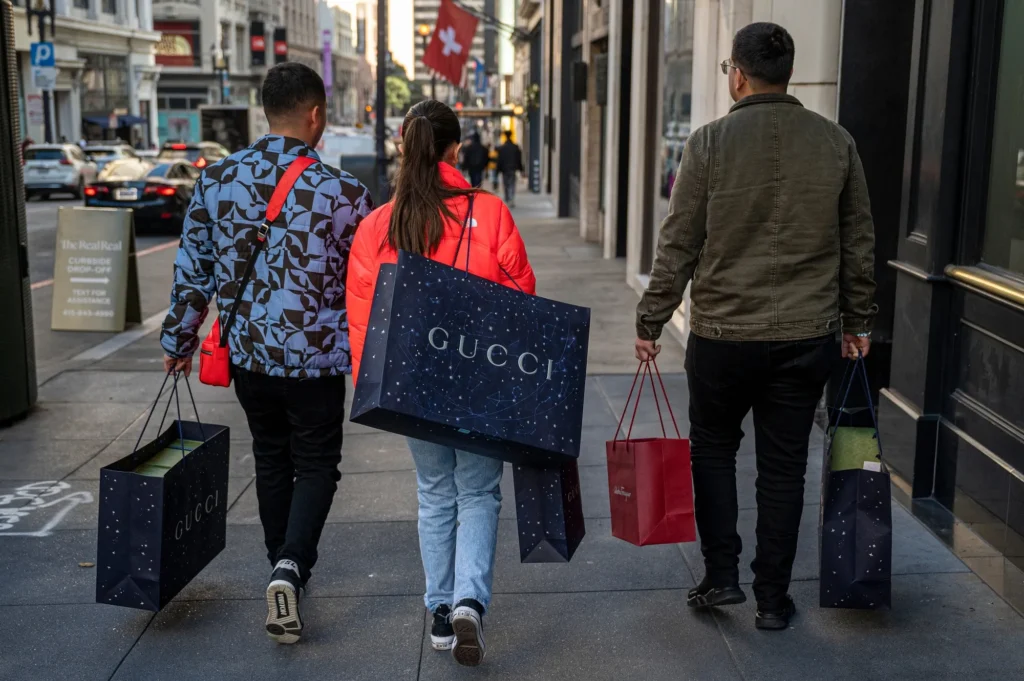
We are witnessing a defining moment for one of the world’s most iconic fashion houses. On April 16, 2026, French luxury group Kering unveiled what it calls a “structural reset” aimed at reviving Gucci, its flagship brand, after a period of declining sales and weakening momentum. The announcement follows a 6 percent drop in overall group revenue and continued struggles at Gucci, once the engine of Kering’s global dominance.
A Wake Up Call for a Luxury Powerhouse
The numbers behind this decision are difficult to ignore. Kering reported quarterly revenue of approximately 3.57 billion euros, down around 6 percent year over year, with Gucci contributing heavily to that decline.
Gucci alone saw sales fall sharply, dropping between 8 percent and 14 percent depending on the measure, signaling deeper structural challenges within the brand.
For a label that once defined modern luxury, the slowdown is more than a financial concern. It represents a shift in consumer sentiment. We are seeing a brand that must reconnect with its identity while adapting to a market that has become more selective, more global, and more demanding.
The Meaning Behind a “Structural Reset”
Kering’s leadership has framed this transformation as more than a routine strategy update. The reset is designed to restore financial discipline, streamline operations, and rebuild the desirability that once made Gucci a cultural force.
The plan, expected to be completed within the year, focuses on improving efficiency across the group while reshaping Gucci’s creative direction and product strategy.
We can think of this as a recalibration rather than a reinvention. The goal is not to abandon Gucci’s heritage but to refine it, bringing clarity back to what the brand represents in a crowded luxury market.
Rebuilding Desire in a Changing Market
Luxury today is not what it was a decade ago. Consumers are more informed, more cautious, and increasingly focused on authenticity and quality rather than logos alone.
Kering has acknowledged this shift. The company’s strategy places renewed emphasis on creativity, craftsmanship, and cultural relevance. Gucci is being repositioned to feel unmistakably itself again, with clearer product lines and stronger design identity.
We are seeing a move away from overexposure and toward exclusivity. In practical terms, this means refining product architecture, focusing on high margin categories such as leather goods, and ensuring that each collection aligns with a coherent vision.
Key Elements of the Reset Strategy
- Refocusing on core brand identity and heritage
- Streamlining product categories for clarity and consistency
- Improving pricing discipline and reducing excess inventory
- Optimizing retail networks and store locations
These steps may appear technical, but they are rooted in a simple idea. Luxury depends on desire, and desire requires both scarcity and meaning.
The Role of New Leadership
The reset comes under the leadership of CEO Luca de Meo, who took the helm with a mandate to bring operational rigor and fresh perspective to the group. His background outside the traditional luxury sector has shaped a strategy that blends creativity with discipline.
We are seeing a leadership style that prioritizes execution as much as vision. The emphasis on efficiency, inventory control, and margin improvement reflects a belief that creativity alone cannot sustain growth without strong operational foundations.
Kering has set ambitious targets, including plans to more than double its operating margin over the medium term, signaling confidence in the turnaround despite current challenges.
Global Pressures Shaping the Luxury Sector
Gucci’s struggles do not exist in isolation. The broader luxury market is facing a complex set of pressures, from geopolitical tensions to shifting consumer behavior.
Recent conflicts in the Middle East have impacted tourism and spending, particularly among high value shoppers who drive luxury sales.
At the same time, markets like China are evolving rapidly. Consumers are becoming more discerning, prioritizing quality and experience over brand recognition alone. This shift requires companies to rethink how they engage with key regions.
We are also seeing increased competition from both established luxury houses and emerging brands that are redefining what luxury means for a new generation.
The Challenge of Restoring Gucci’s Position
For years, Gucci was the centerpiece of Kering’s success, contributing a significant share of revenue and profit. That dominance has gradually weakened, highlighting the risks of relying heavily on a single brand.
Reviving Gucci is not simply about improving sales figures. It is about restoring its place in the cultural conversation. The brand must once again feel relevant, distinctive, and desirable.
We can imagine the challenge as both creative and strategic. Designers must produce collections that resonate emotionally, while executives must ensure that those creations reach the right audience in the right way.
Balancing Creativity and Commercial Discipline
One of the central tensions in luxury is the balance between artistic expression and financial performance. Too much focus on creativity can lead to inconsistency. Too much focus on numbers can dilute the brand’s identity.
Kering’s reset aims to strike that balance. By reinforcing operational discipline while supporting creative direction, the company hopes to build a more sustainable model for growth.
This approach reflects a broader industry trend. Luxury brands are increasingly integrating data driven decision making with traditional craftsmanship and design.
Investor Expectations and Market Reaction
The announcement of the reset comes at a time when investors are closely watching Kering’s performance. Recent declines in sales and share price have raised concerns about the pace of recovery.
While the strategy outlines a clear direction, questions remain about execution. Analysts have noted that turning around a brand of Gucci’s scale will take time, particularly in a challenging economic environment.
We are reminded that in luxury, perception can be as important as performance. Rebuilding confidence among both consumers and investors will be a gradual process.
A Broader Transformation Across Kering
Although Gucci is at the center of this reset, the strategy extends across the entire Kering group. Other brands within the portfolio, including Saint Laurent and Bottega Veneta, have shown resilience and growth, providing a foundation for stability.
The company is also expanding into new categories such as eyewear and jewelry, diversifying its revenue streams and reducing reliance on any single brand.
We are seeing a group that is not only addressing immediate challenges but also positioning itself for long term evolution.
Looking Ahead to a Critical Year
Kering has set a clear timeline, aiming to complete the structural reset by the end of 2026. The coming months will be crucial in determining whether the strategy can deliver on its promises.
For Gucci, this period represents both a challenge and an opportunity. It is a chance to reconnect with its heritage while redefining its future.
We are watching a brand at a crossroads, where decisions made today will shape its trajectory for years to come.
A Story Still Unfolding
The story of Gucci’s reset is far from complete. It is a process that will unfold over time, shaped by creative choices, market conditions, and consumer response.
What remains clear is the significance of this moment. A global luxury leader has acknowledged the need for change and taken decisive steps to address it.
In the world of fashion, where trends shift quickly and competition is relentless, the ability to adapt is essential. Kering’s structural reset is not just a response to declining sales. It is a statement of intent, a commitment to rebuild, and a reminder that even the most iconic brands must evolve to remain relevant.