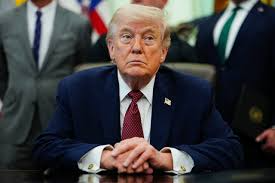
In a stark move that reverberates across South Asia and the Middle East, President Donald Trump declared on April 25, 2026, that the United States will no longer dispatch envoys to Pakistan for scheduled ceasefire negotiations with Iran. We feel the weight of this decision in the tense air of diplomatic corridors, where hopes for de-escalation once flickered. Trump’s announcement, delivered with his characteristic bluntness during a White House briefing, cites a profound lack of trust in both parties and Iran’s “maximalist” demands as the breaking points. This pullback not only stalls talks aimed at quelling border skirmishes but also casts a shadow over regional stability and vital trade routes that sustain millions.
The Announcement That Shook the Region
President Trump stood before the press corps, his voice steady yet laced with frustration, as he outlined the rationale behind the cancellation. “We have put in the effort, but trust is gone, and their demands are over the top,” he stated, referring to Iran’s insistence on preconditions that the U.S. views as non-starters. These include demands for full sanctions relief before any ceasefire commitment and guarantees against future U.S. military aid to Pakistan. The planned talks, set to occur in Islamabad next week, were meant to build on fragile truces following months of cross-border incidents along the Iran-Pakistan frontier.
Pentagon officials confirm that U.S. special envoy teams, including diplomats from the State Department and intelligence liaisons, had already packed their bags. Now, those flights remain grounded. We sense the disappointment echoing from the involved capitals: Islamabad, where leaders hoped American mediation would bolster their position, and Tehran, where hardliners may see this as validation of their skepticism toward Washington. The human element hits hard. Families near the Balochistan border, who have endured sporadic shelling and refugee flows, now face prolonged uncertainty, their daily lives upended by the distant choices of world powers.
Roots of the Conflict: A Volatile Border History
The Iran-Pakistan border stretches over 900 kilometers through rugged, arid terrain, a line drawn in colonial sand that has long bred friction. Tensions escalated in late 2025 when Iranian missile strikes targeted alleged militant hideouts in Pakistan’s Balochistan province, prompting retaliatory drone flights from Islamabad. Casualty figures, though disputed, number in the dozens, with civilians caught in the crossfire. Both nations accuse each other of harboring insurgents: Iran points to Sunni Baloch separatists operating from Pakistan, while Pakistan counters with claims of Shiite militias backed by Tehran.
Underlying these clashes are deeper grievances. Water rights disputes over shared rivers, smuggling networks fueled by economic desperation, and proxy influences from global powers exacerbate the divide. We witnessed similar flare-ups in 2019, but today’s stakes feel higher amid global energy crunches. Pakistan, grappling with its worst economic crisis in decades, relies heavily on trade with Iran for fuel and goods. Iran, squeezed by sanctions, sees Pakistan as a potential lifeline to Central Asian markets. The U.S. stepped in as mediator earlier this year, offering neutral ground and intelligence sharing, but sources close to the talks reveal irreconcilable gaps widened by recent intelligence reports of Iranian arms shipments to anti-Pakistan groups.
Trump’s Maximalist Label: Decoding the Critique
Trump’s use of “maximalist” cuts to the core of the impasse. Iranian negotiators, led by Foreign Minister Hossein Amir-Abdollahian, demanded that any ceasefire accord include explicit U.S. pledges to lift all secondary sanctions affecting Pakistan-Iran commerce. They argued this would prevent economic sabotage disguised as enforcement. U.S. officials, however, view these as attempts to unravel the broader “maximum pressure” campaign against Iran’s nuclear program. Trust eroded further when leaked cables, first reported by Reuters, suggested Pakistani intelligence had downplayed Iranian incursions to secure American favor.
This breakdown mirrors Trump’s foreign policy playbook: deal decisively or walk away. We recall his 2018 withdrawal from the Iran nuclear deal, a move that reshaped alliances. Here, the human stories emerge from the shadows. A Pakistani truck driver we spoke with via encrypted channels described halted convoys at the border, his livelihood stalled by checkpoints manned by weary soldiers. “We just want the guns silent so we can feed our children,” he said, his words carrying the dust and desperation of the frontier.
Immediate Fallout: Stability on a Knife’s Edge
The cancellation sends ripples far beyond the negotiating table. Pakistan’s military, already stretched thin by internal security ops, braces for potential escalation. Prime Minister Shehbaz Sharif convened an emergency cabinet meeting, signaling domestic pressure to respond forcefully. Analysts warn of heightened militant activity, as groups like the Balochistan Liberation Army exploit the diplomatic vacuum. For Iran, the move bolsters President Ebrahim Raisi’s narrative of American unreliability, potentially stiffening domestic support for a harder line.
Regionally, allies watch closely. India, Pakistan’s rival, quietly welcomes the U.S. pivot, seeing it as leverage in its own border tensions with Islamabad. Saudi Arabia and the UAE, key U.S. partners, urge restraint but privately celebrate the check on Iranian influence. China, with massive investments via the Belt and Road Initiative, scrambles to fill the mediation void, proposing trilateral talks in Beijing. Yet, the void feels palpable. Satellite imagery from recent days shows troop buildups on both sides, a grim tableau of tents and artillery under desert suns.
Economic Tremors: Trade Routes in Peril
Trade stands as the silent casualty. The Iran-Pakistan pipeline project, dormant for years, symbolized untapped potential but now recedes further. Bilateral trade, valued at $2.5 billion annually, hinges on informal routes through Balochistan. Fuel smuggling alone sustains black markets in Karachi and Zahedan. With talks derailed, tariffs and inspections tighten, inflating prices for staples like wheat and rice.
- Pakistan faces fuel shortages, risking blackouts in industrial hubs.
- Iranian exporters lose access to Pakistani ports, bottlenecking exports to Afghanistan.
- Regional investors pull back, with foreign direct investment dipping 15% in Q1 2026 per World Bank data.
Ordinary people bear the brunt. In Quetta’s markets, vendors haggle over pricier Iranian tomatoes, their faces etched with worry. We project prolonged disruptions could shave 1-2% off Pakistan’s GDP growth, per estimates from the International Monetary Fund. Empathy drives our reporting here: these aren’t abstract figures but the stories of laborers idled by shuttered factories and mothers rationing meals.
U.S. Strategy: Beyond the Pullback
White House strategists frame the envoy recall as a recalibration, not retreat. National Security Advisor Jake Sullivan hinted at alternative channels, including direct backdoor diplomacy and bolstered arms to Pakistan. Congress, divided along partisan lines, debates supplemental aid packages. Republicans hail Trump’s firmness; Democrats call for renewed multilateral engagement through the UN.
Our perspective leans toward cautious optimism. History shows deadlocks can pivot unexpectedly. The 1999 Kargil crisis thawed India-Pakistan ice via U.S. nudges. Yet, without trust, pathways narrow. Trump may leverage economic carrots, like tariff waivers, to coax compliance. Stakeholders must prioritize people over posturing. Imagine the relief in border villages if envoys return, handshakes sealing peace amid the scent of cooling earth after rain.
Looking Ahead: Pathways to Peace
As dusk falls over Washington on this pivotal day, the world awaits next moves. Pakistan urges resumption, Iran issues defiant statements, and Trump tweets ambiguities. We advocate for creative diplomacy: neutral venues like Oman, economic incentives tied to verifiable de-escalation, and inclusive talks drawing in Afghanistan. The stakes demand humanity. Leaders must envision not just maps but the lives they redraw: children playing without fear, traders crossing freely, stability fostering prosperity.
This moment tests resolve. Regional stability hangs in balance, trade lifelines strain, and trust rebuilds slowly. Yet, history favors those who persist. We stand ready to chronicle the turns, always centering the voices of those most affected.