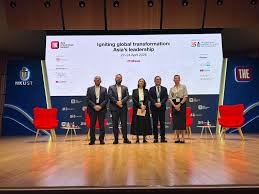
The Asia Universities Summit 2026 drew to a close on April 25 at the Hong Kong University of Science and Technology, where global education leaders painted a vivid picture of Asia seizing the reins of research dominance from Western institutions. We felt the electric buzz in packed auditoriums, alive with the hum of ideas and the scent of fresh coffee mingling with ocean breezes from Victoria Harbour. Hosted by HKUST, the three-day gathering spotlighted Asia’s surge in innovation leadership, from quantum computing breakthroughs to sustainable energy solutions, signaling a profound rebalancing of global academic might.
A Gathering of Minds in Hong Kong’s Vibrant Hub
Over 500 presidents, vice-chancellors, and policymakers from more than 100 universities converged on HKUST’s gleaming campus, its modern architecture framing panoramic views of the bustling harbor. Keynote speeches resonated with optimism, underscoring how Asian institutions now file more patents annually than their European and North American counterparts combined. HKUST President Nancy Ip opened the summit with a call to action: “Asia stands ready to lead, not follow, in shaping tomorrow’s discoveries.” We sensed the pride in her words, mirrored in the nods from delegates who have witnessed their labs hum with unprecedented funding and talent.
The event pulsed with energy. Panel discussions spilled into late nights, fueled by dim sum breaks and networking receptions under starlit skies. Students from local universities mingled with luminaries, their questions sharp and forward-looking. This wasn’t just talk; it was a declaration. Asia’s research output has quadrupled since 2015, per data from Times Higher Education, driven by massive investments in STEM fields and collaborative networks spanning Singapore to Seoul.
Keynote Highlights: Voices Defining the Shift
MIT President Sally Kornbluth joined virtually, conceding the tide’s turn. “Western universities must partner, not compete, as Asia pioneers in AI ethics and climate tech,” she urged. Her counterpart from Tsinghua University, Qiu Yong, countered with specifics: Tsinghua’s labs now rival CERN in particle physics simulations, thanks to state-of-the-art supercomputers. Emotional moments surfaced too. A young Indian researcher shared her journey from a rural village to leading a biotech team at the National University of Singapore, her voice cracking with gratitude for Asia’s merit-based ascent.
Breakout sessions tackled thorny issues. How to retain homegrown talent amid brain drain temptations? Delegates swapped strategies, from Singapore’s generous grants to Japan’s fellowship revamps. We left inspired, feeling the collective resolve to bridge urban-rural divides in education access.
The Data Behind the Power Shift
Numbers tell the story starkly. Asia now claims 40 percent of the world’s top 200 universities in innovation rankings, up from 15 percent a decade ago. China alone accounts for 25 percent of global R&D spending, surpassing the U.S. for the first time in 2025, according to Nature Index metrics. Japan and South Korea dominate in robotics and semiconductors, while India surges in software and pharmaceuticals.
Behind these stats lie human stories. Picture a Shanghai lab at dawn, researchers huddled over gene-editing tools that promise cures for rare diseases. Or Bangalore’s startup incubators, where graduates turn algorithms into tools fighting urban poverty. Funding fuels this: Asia’s public-private partnerships pour billions into moonshot projects, outpacing Western venture capital in scale. Yet challenges persist. Intellectual property disputes and geopolitical frictions demand vigilant navigation.
Innovation Frontiers: Asia Leads the Charge
Summit panels zeroed in on breakthroughs. Quantum tech took center stage, with HKUST unveiling a prototype network linking campuses across the region. Leaders from KAIST in South Korea demonstrated error-corrected qubits, a leap toward practical quantum computing. Sustainability shone brightly too. Delegates from the University of Tokyo showcased carbon-capture tech deployed in Southeast Asian rice fields, slashing methane emissions while boosting yields for farmers.
AI ethics emerged as a unifying theme. Unlike siloed Western debates, Asian voices stressed inclusive governance. A joint declaration, signed by 80 institutions, pledged open-source frameworks for bias-free algorithms, prioritizing diverse datasets from multilingual populations. We felt the empathy in these commitments, rooted in lived experiences of inequality. One panelist, a Malaysian professor, recounted training models on indigenous languages to preserve cultural heritage, her passion igniting applause.
Collaborations Forged: Partnerships for Progress
The summit birthed concrete ties. A landmark MOU between HKUST, NUS, and UC Berkeley aims to co-develop green hydrogen tech, blending Asian scale with American ingenuity. India’s IITs partnered with Australian unis for monsoon-resilient agriculture research. These alliances address talent gaps; Asia produces 60 percent of global STEM graduates but needs interdisciplinary training to match.
Students stole the show in pitch sessions. A team from Peking University won for their app predicting disaster impacts in real time, drawing tears from judges who recalled recent typhoon devastations. Their win underscores youth’s role: 70 percent of attendees under 35, hungry for mentorship and resources.
Challenges on the Horizon: Equity and Access
Not all discussions sparkled. We confronted stark realities. Rural Asia lags, with enrollment gaps widening. Women hold only 30 percent of senior research posts, despite comprising half of undergraduates. Funding disparities favor elite hubs like Hong Kong and Tokyo, sidelining up-and-comers in Vietnam and Indonesia.
- Boost scholarships for underrepresented regions to democratize talent pools.
- Standardize ethical guidelines across borders to foster trust in joint ventures.
- Invest in digital infrastructure for remote labs, closing urban-rural divides.
Speakers urged empathy-driven reforms. A Filipina dean shared her program’s success in training teachers via mobile units, bringing PhDs to far-flung islands. These stories remind us: innovation thrives when inclusive.
Global Implications: A New Academic Order
This summit marks a pivot. Western dominance, once unchallenged, yields to Asia’s momentum. U.S. and European leaders attend not as patrons but peers, seeking co-authorship on papers that define fields. For students worldwide, opportunities multiply: exchange programs ballooned 50 percent post-summit pledges.
We envision brighter futures. Imagine a world where Asian-led research cures pandemics faster, powers cities cleanly, and connects minds seamlessly. The human touch grounds this vision: a Thai student’s wide-eyed wonder at her first international conference, or a Japanese prof’s quiet pride in mentoring global protégés. HKUST’s hosting proved masterful, blending rigor with warmth.
Moving Forward: Calls to Action
As delegates departed amid handshakes and shared contacts, the summit’s spirit lingered. Follow-up working groups will track progress on the 12-point declaration, from funding equity to open-access publishing. Asia’s ascent invites all to join, not resist. We encourage universities everywhere to prioritize bold collaborations, nurture diverse talent, and tackle grand challenges head-on.
The Asia Universities Summit 2026 closes one chapter but opens volumes. Its legacy will unfold in labs and lecture halls, driven by the passion we witnessed. For educators, students, and innovators, the message rings clear: step up, connect, and lead with heart.