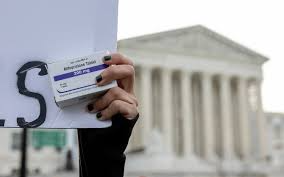
The U.S. Supreme Court issued a new order on May 5, 2026, reinstating nationwide mail-order access to the abortion medication mifepristone, effectively pausing a series of lower court decisions that had required in-person prescriptions. The ruling marks a pivotal shift in how people seeking early abortion care can obtain this widely used drug, especially in states with few clinics, long travel distances, or tight clinic hours. We feel the weight of this decision not only in legal briefs and policy debates but in the quiet moments of women weighing options, sometimes late at night, in their cars, or at home in rural counties where the nearest provider may be a two‑hour drive away.
What the Supreme Court Order Changes
The Court’s order temporarily blocks several appellate and district court rulings that had rolled back the Food and Drug Administration’s 2023 relaxation of mifepristone rules, under which the drug could be mailed to patients after a virtual or telehealth consultation. Those lower court decisions reinstated requirements that patients obtain the drug from a clinic, often in person, and that prescriptions be issued by certain licensed providers under stricter protocols. After the Supreme Court’s move, the earlier, more flexible FDA rules return: clinicians can prescribe mifepristone via telehealth, and patients can have it shipped to their homes or picked up at pharmacies in most states.
For pregnant people in remote or underserved areas, that change can mean the difference between a timely, private abortion and weeks of delays, or even no accessible care at all. In places where a single clinic closes or where state laws create hostile access environments, the ability to receive medication by mail reduces travel costs, burdens on work schedules, and the stress of public visibility at a clinic door.
The Role of Mifepristone in Reproductive Care
Mifepristone is one of two medications used in medication abortion, typically paired with misoprostol. Taken within the first weeks of pregnancy, the combination has a safety profile and effectiveness comparable to early surgical procedures, according to clinical guidelines from professional medical organizations such as the American College of Obstetricians and Gynecologists. The drug blocks progesterone, a hormone needed to sustain a pregnancy, and the second medication triggers contractions that complete the process.
For many, medication abortion offers a less invasive, more private path through a deeply personal experience. The process can unfold in the comfort of home, surrounded by familiar blankets and quiet, or with a trusted friend or partner nearby. The Supreme Court’s order does not expand the indications or timing for mifepristone, but it does restore the logistical flexibility that made it a practical choice for millions.
How the Legal Back-and-Forth Unfolded
This latest order caps a years-long legal battle over the FDA’s ability to regulate mifepristone. In 2023, the agency removed several restrictions, including a requirement that the drug be dispensed in person and in certain clinical settings, allowing it to be shipped and administered in a broader range of circumstances. Medical groups welcomed the change, arguing that it reflected real-world data and safety records. But a series of conservative state attorneys general and anti‑abortion organizations challenged those changes in court, arguing that the FDA had overstepped or ignored safety concerns.
Over the next two years, lower courts issued a patchwork of orders. Some states saw mail-order access cut off, while others maintained it, creating a confusing landscape for providers and patients. Clinics in Texas or Idaho, for example, had to navigate different rules than those in New York or California, even though the underlying science remained the same. The Supreme Court’s May 5 order steps in to restore a more uniform national approach, at least for now, while any underlying challenges to the FDA’s regulatory authority remain under review.
Impact on Providers and Clinics
For abortion providers, the reinstatement of mail-order access recalibrates how care is delivered. Telehealth visits can now be coupled with pharmacy or mail-order fulfillment, making it easier to scale capacity without needing more physical exam rooms or more in‑person visits. Rural clinics, often understaffed and overstretched, benefit particularly; they can triage patients remotely, send prescriptions to pharmacies in the patient’s home community, or coordinate with mail-order services that ship directly to the patient’s mailbox.
However, the legal uncertainty surrounding mifepristone has already left a mark. Some providers tell us they scaled back medication abortion services after earlier court rulings, fearful of operating in a gray zone. The Supreme Court’s order does not erase the political volatility that has swirled around the drug, but it does give providers clearer ground to rebuild telehealth and mail-order workflows, often in collaboration with patients’ primary care physicians or local pharmacists.
What Patients Stand to Gain
For patients, the restoration of mail-order access means more control over timing, location, and privacy. A woman in her 30s raising children in a small town can schedule a virtual consult after putting the kids to bed, receive a prescription in the morning, and have the medication delivered later that week, without taking time off work or arranging childcare for a clinic visit. A college student in a state with restrictive laws can connect with an out‑of‑state clinician, review the process, and receive the pills discreetly, avoiding the stigma and exposure of entering a clinic in a hostile environment.
The Court’s order does not resolve every access barrier. Some states still impose counseling mandates, waiting periods, or age-based restrictions on abortion, and others may attempt to regulate how and where medication is delivered, even if the Supreme Court’s ruling applies nationally. But by restoring the federal framework that allows telehealth prescribing and mail-order distribution, the decision gives people a broader set of options for managing their own reproductive health.
Key Practical Effects for People Seeking Care
- Expanded access in rural and medically underserved regions through telehealth and mail delivery.
- Reduced travel and time burdens, including fewer unpaid days off work or long waits for appointments.
- Greater privacy compared with in‑person clinic visits in high‑risk or stigmatizing environments.
- Continuity with obstetric and primary‑care providers who can offer ongoing support and follow‑up.
Medical and Public Health Considerations
From a medical standpoint, mifepristone has been studied extensively for decades. Peer‑reviewed research shows that when used in early gestation, it is highly effective and associated with very low rates of serious complications. The American College of Obstetricians and Gynecologists and other major medical associations have long supported removing unnecessary in‑person dispensing requirements, arguing that they do not improve safety and instead create avoidable barriers.
Yet stigma and misinformation still surround the drug. Some lawmakers and advocacy groups have compared it to “chemical weapons” or “child abuse,” despite the absence of any evidence supporting such claims. The Supreme Court’s order does not dictate how individual states or providers talk about mifepristone, but it does reinforce a regulatory framework grounded in clinical evidence rather than political rhetoric.
The Role of Federal and State Laws
Even with the Supreme Court’s latest intervention, the legal map for abortion care remains complex. The 2022 overturning of Roe v. Wade handed authority to states, leading to a stark divide: some states have enshrined strong protections for abortion access, while others have enacted near‑total bans or tight gestational limits. The federal status of mifepristone exists alongside those state rules, which can still restrict when, where, and how abortion is performed, even if a medication can be mailed.
For example, a state that bans abortion after six weeks may still allow mifepristone, but only within that early window and potentially under specific conditions. The Supreme Court’s order clarifies the federal baseline for how the drug can be prescribed and delivered, but it does not override a state’s broader abortion law. That means people and providers still need to navigate both layers of regulation, often in a hurry, during a time‑sensitive window of early pregnancy.
Reactions from Advocates and Policymakers
Reproductive‑rights advocates welcomed the Supreme Court’s order as a necessary step toward respecting patients’ autonomy and medical evidence. Groups such as the Planned Parenthood Federation of America and regional providers issued statements emphasizing that restoring mail-order access will help narrow the gap between who needs care and who can actually reach it. They also warned that the relief is likely temporary as long as political and legal battles over abortion continue.
Opponents of abortion law expressed disappointment, arguing that the decision undermines efforts to impose stricter oversight on mifepristone and expand avenues for legal challenges. Some lawmakers in restrictive states have signaled that they may pursue new legislative strategies, including targeted regulations on pharmacies or labeling requirements, even if they cannot fully restore the previous in‑person mandate. The debate is likely to continue in legislatures, courts, and at the ballot box long after today’s order.
A Human Perspective on the Decision
Beyond the legal and policy language, this decision touches intimate, often silent moments in people’s lives. We have heard stories of women in their 20s, living in small towns, who once drove for hours to meet a doctor in person, only to find a new court ruling had just changed the rules on how they could receive their medication. Others have described the anxiety of waiting for a package in a mailbox shared with a conservative landlord, or the relief of having a clinician walk them through every step remotely, from privacy setting to managing side effects.
The Supreme Court’s order does not erase the emotional weight of needing an abortion, but it does shrink one of the logistical hurdles that has made the experience more stressful, risky, or impossible for many. In a legal landscape marked by shifting ground and deep polarization, it offers a measure of stability for those who rely on mifepristone to manage their reproductive choices with as much autonomy as possible.
Looking Ahead: Access, Equity, and Ongoing Challenges
Going forward, the practical impact of the Court’s order will depend on how quickly clinics, telehealth platforms, and pharmacies adapt to the restored mail‑order framework. Some states and cities may see a surge in capacity as providers reenable earlier workflows, while others may lag due to provider shortages, regulatory caution, or local political resistance. The digital divide—uneven internet access, smartphone reliability, or digital literacy—will also shape who benefits most from expanded telehealth prescribing.
For journalists and public‑health researchers, the months ahead offer a chance to track how restoring mail‑order access influences time to care, rates of medication abortion, and patient satisfaction. The decision is unlikely to end the broader debate over abortion in the United States, but it does recenter one important question: when clinical evidence supports a safe, effective method of care, how much should politics and geography stand in the way of someone’s ability to obtain it?