I attended the announcement on May 17, 2026 when Egypt s Ministry of Higher Education and Scientific Research unveiled the Mediterranean SEEDS Project, a strategic initiative that connects academic research centers across seven Mediterranean countries to joint research, startup incubation, and regional resilience against food supply shocks. The moment felt purposeful and urgent, with policy makers, university deans, and young entrepreneurs speaking in quick succession about shared risk, local solutions, and the tactile work of rebuilding supply chains one lab and one farm at a time.
What Mediterranean SEEDS seeks to do
Mediterranean SEEDS aims to knit together research capacity and industry needs in Egypt, Tunisia, Morocco, Lebanon, Greece, Italy, and Spain. The core objectives are joint applied research in climate resilient agriculture, technology transfer to small and medium enterprises, creation of cross border startup incubators, and workforce training for modern agrifood systems. Officials framed the project as pragmatic and measurable with milestones for pilot projects, knowledge exchange fellowships, and commercialization pathways for university innovations.
Why this matters now
Regional food security has become a pressing concern after recent years of extreme weather, disrupted trade routes, and volatile commodity prices. The Mediterranean basin is particularly exposed because of its reliance on water scarce farming, seasonal tourism driven demand, and dense urban populations. By coordinating research and industrial capacity across national boundaries the project seeks to reduce duplication, share scarce resources, and accelerate solutions that are locally adapted yet scalable across the region.
How the network will operate
The project uses a hub and spoke model anchored by national research centers in each participating country. Hubs will host shared facilities such as controlled environment agriculture labs, seed banks, and digital data platforms that aggregate crop, weather, and soil analytics. Spokes will be university departments, vocational training centers, agritech startups, and regional cooperatives that test prototypes and run pilot deployments.
Key operational components include multidisciplinary research teams, standardized data sharing protocols, joint intellectual property frameworks to balance academic publication with commercial pathways, and seed funding for early stage ventures. The governance structure will include a steering committee with representatives from each country, rotating leadership for pilot selection, and independent monitoring to measure project impact on yields, employment, and startup growth.
Funding and partnerships
Initial financing comes from a mix of national allocations from participating governments, support from regional development banks, and matched contributions from participating universities. Mediterranean SEEDS also plans to invite private investors for later stage scaling and to partner with established industry players for technology licensing and distribution. Officials cited partnerships with agricultural extension services and local cooperatives as essential to move pilot innovations from experimental plots into working supply chains.
Human stories at the heart of the project
At the launch I spoke with a young agronomist from Alexandria who described the smell of damp soil in a campus greenhouse where she has been testing drought tolerant varieties. She framed her work in concrete terms: fewer crop losses in a dry season, more predictable income for a smallholder family, and opportunities for students to learn coding for farm sensors in the same semester they learn soil chemistry. Those human details reveal why university industry collaboration matters beyond academic metrics.
Another attendee was a founder of a nascent agtech startup in Tunisia who described how access to specialized lab equipment in a partner university could shave months off product development and save the company from expensive outsourcing. For entrepreneurs like her the network is not theoretical it is a lifeline that converts ideas into viable businesses and local jobs.
Expected research themes and pilot projects
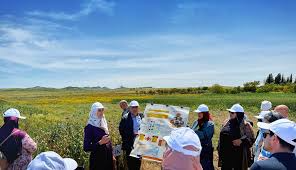
Research will focus on water efficient irrigation techniques, heat tolerant crop varieties, post harvest loss reduction, supply chain digitization, and alternative protein sources suitable for Mediterranean diets. Pilot projects include urban rooftop farms in Barcelona and Alexandria, decentralized cold chain hubs in southern Italy and Morocco, and an open data platform linking weather stations with crop advisory services to reduce decision risk for farmers.
Technology and training
A central feature of Mediterranean SEEDS is capacity building. The initiative plans short term apprenticeships for technicians, certification programs for agrifood quality control, and joint PhD fellowships that place students in both academic and industrial settings. Training modules will combine hands on field work with remote learning for sensor management, data analytics, and business model development so that graduates can move seamlessly between research labs and scaling enterprises.
Regional political dynamics and cooperation challenges
Cross border collaboration requires navigating political sensitivities, different procurement rules, and varying capacities of national institutions. Organizers stressed diplomacy and practical problem solving, noting that technical cooperation on food security can be less politically fraught than discussions on trade or defense. Still, harmonizing data governance, intellectual property, and export rules will require patient negotiation and clear legal frameworks.
Language barriers and differing academic calendars also pose coordination difficulties. The project addresses this through multilingual platforms, staggered pilot schedules, and shared administrative templates to lower transactional friction for smaller institutions that lack experience with multinational consortia.
Metrics for success
Mediterranean SEEDS set measurable targets for its first three years. These include the number of jointly filed patents and publications, the percentage reduction in pilot project post harvest losses, the number of startups incubated and their survival rates, and recorded increases in yields or water efficiency in test regions. Independent evaluators will track socioeconomic outcomes such as job creation, female participation in STEM programs, and improvements in local food access.
Risks and contingency planning
Project risks include funding shortfalls, political shifts that deprioritize international cooperation, and technological adoption gaps among farmers. Contingency measures involve phased rollouts tied to achievement milestones, reserve funds for critical pilot sites, and targeted outreach to farmer unions and cooperatives to ensure community buy in and practical relevance.
Broader implications for Mediterranean development
If Mediterranean SEEDS succeeds it could become a blueprint for regional academic industrial partnerships that address other shared vulnerabilities such as water scarcity, coastal erosion, and renewable energy integration. The model places universities at the center of practical problem solving rather than as isolated centers of theory. That matters because when researchers, entrepreneurs, and farmers share a table the solutions tend to look more usable and equitable.
Further resources
For background on regional research collaboration and agricultural resilience see resources from the Food and Agriculture Organization and the Union for the Mediterranean which provide context on policy frameworks and financing instruments Food and Agriculture Organization Union for the Mediterranean.
As Mediterranean SEEDS moves from announcement to action the work will be practical and often unglamorous: collecting soil samples, calibrating sensors at dawn, drafting licensing agreements at dusk. Those modest acts are what build resilience. I will follow developments closely to see whether this network of universities and enterprises can yield measurable improvements in food security, durable startups, and a stronger regional capacity to face shared shocks together.