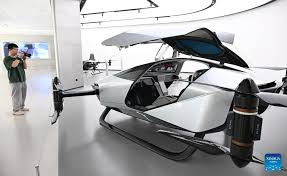
On May 21 2026 the eighth Western China International Fair for Investment and Trade opened in Chongqing with 1 400 exhibitors from around the world filling exhibition halls with prototypes partnerships and pitches. The show has turned into an annual magnet for manufacturing exporters technology developers and municipal planners who want to showcase real world applications from industrial robotics to urban air mobility. Walking the aisles feels like standing where tomorrow brushes shoulders with commerce today.
What the fair is showcasing and why it matters
WCIFIT has grown beyond a regional trade fair into a staged meeting between China s western development agenda and international supply chains. This year robotics companies displayed collaborative robots for assembly lines automated pick and place systems and smart logistics platforms that promise to shorten order to delivery cycles. At a separate pavilion startup teams demonstrated small electric vertical takeoff and landing vehicles designed for intra city routes with scale models and tethered flight demos that drew crowds and planners wanting to test regulatory readiness.
The combination of capital goods and advanced mobility speaks to broader economic shifts. Western provinces aim to move up the value chain from raw material processing to productive high tech manufacturing and services. For foreign firms the fair offers a concentrated venue to secure purchase orders meet local integrators and explore partnerships for joint manufacturing or research centers.
First person moments and sensory detail
I toured a robotics aisle where the air hummed with servos and compressed air lines while blue and silver arms executed smooth pick routines with uncanny quiet. A sales engineer guided me to a demonstration cell where a robot lifted a fragile ceramic component and set it precisely into a jig. The engineer s voice was steady with practiced patience while the robot s motion was almost balletic as fluorescent lights reflected on polished metal. At the flying car display the smell of warm electronics and fresh printed promotional materials mixed with the tang of diesel from delivery trucks outside the hall a small reminder that advanced prototypes still share space with everyday logistics.
Conversations ranged from technical specifications to lived trade concerns. An Italian SME owner explained how showing a machine live helped him close a pilot contract with a Chongqing tier one supplier. A municipal planner said the sight of multiple air mobility developers consolidating at the fair made local regulators accelerate draft rules on vertiport siting and noise monitoring.
Deals, investment and what exhibitors seek
Exhibitors came with clear commercial aims. Many sought procurement contracts from state owned enterprises and large private manufacturers that are modernizing plants under regional development plans. Others pursued joint ventures for local production which can ease market access while meeting domestic content preferences. Investors in the audience followed valuation narratives for robotics firms focused on software monetization and mobility companies that can secure pilot routes and operational partnerships.
Trade offices from Europe Asia and the Americas staffed booths to facilitate introductions and to flag financing or export insurance programs. For many exporters the fair functions as both a market discovery exercise and a serious negotiation table where letters of intent are signed and supply chain timelines are hashed out.
Policy signals and regulatory traction
The presence of flying car prototypes pushed policy conversations into public view. City and provincial officials used the forum to outline pathways for test corridors simplified permitting for trials and noise monitoring frameworks. The accelerated policy work is pragmatic: officials want to attract pilots that create data while ensuring safety and community acceptance. At the same time aviation regulators cautioned that any expansion of operations will need rigorous certification regimes and airspace integration with traditional aviation.
Robotics adoption raises different regulatory and workforce questions involving occupational safety standards machine certification and workforce transition programs. Local governments emphasized training programs to reskill technicians and assembly line workers so factories can operate complex automated systems without social disruption.
Supply chain resilience and localization trends
A recurring theme was supply chain resilience and the value of localized manufacturing. Global firms showcased modular lines designed for rapid deployment near major customers to reduce transport time and tariff exposures. Local suppliers presented components such as sensors actuators and specialized fasteners that could replace imported parts while meeting quality thresholds. The fair highlighted a pragmatic push toward near sourcing where performance and lead time improvements justify investing in regional production capacity.
For multinational companies the calculus is shifting. They must weigh cost competitiveness against geopolitical risk and delivery reliability. WCIFIT provides a place to test localization partners and to build redundancy into supplier networks across western China and beyond.
Workforce implications and training initiatives
As automation and advanced mobility scale up workforce development becomes central. Exhibitors partnered with vocational schools and universities to announce training programs that combine robotics maintenance simulation labs and air mobility operations courses. These programs aim to produce technicians pilots for unmanned systems and data analysts who can maintain predictive maintenance systems and traffic management software.
Local educators discussed apprenticeship models that embed students inside factory pilots so training occurs alongside production. That approach reduces the time from classroom to shop floor and helps firms derive value from training investments quickly.
International presence and geopolitical context
WCIFIT s roster of 1 400 firms included national pavilions and delegations from Europe Southeast Asia and the Middle East. China s western development strategy positions Chongqing as a logistics and industrial node connecting inland provinces with coastal export hubs and with routes into Central Asia for overland trade. Exhibitors and delegates used the fair to discuss how trade lanes and new infrastructure projects such as rail and river port upgrades could support larger scale manufacturing exports.
Geopolitical tensions shaped conversations subtly. Firms from some markets focused on non sensitive technologies and supply chain cooperation while steering clear of areas with export control risks. The fair thus operates as a pragmatic marketplace where commerce adapts to policy boundaries while seeking mutual gain.
What to watch after the event
Outcomes to monitor include signed procurement contracts pilot licenses for urban air mobility trials the emergence of local manufacturing joint ventures and published regulatory roadmaps for vertiport siting and robotics safety. Observers should also track announcements linking vocational training programs to measurable placement rates and reports that quantify how many pilot projects move to sustained commercial operation within a year.
For investors and procurement teams event follow up is crucial. Initial enthusiasm must convert into executed purchase orders delivered on agreed timelines. For communities the key measure will be whether new capacity creates durable jobs and whether pilots for flying vehicles respect noise profiles and safety standards.
Further reading and resources
Those who want broader context on Chinese regional development strategies and urban air mobility policy can consult analyses by major international trade organizations and aviation authorities. Background on manufacturing automation and robotics standards is available from international standards organizations and industry research groups.
World Trade Organization resources on trade and regional development and Federal Aviation Administration research on advanced air mobility provide useful frameworks for readers following the fair and its longer term implications for global trade and technology adoption.
The Chongqing fair reminded me that technological spectacle is less about novelty than negotiation. Robots and flying cars draw attention but the real work happens in procurement offices training centers and regulatory meetings where prototypes become services people can use and rely on. WCIFIT this year offered a concentrated view of that work and a preview of how commerce and public policy may converge to make certain futures possible.