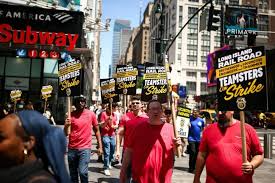
On May 21 2026 the International Court of Justice issued a landmark opinion affirming that the right to strike is protected under a major international labor treaty. The ruling clarifies legal obligations for states party to the convention and will reverberate through courtrooms union halls workplaces and government ministries that oversee labor standards and industrial relations. For workers the decision offers renewed legal grounding for collective action and for employers it creates a clearer regulatory framework to manage labor disputes within rule of law constraints.
What the court decided and why it matters
The court held that measures by states that effectively criminalize or unduly restrict strike action can violate treaty obligations that protect freedom of association and collective bargaining. The opinion interprets treaty provisions to include the right to engage in concerted work stoppages as a necessary element of meaningful collective negotiation. This is not an abstract judgment. It establishes that states must calibrate national laws and enforcement practices so they do not render the right to strike illusory for workers who seek to press grievances over wages safety and working conditions.
The practical significance is twofold. First governments that maintain overly broad prohibitions on strikes will face legal exposure in international fora and may be required to amend statutes and enforcement protocols. Second unions and labor advocates gain a stronger basis to press for remedies through national courts administrative bodies and international human rights mechanisms when peaceful strike activity is met with criminal penalties or disproportionate sanctions.
Legal reasoning and treaty interpretation
The court grounded its opinion in long standing principles of treaty interpretation including the ordinary meaning of treaty text the object and purpose of labor conventions and relevant state practice. Judges referenced prior decisions from international labor tribunals and advisory opinions that emphasize the centrality of collective action to effective labor rights. The opinion stressed that the right to strike should be balanced with legitimate public interests such as essential public services but should not be read out of existence by overly expansive exceptions.
Key aspects of the judgment address proportionality and necessity. The court explained that restrictions must be prescribed by law pursue a legitimate aim and be proportionate to that aim. Measures that impose blanket criminal sanctions for participating in peaceful strikes or that retroactively penalize organizers will fail that test. The opinion therefore provides a legal lens to evaluate statutes and administrative practices across jurisdictions.
Immediate reactions from unions and employers
Labor organizations welcomed the ruling as a decisive affirmation of collective rights. Union leaders described the decision as empowering for members who have faced criminal investigations or workplace reprisals for lawful strike participation. Many expressed hope that governments will now move to reform draconian statutes and adopt clear protections for picketing and collective bargaining activities.
Employers and business associations reacted with caution. Some expressed concern about operational continuity particularly for critical infrastructure and expressed a desire for clearer guidance on what constitutes essential services and permissible restrictions. Corporate counsel noted that the ruling requires measured policy responses rather than abrupt operational changes and called for consultation with social partners to avoid unnecessary disruption while complying with new legal expectations.
How the ruling affects national law and policy
States party to the relevant treaty must review domestic labor laws to ensure compliance. That could involve repealing criminal penalties for strike participation narrowing exceptions to cover only genuinely essential services and creating mechanisms for temporary dispute resolution to reduce harmful service interruptions. Administrative practices such as surveillance of union activity punitive dismissal for strike participation and the imposition of onerous fines may also require revision.
Governments may face complaints before international human rights bodies and national courts that now can cite the ICJ opinion as persuasive authority. Legislatures will be under pressure from both labor constituencies and business groups to craft laws that balance worker rights with public order and service continuity.
Real world stakes and human stories
The ruling matters most where workers have paid a steep price for exercising collective power. I spoke with a public transit conductor who had faced criminal investigation after joining a lawful stoppage over safety protocols. He described sleepless nights and the sting of being labeled a criminal for raising safety concerns that affected colleagues and passengers. For him the court s decision offers a measure of dignity and the prospect of legal recourse if punitive actions recur in the future.
Across industries people told similar stories of precarious workers who feared retaliation if they spoke up. The legal clarity the court provides can reduce that chilling effect and make it safer for workers to press for sane schedules safer workplaces and fair pay without fearing criminalization.
Balancing rights and essential services
The court acknowledged the special status of certain public functions where uninterrupted service is truly critical to life and health. It urged states to adopt narrowly tailored definitions of essential services and to provide alternative dispute resolution frameworks such as binding arbitration or temporary staffing arrangements to maintain service while preserving the core right to strike. This balance aims to protect vulnerable populations relying on continuous services while upholding democratic labor rights.
Policymakers will therefore need to build robust consultation processes that include unions employers civil society and independent experts to define essential services and to create contingency frameworks that minimize harm when industrial action occurs.
International and comparative impact
The ruling will inform case law and policy debates beyond the states directly involved in the case. Labor rights advocates expect tribunals and courts in other jurisdictions to reference the opinion when adjudicating disputes over strike limitations. International organizations that monitor labor standards may update guidance to reflect the court s interpretation, and multilateral lenders and development agencies might condition funding on labor law reforms that meet the clarified standard.
Comparative law scholars will also examine how the ruling interacts with constitutional protections in various countries and with domestic jurisprudence that interprets freedom of association. The decision creates a transnational benchmark for assessing whether restrictions align with international obligations.
Next steps for workers employers and governments
Unions should use the ruling to prioritize legal education for members and to work proactively with employers on dispute resolution mechanisms that reduce the need for strike action. Employers should audit workplace policies, review disciplinary practices and engage in meaningful collective bargaining to address root causes of industrial unrest. Governments should undertake legislative reviews, narrow essential service exceptions and strengthen impartial arbitration capacities so that workers rights and public interests are both safeguarded.
Civil society actors and legal aid providers will play a critical role helping workers navigate complaints mechanisms and receive remedies when rights are violated. The court s opinion opens pathways for strategic litigation and for advocacy campaigns aimed at aligning national laws with international principles.
Where to read the ruling and further guidance
Readers seeking the full legal text and advisory materials can consult the International Court of Justice s official publications and the International Labour Organization s resources on freedom of association and collective bargaining. These documents provide the doctrinal and practical frameworks needed to interpret the court s opinion in specific national contexts.
International Court of Justice official decisions and International Labour Organization guidance on freedom of association will be useful for lawyers policy makers and advocates tracking the decision and its implementation.
The court s affirmation is a pivotal moment for labor rights. It clarifies that meaningful collective bargaining includes the right to strike as an essential instrument and that democratic societies must reconcile the protection of workers with the maintenance of essential services through careful law making and genuine social dialogue.