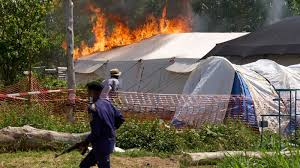
Anger and fear boiled over in a Congolese town on May 22, 2026, when residents set fire to an Ebola treatment facility established to care for infected patients and contain the outbreak. Witnesses described smoke pouring into a clay dawn, the acrid tang of burning plastic and medical gear, and terrified families rushing to pull loved ones from wards as health workers fled. The attack deepens a humanitarian crisis and raises urgent questions about community trust, public health communications, and security during infectious disease responses.
What happened on the ground
Local sources say community members gathered outside the treatment center after rumors spread that the facility was the source of new infections rather than a place of care. Tensions escalated into violence as a crowd pushed past security, looted supply rooms, and set mattresses and equipment ablaze. Health care workers who remained inside were forced to evacuate under cover of smoke and chaos. Emergency response teams later reported that several patients either escaped or were taken by relatives, complicating contact tracing and potential isolation efforts.
The immediate human toll includes damaged infrastructure, loss of scarce medical supplies, and disrupted treatment for patients with Ebola and other conditions. The psychological toll is also significant. Survivors, caregivers, and medical staff now face increased trauma from the attack, while public health teams confront the practical consequences of losing a functioning treatment center during an active outbreak.
Why communities attack treatment centers
Violence against disease control facilities is not new in the Democratic Republic of the Congo. Deep mistrust of external actors, historical grievances, misinformation, and fear of stigmatization create fertile ground for hostility. Communities coping with chronic insecurity, poor public services, and scant economic opportunity sometimes view sudden public health interventions with suspicion, particularly when they arrive with armed guards or when authorities fail to explain procedures in accessible local languages.
Local leaders and anthropologists say that when people believe treatment centers are places where patients vanish or where outsiders impose harsh measures, panic can trigger desperate acts. Past outbreaks show that heavy handed measures without community buy in increase the risk of attacks, patient flight, and the spread of disease beyond initial hotspots.
Voices from the community and health workers
One nurse who escaped the blaze described the scene as surreal, saying she had spent nights comforting fevered patients and then found herself running through smoke clutching oxygen tubing and bleaching solution in case they could be reused. A neighbor who joined the crowd said fear drove him to the center; he asserted that earlier that week a relative had entered and never returned, a claim local officials dispute but which highlights how rumor can rapidly inflame grief.
Community elders interviewed emphasized that their actions grew from a lack of listening. They said health teams rarely consulted village councils about where to place treatment sites or how to handle burials in line with religious and cultural customs. Those gaps, they said, erode legitimacy and create the conditions for confrontation even when medical intentions are genuine.
Public health implications
The destruction of a treatment center during an active Ebola outbreak has immediate epidemiological consequences. Facilities serve as hubs for isolating suspected cases, providing supportive care that lowers mortality, and conducting vital surveillance and contact tracing. When patients flee or are removed by family members, tracing chains of transmission becomes much harder. The risk of unchecked spread into neighboring communities rises, taxing already limited resources.
Response coordinators must now redirect scarce personnel to reestablish safe care spaces, secure medical supplies, and rebuild trust. That will slow case identification and could lead to more secondary infections among both household contacts and people who care for fleeing patients without protective equipment.
What responders can do next
Rebuilding trust must be central to any recovery plan. Effective steps include transparent communication about how treatment works, public demonstrations of safe care that include recovered patients, and deeper engagement with traditional and religious leaders to align practices such as safe burial with cultural norms. Security responses should prioritize protection without undermining community relations; heavy militarized approaches can worsen perceptions and spark further resistance.
Operationally responders also need rapid stabilization of medical capacity. That involves securing alternate treatment spaces that can be erected quickly, sourcing emergency stocks of personal protective equipment and therapeutics, and deploying mobile teams for localized quarantine and contact tracing. International partners and the national government can help by fast tracking supply deliveries and by supporting psychosocial services for traumatized staff and families.
An example of community engagement success
During past outbreaks in the region community liaison programs that trained local volunteers to explain infection control procedures and accompany health teams into villages reduced hostility and improved acceptance of isolation facilities. Replicating such models at scale could help prevent further attacks and ensure patients seek care willingly rather than in secret.
Security and legal responses
Authorities face a delicate balance between restoring order and preserving the legitimacy of the public health response. Arrests of those who commit violence may be necessary to deter future attacks, but heavy handed prosecutions without community reconciliation risk amplifying resentment. Combining law enforcement with swift, visible efforts to replace destroyed services and provide compensation for losses can mitigate immediate anger and open channels for dialogue.
International humanitarian law and public health norms support protecting health workers and facilities during outbreaks. Donor agencies and the United Nations can offer mediation services and deploy protection advisors to help design responses that reduce the need for force while improving safety for staff and patients.
Broader context and lessons
The attack exposes a recurring lesson from epidemics around the world: public health success depends as much on social trust as on clinical capacity. Medical interventions will fail if they are perceived as alien or threatening. This is particularly true in regions where governance is weak, misinformation circulates rapidly, and people have experienced trauma from conflict and displacement.
Long term resilience requires investment in health systems that are locally anchored. Strengthening primary care, training community health workers, and building supply chains that function outside crisis moments reduce the chance that emergency interventions will be met with fear. When communities see health structures as their own, cooperation during outbreaks is far more likely.
Where to watch next
Key indicators to monitor include official statements from the Congolese health ministry on replacement facilities, reports from humanitarian agencies on patient numbers and contact tracing effectiveness, and independent verification from organizations on the ground regarding security incidents. Coverage from respected health agencies provides useful background on Ebola response mechanisms and protocols https://www.who.int.
We must also watch how local leaders and health teams rebuild relationships with residents. Trust cannot be hurried, but transparent steps, visible care for the bereaved, and inclusion of community voices in decision making offer a path forward. For patients and families who lost a place of refuge and for health workers who risked their lives, the immediate priority is safe care and the restoration of dignity for those affected.
The burned treatment center is both a tragic event and a warning. It reminds us that controlling disease requires not only drugs and beds but listening, humility, and respect for the people whose cooperation determines whether an outbreak spreads or is contained.