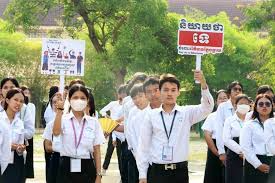
On May 22, 2026 the Cambodian Information Ministry rolled out the second phase of a national campaign aimed at curbing misinformation by teaching media literacy across the school system. The program seeks to equip students with practical skills to spot false content, evaluate sources, and engage responsibly online. For educators families and young people the effort offers a hopeful but challenging pathway to rebuild public trust in news and reshape how information circulates in communities.
Why the campaign matters now
The spread of false information in Cambodia has accelerated in recent years as mobile connectivity expanded and social media became a primary source of news for many citizens. Misinformation about public health elections and local disputes has sometimes produced confusion and social tension. By embedding media literacy into formal education the government is attempting to build long term resilience so students can separate rumor from reporting and make informed civic choices.
The campaign is also timely because younger generations are both the most connected and the most likely to shape future information ecosystems. Teaching critical reading, digital sourcing and ethical sharing practices in classrooms gives students habits that can ripple outward into families and neighborhoods where misinformation often takes root.
What phase two will do in schools
The second phase expands pilot lessons tested in selected provinces to a broader range of primary and secondary schools. Curriculum modules cover practical skills including assessing source credibility, recognizing manipulated images or videos, cross checking claims with multiple outlets, and understanding how algorithms amplify certain content. Training for teachers includes role playing exercises and locally relevant case studies so lessons resonate with students daily experiences.
Officials said materials will be available in Khmer and tailored to different age groups so younger students learn basic verification habits while older students tackle deeper issues such as media ethics, privacy, and the economic incentives that drive content production. The program also includes community outreach components so parents and local leaders can reinforce classroom learning.
Voices from classrooms and communities
In a provincial secondary school a teacher described how students often pass along sensational posts without checking sources. She welcomed structured lessons that give students language to question what they see and the confidence to ask follow up questions. A 17 year old student said the modules helped him notice subtle edits in images and to verify claims by checking multiple independent outlets before sharing on messaging apps.
Community leaders in rural districts emphasized that family involvement is key. When elders rely on information circulated through neighborhood groups students trained in media literacy can become local resources who gently correct falsehoods and demonstrate fact checking without alienating relatives. That peer to community dynamic can transform classroom lessons into everyday practice.
Design choices and pedagogical challenges
Designing effective media literacy instruction requires balance. Lessons must be practical and actionable rather than abstract. They should build habits through repeated practice such as quick verification checklists for news items and exercises that require students to trace a viral claim back to original sources. The ministry piloted interactive activities and assessments to measure whether students actually change sharing behavior rather than just score well on tests.
Scale creates another challenge. Training hundreds of teachers across diverse provinces requires consistent pedagogical materials, refresher training, and support networks. The ministry plans regional teacher trainers and online resources to sustain skills over time, while partnering with local universities and NGOs for ongoing professional development.
Safeguards for freedom of expression and civic debate
Media literacy programs can risk being perceived as top down attempts to control narratives if they are not clearly framed around critical thinking and open inquiry. Officials told us the curriculum emphasizes pluralism and responsible debate, and that classroom activities encourage students to examine a wide range of viewpoints. Civil society groups welcome the skills focus but say transparency about learning objectives and open stakeholder input are essential to avoid politicization.
Independent media and human rights organizations will watch implementation closely to ensure lessons preserve space for dissenting voices and do not become tools to delegitimize certain outlets. Clear, public benchmarks for curriculum content and independent evaluation will help reassure critics while strengthening program credibility.
Technology, partnerships and fact checking
The campaign pairs classroom instruction with partnerships involving local newsrooms and fact checking organizations. These partners provide real world examples students can test and create opportunities for journalism students to engage with schools. Digital toolkits and teaching aids include simple verification apps and checklists that students can use on smartphones or school computers.
International development agencies and regional education bodies have offered technical assistance and shared best practice models from other countries that combine teacher training with community media initiatives. Embedding fact checking as a civic skill helps students evaluate not just headline claims but also the trustworthiness of trending videos and forwarded messages.
One practical classroom example
A lesson in which students debunk a viral local claim by tracing it back to official records, interviewing a subject, and comparing multiple outlets produced strong learning outcomes. Students reported feeling empowered when they could present verifiable evidence to their community and see false rumors corrected in local forums. Those hands on projects help translate abstract skepticism into concrete civic action.
Monitoring impact and measuring success
Measuring the program says more than counting schools with the curriculum. Success indicators include changes in student behavior such as reduced sharing of unverified posts increased use of verification tools and greater civic engagement measured through informed participation in school debates and community forums. The ministry plans periodic surveys and third party evaluations to assess effectiveness and refine materials.
Local NGOs and academic partners will track outcomes and provide feedback loops so teachers can adapt lessons. Long term evaluation will also consider whether media literacy contributes to broader civic health metrics including trust in institutions and the quality of local public discourse.
Where to watch next
Observers should track ministry publications outlining curricular standards teacher training schedules and evaluation reports from independent researchers. Statements from civil society groups on content transparency and examples of community level initiatives that amplify classroom learning will be telling. For global perspective on media literacy policy and best practices readers may consult resources from UNESCO and other education bodies https://www.unesco.org.
Balancing ambition with empathy
The second phase of Cambodia national campaign signals a serious commitment to building critical thinking among the next generation. The work will be slow and sometimes messy because it asks people to change how they consume and share information embedded in daily life. Done with sensitivity to local contexts and with robust safeguards for pluralism the program can foster a generation better equipped to navigate digital information with care and compassion.
Students learning to verify a claim before sharing do more than improve data hygiene. They learn habits of listening testing and respectful correction that strengthen communities. That human centered focus may prove the most enduring defense against the harms of misinformation.