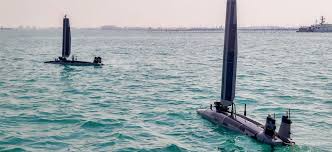
On May 30, 2026 the defense ministers of the United States United Kingdom and Australia announced a decisive expansion of AUKUS under Pillar 2 to accelerate manufacturing and deployment of uncrewed underwater vehicles to protect critical subsea networks. The initiative commits industrial capacity funding streamlined procurement pathways and real world operational testing to place more autonomous and remotely operated systems near vulnerable cables pipelines and energy installations within years rather than decades. I attended the announcement and spoke with engineers naval officers and industry leaders who described both the technical urgency and the human stakes behind the move.
Why subsea infrastructure matters now
Subsea fiber optic cables carry the bulk of global internet traffic and undersea pipelines supply energy across continents. These assets sit on the ocean floor often in remote or contested waters and are difficult to monitor. Damage either accidental or deliberate can sever communications isolate communities and cost billions to repair. Recent incidents that gained public attention included repeated cable cuts attributed to fishing gear and one high profile unexplained outage that underscored how fragile connectivity can feel. The AUKUS announcement acknowledges that protecting these lifelines requires sustained presence and rapid response capabilities in blue water environments.
What Pillar 2 will do differently
Pillar 2 of AUKUS historically has focused on operational capability and industrial cooperation. The new push specifically targets uncrewed underwater vehicles UUVs including autonomous underwater vehicles AUVs and remotely operated vehicles ROVs. Key commitments on the table include:
- Scaled manufacturing agreements to increase production rates of proven UUV designs and modular payloads.
- Shared test ranges and joint exercises to validate systems in representative deep and littoral environments.
- Interoperability standards so platforms from different suppliers can share sensor data command formats and mission plans.
- Expedited export controls and procurement frameworks across the three nations to shorten delivery timelines.
How this shifts operational posture at sea
The goal is to move from episodic inspections toward persistent distributed sensing. Rather than dispatching a single survey ship after an incident militaries and partner agencies will be able to deploy networks of UUVs that can monitor broad swaths of seabed for changes to cable tension abnormal acoustics or unauthorized activity. Operators expect UUVs to perform continuous acoustic mapping anomaly detection and rapid triage so that human teams focus on repairs and higher level decision making. Officers I spoke with emphasized that increased autonomy will reduce crew risk during inspection and recovery missions while improving response times.
Technological focus areas and challenges
Engineers highlighted several areas where accelerated investment will be concentrated. Navigation and localization remain challenging underwater because GPS signals do not penetrate the ocean. Teams are improving inertial systems long baseline acoustic positioning and collaborative swarm navigation where multiple vehicles share fixes to maintain accuracy. Another priority is advanced sensing including distributed fiber sensing payloads magnetometers and hyperspectral imagers for material characterization.
Battery energy density and endurance are practical limits for many platforms. The program aims to fund next generation battery packs and charging infrastructure using unmanned surface vessels as mobile recharging hubs. Communications bandwidth is another constraint. Acoustic modems offer long range but low throughput so efforts will link acoustic control with opportunistic high bandwidth exchanges using optical modems near surface or tethered relay nodes.
Industrial scale and supply chain steps
To meet production targets the three nations will coordinate procurement schedules and invest in regional manufacturing hubs that reduce single supplier risk. Officials described fostering partnerships between established naval primes and smaller specialized firms to mass produce modular hull sections sensor suites and common control software. The initiative will also address critical minerals and electronic component sourcing by identifying alternative suppliers and stockpiling key parts to avoid the delays that historically slowed defense programs.
Legal policy and alliance governance
Deploying persistent uncrewed systems across international waters raises legal and diplomatic questions. The ministers committed to clear rules of engagement data sharing agreements and transparency measures for commercial partners to reduce friction with coastal nations. The three parties will also work with allies and industry to define acceptable norms for surveillance in exclusive economic zones and to ensure operations comply with the United Nations Convention on the Law of the Sea. The announcement included plans for an oversight board with civilian representatives to review privacy and maritime domain awareness policies.
Environmental and community considerations
Ocean scientists and conservation groups have long cautioned that scaling operations at sea must avoid harming marine life. The AUKUS statement includes funding for environmental impact assessments and mandates for acoustic mitigation when operating near sensitive habitats. One engineer described mission planning that routes vehicles to avoid migration corridors and limits active sonar usage during breeding seasons. Local communities dependent on fishing and tourism will be part of consultation processes to build trust and minimize economic disruption.
International context and ripple effects
Other partners and competitors will watch how quickly the alliance moves from spoken intent to forward deployed capability. Greater UUV presence could deter malicious interference with subsea cables and energy lines but it could also intensify surveillance in contested regions. The announcement is likely to spur additional investment by NATO partners and regional actors who rely on undersea networks. For commercial subsea operators the program promises faster incident response and shared situational awareness that could reduce downtime and repair costs.
Voices from industry and the fleet
At the press event a chief engineer for an Australian manufacturer spoke about the practical difference faster procurement makes. She said that reducing lead times by months can keep talented engineers focused on upgrades rather than routine support tasks. A junior navy officer described the first time he watched a team of UUVs map a damaged cable in rough weather and how seeing the machines work in concert felt like watching a carefully rehearsed orchestra. Both emphasized that human skills remain central even as machines take on riskier tasks.
What to watch next
Over the coming months expect to see public calls for industry bids new joint exercises in shared test ranges and initial deployments aimed at high value corridors linking the three nations. Progress metrics to follow include production numbers for certified UUV types time to first operational deployment and establishment of the planned oversight board. For policymakers and citizens alike the key question will be whether faster capability means safer infrastructure and more resilient communication networks without unnecessary escalation in the maritime domain.
Further reading and sources
For background on global subsea infrastructure and vulnerabilities see a technical overview from the International Cable Protection Committee and legal perspectives on maritime operations available at the United Nations Division for Ocean Affairs and the Law of the Sea. Additional analysis of autonomous maritime systems and defense procurement appears in reports by defense research centers and naval institutes.
Would you like a summarized timeline of expected milestones and procurement rounds that the AUKUS partners announced so I can include it with sourcing and estimated delivery windows