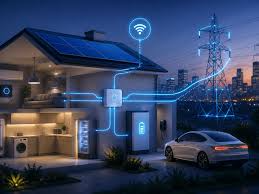
On June 20, 2026 leading global appliance manufacturers unveiled updated integrations that support the Matter 2.0 framework, setting a new baseline for interoperable home automation and coordinated energy management. The announcement signals a practical pivot from isolated smart devices to household grids where thermostats water heaters and refrigerators talk a common language to reduce consumption and respond to grid signals. What consumers will feel is quieter coordination, fewer setup frustrations and smarter thermal comfort that adapts to rhythms of life.
Why Matter 2.0 matters for everyday homes
Matter 2.0 builds on earlier interoperability efforts by defining richer device capabilities and standardized energy management profiles. That means a thermostat from one manufacturer can negotiate load shifting with a smart water heater from another without proprietary gateways. For homeowners the benefit is functional: fewer incompatible apps, simpler device onboarding and coordinated responses that keep comfort while trimming peak energy use. For utilities the benefit is a predictable pool of controllable load that can be leveraged to balance the grid and integrate more renewable power.
The update is not merely technical. It rewrites expectations about how devices behave together. A Matter enabled home can defer a clothes dryer cycle when a local solar array dips, pre cool living spaces before an afternoon heat spike and aggregate small adjustments across many homes to avoid costly grid interventions. The result is energy smoothing that is largely invisible to occupants yet meaningful to system operators.
What changed in Matter 2.0 integrations
Matter 2.0 extends device models to include standardized energy profiles time of use awareness and flexible setpoint negotiation. Appliances report real time energy use and accept priority levels for automated demand response. Security measures and privacy controls were tightened, specifying consent flows and data minimization so that device telemetry used for grid services does not reveal detailed household behavior.
Manufacturers rolled out firmware and cloud updates that implement these profiles and published developer guides to help integrators and installers. Many devices now support local mesh operation where negotiation happens inside the home without cloud dependency, preserving basic automation when internet access is interrupted.
Examples of new interactions
- A connected heat pump receives a grid signal to reduce draw during an evening peak and automatically raises the target temperature slightly while maintaining comfort through predictive control.
- A refrigerator shifts defrost cycles to times of low grid stress and communicates expected incremental savings to an in home energy dashboard.
- EV chargers and smart water heaters sequence charging windows and warmup cycles so a household’s aggregated load stays within a utility provided envelope while still meeting resident needs.
What homeowners will notice
For most people the change will be subtle and positive. Initial setup should be less frustrating because Matter standardizes discovery and configuration. Homes that combine Matter certified thermostats, smart plugs and appliances will have access to consolidated dashboards that show energy use in near real time and offer clear trade offs such as how delaying a clothes cycle can save money during expensive rate periods.
There will be new opportunities for cost savings. Utilities and retailers can offer time of use rates and incentives that Matter capable devices can respond to automatically. Consumers can authorize higher level automation while retaining granular control through consented settings. For those who value privacy local mode provides automation without streaming detailed usage data to third parties.
Utility and grid benefits
Grid operators have long sought predictable demand side flexibility. Matter 2.0 standard profiles create a more uniform interface to aggregate distributed resources. Rather than negotiating custom integrations with many vendors utilities can rely on common messages to request load reduction or timed consumption. This lowers operational friction and broadens the pool of residential resources available for balancing supply with intermittent wind and solar generation.
Pilot programs already show that coordinated, small adjustments across many homes can avoid the need for large peaker plants and reduce emissions during critical periods. Matter promotes scalable demand response by making participation straightforward and by protecting customer privacy in the process.
Challenges and real world limits
Interoperability does not remove all technical and social barriers. Older homes with legacy equipment will require adapters or staged upgrade paths. Not all appliances can modulate load in meaningful ways. Behavioral factors matter too. Households must choose automation preferences and opt into programs for the full benefits to appear at scale.
There are also cybersecurity and trust challenges. Standardized protocols increase the attack surface if implementations are sloppy. The Matter working groups emphasized secure boot, signed firmware updates and minimalistic telemetry to reduce risk. Regulators and certification bodies will need to monitor compliance and oversee vulnerability disclosure processes.
Equity and accessibility considerations
Stakeholders stressed the need to make benefits available across income levels. Without deliberate policy lower income households could be left with older devices and miss out on bill savings. Possible responses include utility rebates for Matter capable thermostats and community programs that install smart controllers in multifamily housing. Accessibility features are part of the specification effort so that interfaces and voice controls serve diverse needs.
Industry reaction and vendor commitments
Major manufacturers issued synchronized announcements about firmware rollouts and backward compatible bridges for key appliance lines. Many also pledged to open portions of their developer documentation to third party integrators to speed feature availability. Startups building energy orchestration platforms saw an opening to provide value added services that combine local automation with optional cloud based analytics for households that want deeper insights.
Retailers and installers will play a vital role. Clear Matter certification badges and straightforward in store demos help consumers understand tradeoffs. Installers will need updated training on the new profiles so they can set up consented automation and verify local mode operation.
Security, privacy and governance
Matter 2.0 includes refined consent flows that give occupants control over which devices can share energy telemetry externally. Data minimization practices and on device aggregation were prioritized so that reported metrics answer grid needs without exposing granular behavior such as presence or appliance level timelines. Industry groups promised to publish compliance reports and coordinate with independent labs for conformance testing.
Observers will watch how regional privacy laws interact with the protocol. Manufacturers that adopt the strictest consent and data protection models will likely gain consumer trust, while those that rely on broad cloud telemetry may face pushback in privacy conscious markets.
Practical steps for consumers and installers
- Check for Matter 2.0 certification when purchasing thermostats smart plugs and major appliances to ensure future compatibility.
- Ask installers about local mode operation and how device settings preserve privacy while participating in utility programs.
- Sign up for utility pilots that offer rebates or credits for smart thermostats and load flexibility participation.
- Keep device firmware updated and register products with manufacturers to receive security patches.
Where to learn more and next milestones
For technical specifications and developer resources refer to the Connectivity Standards Alliance page on Matter and the Energy Services sections that outline sample profiles and certification pathways. Utilities and consumer advocacy groups will host public webinars and pilot signups over the coming months as vendors ship firmware updates and retailers stock compliant devices.
Matter 2.0 does not promise instant utopia. What it does offer is a practical path toward homes that behave more like coordinated systems than a collection of isolated toys. For households that value comfort privacy and lower energy bills the new protocol lays the groundwork for automation that respects choice and responds intelligently to the needs of the grid.