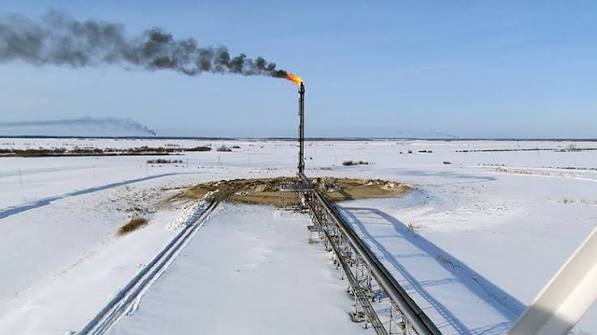
The World Bank released its annual flaring report on June 23 2026 and the headlines were stark: global gas flaring rose for the third straight year, wasting an estimated fifty four billion dollars worth of natural gas. The visual of continuous flames along oil fields is familiar to many communities around the world yet the scale of economic loss and climate damage recorded in the report makes the practice harder to ignore. Eliminating routine flaring offers a direct way to bolster energy supplies while cutting greenhouse gas emissions and improving local air quality.
The scale of the problem and why it matters
The report quantifies both wasted value and environmental cost. Flaring releases carbon dioxide and methane and represents a missed opportunity to capture fuel that could supply power plants heat homes or be processed into cleaner fuels. The economic figure of fifty four billion dollars is not an abstract number. It corresponds to pipelines that never run to communities that might use the gas placing a tangible opportunity cost on local development. For countries with constrained energy systems the lost gas could help stabilise grids and reduce reliance on higher carbon alternatives.
Beyond national energy security the climate implications are urgent. Methane is a potent short lived greenhouse gas that accelerates warming in the near term. Cutting routine flaring therefore contributes both to near term climate mitigation and to public health by reducing local pollutants that aggravate respiratory illness.
Where flaring is rising and what drives it
The increase is uneven geographically. New upstream production in some regions lacks the midstream infrastructure needed to capture and transport associated gas. In fast moving exploration zones it can be cheaper for operators to burn off gas than to build pipelines or invest in treatment facilities that would allow sale or local use. Regulatory gaps and weak enforcement in certain jurisdictions also permit routine flaring to continue as a low cost operational choice.
Economic incentives matter. When global markets pay little for delivered gas or when regulatory frameworks do not properly price emissions operators face limited commercial reasons to capture associated gas. Technical barriers such as the presence of contaminants and intermittent gas flows further complicate capture economics and raise capital costs for processing equipment.
Practical solutions that can reduce flaring
Eliminating routine flaring is technically feasible and commercially attractive in many cases if policy and finance align. Practical measures include building modular gas processing units that condense or treat associated gas on site, deploying mobile compression and small scale LNG facilities that turn gas into transportable cargo, and investing in local power generation to consume gas near production hubs.
Regulatory frameworks that mandate strict flare limits combined with predictable enforcement create a level playing field. Market mechanisms such as carbon pricing or performance standards can change operator incentives while targeted public finance and concessional loans can lower the up front cost of capture infrastructure in lower income regions.
Role for public private partnerships
Public private partnerships can bridge the initial financing gap for midstream infrastructure. Governments can offer offtake guarantees or subsidised connection fees while private firms provide technology and operational expertise. Multilateral development banks and climate funds also have a role in de risking projects and catalysing investment at scale, particularly in countries where capital costs are highest and commercial returns are uncertain.
Health and community impacts
In communities near production sites the sensory reality is immediate: a metallic tang in the air, the constant glow of flares at night, and soot settling on nearby surfaces. Those emissions contribute to local respiratory problems and reduce life quality. Reducing flaring brings direct health co benefits and can improve relationships between operators and host communities by demonstrating a commitment to safer and cleaner operations.
Community engagement matters for project success. Projects that turn flared gas into local power or into marketable products can generate jobs and revenues that provide a measurable benefit to residents and strengthen social licence for upstream activities.
Economic trade offs and energy planning
Some policymakers argue that rapid capture creates investment burdens or complicates production schedules. Yet the World Bank report reframes the choice: routine flaring is an economic loss not a neutral externality. Capturing associated gas can feed domestic industry, lower import dependency for power generation, and stabilise energy prices over time. For energy planners incorporating gas capture into national strategies can yield both resilience benefits and revenue upside if captured gas is monetised effectively.
Integration across sectors is essential. Power utilities need predictable offtake contracts. Transport and storage solutions must connect remote fields to demand centers. Coordinated planning reduces stranded asset risk and improves the bankability of capture projects.
Policy levers that accelerate change
Effective policy includes clear flare reduction targets legal limits on routine flaring transparent reporting requirements and penalties for non compliance. Enforcement paired with incentives for early action such as tax credits or fast tracked permits for capture projects encourage operators to prioritise investments. International cooperation is useful too because it can support technology transfer and finance and align standards that prevent regulatory arbitrage.
Market based instruments such as tradable emission reduction credits for captured gas can create additional revenue streams. Yet those instruments must be designed to avoid double counting and to ensure that credits represent real additional reductions rather than business as usual improvements.
Technology and innovation frontiers
Technological progress matters. Advances in modular gas to liquids systems, more efficient small scale liquefaction technologies, and improved gas treatment units that handle contaminants make capture viable in smaller fields. Remote sensing technologies and satellite monitoring have also improved flare detection and quantification which strengthens enforcement and public transparency.
Innovation extends to business models. Mobile units that serve multiple wells and pay as you go contracts for processing services reduce capital intensity for operators. These models can be particularly useful for marginal fields where traditional infrastructure investments have been uneconomic.
International finance and accountability
Development banks and climate funds can accelerate projects through concessional finance grants and risk sharing instruments. The World Bank has already supported flare reduction programmes and can scale efforts by coordinating with national authorities to prioritise high impact projects. Accountability mechanisms that link finance to verified emission reductions and energy access outcomes ensure that funds produce measurable benefits.
Transparency also matters for investor scrutiny. Public reporting of flare volumes and progress on reduction commitments enables civil society and markets to hold companies and governments to account and helps channel capital to credible projects.
What to watch next
Key indicators include national flare inventories regulatory updates on flare limits investment pipelines for capture infrastructure satellite based flare detection metrics and the pace of project financing from multilateral and private sources. Progress on modular processing deployment and evidence of local economic benefits will show whether technical solutions are translating into real reductions on the ground.
For readers interested in data and guidance the World Bank flaring report includes country level analysis and policy recommendations that inform national strategies. For technical standards and monitoring tools the Global Gas Flaring Reduction Partnership provides resources and frameworks used by governments and industry to track progress World Bank Gas Flaring Partnership. For satellite based monitoring and independent flare estimates organisations such as the Carbon Mapper initiative offer high resolution observation tools that help verify reported reductions Carbon Mapper.
Reducing routine gas flaring is a concrete climate and development win. It requires concerted policy action public and private investment and technologies deployed at scale. The World Bank s alarm should be a call to pragmatic collective action because the gas we burn need not be lost to the night sky; directed differently it can power homes, fuel industries and slow the rate of warming for everyone.