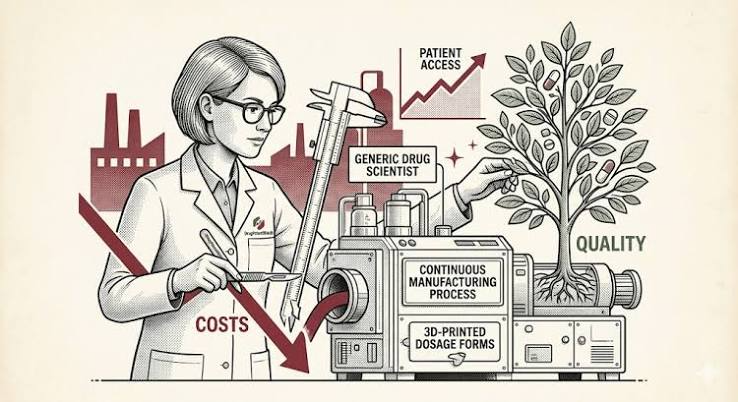
We walked through a sterilized suite on June 22, 2026 and watched vials glide through a choreography of arms and sensors. Advanced medical centers are replacing traditional batch production with automated modular environments and robotics that deliver biological medicines to patients in roughly half the time. The change is not merely technical but human: clinicians report faster treatment starts, patients experience less anxiety waiting for therapy, and labs operate with a steadier rhythm that reduces waste and contamination risk.
Why continuous processing matters for biological medicines
Biologics production has long relied on batch systems where materials move through discrete, labor intensive stages. Continuous processing replaces that stop start flow with seamless, monitored operations where upstream and downstream steps are integrated. The result is faster throughput, more consistent product quality, and a smaller physical footprint for production equipment. For therapies where timing affects outcomes such as cell and gene treatments or time sensitive monoclonal antibody infusions, halving processing time can meaningfully change clinical timelines and patient prognosis.
What the new automated modular environments look like
The modular suites we observed combine compact bioreactors, inline purification, and robotic handling inside controlled containment zones. Workers interact via touchless interfaces and oversee operations through dashboards that display real time process metrics. Modules are built to plug into each other so facilities can scale capacity by adding lanes rather than expanding large batch halls. The sensory detail is striking: the quiet hum of pumps, the soft LED glow of control panels, and the near silent motion of robotic arms executing precise liquid transfers with repeatable accuracy.
Speed gains and quality improvements
Clinical centers that reported the most dramatic reductions in time to patient used end to end automation that removes manual handoffs and reduces idle waiting. Continuous monitoring allows faster detection of process drift so corrective actions occur without stopping production. That reduces failed runs and improves overall yield. Consistent operating conditions also narrow batch to batch variability which strengthens confidence in dosing decisions and regulatory compliance.
Operational and workforce impacts
Automation changes the nature of lab work. Technicians who once performed repetitive transfers now manage orchestration, maintenance, and analytic oversight. Training programs focus on robotics operation, process analytics, and quality engineering. Staff describe a shift from physical toil to higher skill supervision tasks, though there is understandable concern about job displacement for roles centered on manual processing. Centers are mitigating that risk through retraining initiatives and by hiring specialists in automation maintenance and data science.
Regulatory and validation pathways
Regulators are adapting frameworks to evaluate continuous processes and modular facilities. Validation plans now emphasize process control strategies, real time release testing, and robust data integrity protocols. Agencies increasingly accept continuous manufacturing when sponsors demonstrate equivalent or superior assurance of product quality. Early collaboration between developers and regulators shortened approval timelines for several pilot implementations by focusing on measurable control points and automated documentation that create clearer audit trails.
Supply chain and cold chain implications
Faster processing changes upstream and downstream logistics. Raw material demand becomes more predictable, reducing inventory holding and spoilage. Finished goods move more quickly into distribution which eases storage strain on ultra cold and refrigerated networks. For hospitals and clinics the shorter lead times enable smaller on site inventories and reduce the pressure of maintaining large safety stocks that can expire. That operational smoothing can free capital for patient care and reduce wastage linked to overstocking.
Costs, scaling, and capital considerations
Initial investment in automated modular systems can be significant but proponents argue that total cost of ownership falls over time. Savings come from higher yields, reduced waste, lower labor input for routine tasks, and smaller facility footprints. Modular units also support phased scaling so organizations can add capacity incrementally and align capital spend with demand. For regional centers delivering specialized biologics the modular approach provides a practical path to bring manufacturing closer to point of care.
Patient experiences and clinical workflows
Patients interviewed at centers piloting continuous processing reported palpable relief when told their therapy would begin sooner. Clinicians appreciated shorter turnaround between apheresis or biopsy and product infusion, which reduces time in which a patient’s condition might deteriorate. Scheduling became easier because production slots are more predictable, allowing care teams to plan hospital resources and reduce length of stay for treated patients.
Technical challenges and quality assurance
Adopting continuous processing requires attention to sensor reliability, control system robustness, and contamination control. Inline analytics must deliver timely, actionable data and fail safe systems must prevent excursions from becoming clinical risks. Quality assurance teams emphasize layered monitoring and redundancy so that single point failures do not compromise patient safety. The quiet confidence of a well executed run comes from rigorous validation and from teams that rehearse contingency procedures until responses are second nature.
Equity and distributed manufacturing
Modular automation supports distributed manufacturing models that place capacity closer to regional patient populations. That can narrow access gaps where centralized facilities previously created long waits and logistical hurdles. To realize equitable benefit requires intentional deployment in underserved regions, training local workforces, and building supply chains that support remote operations. When these pieces align the human impact can be profound: families spared travel burdens and clinicians able to deliver timely, lifesaving therapies.
Research, collaborations, and the innovation pipeline
Academic centers and biotech firms are partnering to prototype continuous platforms for novel modalities. Those collaborations speed iteration because modular test beds allow rapid swapping of unit operations and analytic tools. Startups focus on specific bottlenecks such as inline purification or single use sensor technology, while consortiums share non proprietary data on process performance to accelerate collective learning. The collaborative atmosphere echoes clinical research trials where shared evidence builds confidence faster than isolated pilots.
Where to follow implementation guidance
Industry groups and regulatory agencies publish technical guidance and case studies that help developers move from batch to continuous. Resources from standards bodies and quality forums provide templates for validation, process control, and data management that reduce implementation risk. Stakeholders monitoring the shift should watch for new guidance on real time release testing and for reports that quantify long term cost savings from modular automation.
The move to continuous processing on June 22, 2026 signals a turning point for biologics manufacturing. It shortens time to patient, tightens quality control, and offers a path toward more resilient and local production. The human images that remain are of quieter labs, schedules that respect patient urgency, and technicians who steer complex systems that bring medicines to life faster and with greater reliability.
U S Food and Drug Administration and International Council for Harmonisation provide guidance and standards that developers and manufacturers can use when implementing continuous processing approaches.