
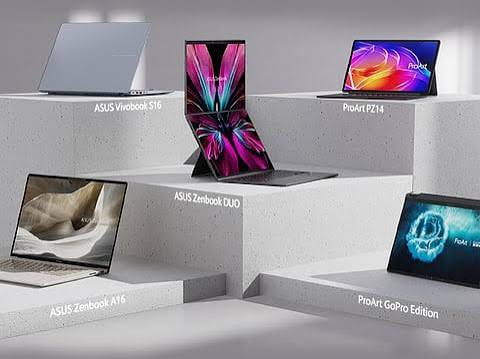
ASUS and Dell have each pushed deeper into the AI PC race, unveiling new professional systems aimed at everyone from everyday notebook users to enterprise teams running serious local workloads. The launches reflect a clear shift in the market: buyers now want laptops and workstations that can handle artificial intelligence tasks on device, with less dependence on the cloud and more control over speed, privacy, and cost.
A clearer split between consumer and enterprise needs
What stands out in these product rollouts is the way both companies are separating the needs of mainstream users from those of technical professionals. ASUS is extending AI into its Vivobook family, a line that has long appealed to students, remote workers, and small business users who want a thin, practical machine that still feels premium. Dell, by contrast, is leaning hard into enterprise computing with new professional AI workstations that are built for developers, researchers, designers, and data heavy teams.
Together, the two announcements show how fast AI computing is moving from a feature to a baseline expectation. Buyers no longer ask only about battery life, display quality, or CPU speed. They also want to know whether a laptop can accelerate generative AI, run local assistants, support secure business workflows, and sustain that performance without sounding like a small jet engine.
ASUS brings AI to the Vivobook line
ASUS has positioned its latest Vivobook PCs as accessible AI machines for mainstream users who still want a modern, polished design. The company has been broadening its Copilot plus and AI ready portfolio for months, and the new Vivobook push continues that strategy with models tuned for productivity, content creation, and everyday multitasking. ASUS has already showcased a broader 2026 AI PC roadmap through its press materials and Computex announcements, which included refreshed Zenbook and Vivobook systems aimed at consumers and creators alike.
[press.asus](https://press.asus.com/news/press-releases/asus-computex-2026-ai-pc-lineup-proart-rtx-spark-zenbook-vivobook/)
For many users, this matters because the everyday laptop is no longer just a browser box. It is now the place where meetings happen, documents are drafted, photos are edited, and AI summaries are generated. ASUS appears to be betting that a lighter, more affordable AI notebook can still feel fast and useful when the day fills up with video calls, spreadsheets, and local machine assisted tools.
Why Vivobook matters
The Vivobook family has always sat at an important middle point in the market. It is not a luxury ultrabook, and it is not a heavy workstation, but it often serves as the default choice for people who need one device to do a little of everything. By adding stronger AI capabilities, ASUS is signaling that practical laptops should now include more than conventional computing muscle. They should also help with writing, editing, note taking, and background tasks in a way that feels quick and quiet.
That shift is especially relevant for students and home office workers who may not need a specialist creator machine but still want a system that feels current. In that sense, ASUS is not just selling hardware. It is selling reassurance that users do not need to choose between affordability and modern AI features.
Dell targets the enterprise AI frontier
Dell’s announcement goes after a different audience altogether. The company has been widening its AI factory and professional workstation portfolio with systems meant for local AI development, engineering work, and enterprise deployment. In recent Dell materials, the company described a new generation of Pro Precision and Pro Max systems designed to bring more of the AI workflow onto the desktop or desk side, reducing cloud dependence and giving organizations tighter control over sensitive data.
[dell](https://www.dell.com/en-us/blog/dell-technologies-world-a-bright-and-beautiful-road-ahead/)
This is the part of the market where performance, stability, and scalability matter more than portability alone. Dell is aiming at people who build models, train systems, test applications, and run large datasets. For those users, the attraction is not a flashy design. It is the ability to keep work local, manage costs more predictably, and move from prototype to production without constantly shifting between cloud platforms.
Local AI becomes practical
One of the strongest themes in Dell’s workstation strategy is that local AI is becoming practical for more businesses. That includes firms that want to reduce cloud token spending, keep proprietary data inside their own environment, or support teams that need consistent high performance during long project cycles. Dell has said its systems can support a wide range of AI workloads, from smaller development tasks to much larger model runs, with hardware tiers built to match different levels of demand.
[crn](https://www.crn.com/news/ai/2026/dell-technologies-world-2026-biggest-dell-ai-factory-with-nvidia-innovation)
That matters because the enterprise AI conversation is changing. A year ago many companies were still experimenting with prompts and pilots. Now many are asking how to operationalize those efforts without blowing up budgets or exposing data. Dell’s pitch is that a workstation sitting under a desk can now do more of that work than many organizations expected, and do it with the sort of governance that IT teams can actually manage.
The hardware race is moving fast
Both companies are responding to the same pressure point: AI features are growing more useful, but they also need better local hardware to feel genuinely seamless. ASUS is pushing AI into familiar consumer form factors, while Dell is building systems for deep technical use. In both cases, the goal is similar: make the machine feel less like a passive tool and more like an active assistant.
That said, there is a real difference in how the two brands are competing. ASUS is likely to win attention by making AI feel approachable. Dell is likely to win trust by making AI feel dependable at scale. Those are different promises, but they speak to the same underlying shift in computing.
What buyers should watch
For shoppers, the biggest question is not which company used the louder AI language. It is which system fits the actual work in front of them. A student editing assignments, a freelance designer, a marketing lead, and a machine learning engineer will not need the same machine, even if all four want AI support. The smarter way to read these launches is through use case, not hype.
- Choose an ASUS Vivobook if you want a lighter everyday laptop with modern AI features and broad usability.
- Choose a Dell professional AI workstation if you need sustained performance, enterprise management, and local data handling.
- Look closely at memory, storage, thermals, and processor class, because AI workloads are often limited by those parts more than by branding.
Performance is not the whole story
Buyers should also pay attention to software support. AI hardware is only useful if the apps you rely on can make use of it. That includes office software, creative tools, and business platforms that increasingly add local AI features. A machine can be technically impressive and still feel disappointing if its ecosystem is thin or if battery life drops sharply under real world pressure.
We are also seeing a stronger link between device choice and privacy. Local processing can be a meaningful selling point for users who do not want every draft, dataset, or meeting note sent to a remote server. For many professionals, that is no longer a niche concern. It is part of the buying decision.
Why this launch matters now
The timing of these announcements is telling. PC makers are no longer treating AI as a future promise. They are treating it as a current sales driver. ASUS and Dell are both trying to define what the next generation of professional computing looks like, and the answer is increasingly hybrid: some work happens on device, some work happens in the cloud, and the best systems help users move between those modes with less friction.
That is a meaningful change for the industry. It suggests that the next competitive battleground is not just processing power, but trust, control, and the quality of day to day interaction. The most successful AI PCs and workstations will be the ones that make complicated tasks feel calmer and more manageable.
What comes next
If these launches are a sign of where the market is headed, the next wave of computing will be judged less by specs alone and more by how well a device fits into real work. ASUS is building a case that AI should be available in mainstream notebooks without making them intimidating or expensive. Dell is arguing that serious AI work belongs closer to the desk, where data can stay local and teams can move faster.
For buyers, that means more choice and, hopefully, more clarity. For the industry, it means the AI PC category is no longer experimental. It is now a central part of the hardware story, and both ASUS and Dell are determined to shape it.
For readers tracking the broader market, ASUS has detailed its AI PC direction through its official pressroom and launch pages, while Dell’s enterprise AI strategy is laid out across its newsroom and corporate blog.
[dell](https://www.dell.com/en-us/dt/corporate/newsroom/announcements/detailpage.press-releases~usa~2026~03~dell-ai-factory-with-nvidia-delivers-proven-path-to-enterprise-ai-roi.htm)

