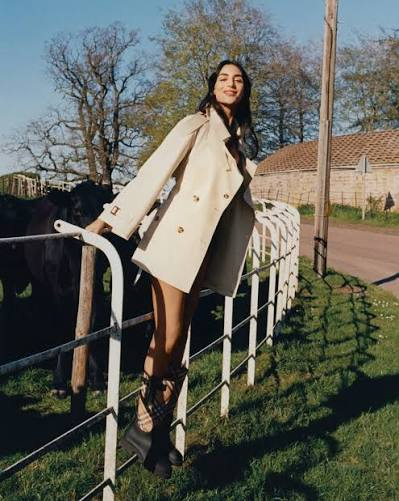
Burberry is leaning into the road trip again, but this time the journey is less about luxury spectacle and more about the slow, textured experience of place. The brand’s new global campaign centers on the British countryside, encouraging travelers to look beyond the capital and toward winding lanes, open fields, coastal air, village pubs, and the kind of scenic detours that turn a simple drive into a memory.
A shift toward slower travel
The initiative arrives as more travelers search for trips that feel personal, local, and grounded in real landscapes rather than tightly packaged itineraries. Burberry is using that change in mood to frame travel as something more intimate than a bucket list checklist. The countryside becomes the destination and the journey itself becomes part of the story, with road travel, regional exploration, and time spent in smaller communities placed at the center of the campaign.
That approach fits neatly with Burberry’s long standing association with weather ready outerwear, heritage style, and a distinctly British identity. Instead of leaning only on polished city imagery, the company is asking audiences to picture wet grass underfoot, stone walls along narrow roads, and the soft, shifting light that gives rural Britain much of its visual appeal. The result is a campaign that feels both commercial and quietly nostalgic.
Why the countryside matters now
Regional travel has become more attractive as many people look for experiences that are easier to pace and more affordable than long haul luxury trips. Scenic road trips also offer a degree of freedom that organized travel cannot always match. Travelers can stop at a farm shop, a cliff path, or a market town without needing to build the whole day around a fixed schedule. Burberry is clearly betting that this mix of flexibility and authenticity will resonate with global audiences who want travel to feel less staged and more lived in.
There is also a deeper cultural layer. The British countryside carries strong symbolic weight in fashion and advertising because it evokes tradition, landscape, craftsmanship, and continuity. By tying a global campaign to local immersion, Burberry is presenting Britishness not as a rigid image but as something that can be experienced through roads, weather, textures, and regional character. That makes the campaign feel less like a postcard and more like an invitation.
The emotional pull of place
What makes countryside travel so powerful is its sensory detail. The smell of damp earth after rain. The muted green of hedgerows at dusk. The distant sound of a train crossing a valley. Those are not just decorative details. They are the elements that make a trip feel memorable in the first place. Burberry appears to understand that travel culture has shifted toward these quieter forms of richness, where a landscape can be as compelling as a landmark.
Burberry’s brand logic
For Burberry, the campaign is also a strategic reminder of what makes the label distinct. The brand has long associated itself with British weather, outerwear, and outdoor movement. A countryside road trip campaign reinforces those associations naturally. Trench coats, scarves, boots, and layered clothing all make more sense when framed against changing skies and unpredictable conditions than they do in a controlled studio environment.
That is a strong fit for fashion storytelling because it turns clothing into part of a lived setting. The clothes are not simply worn. They are used, weathered, and carried through real places. That helps the brand speak to consumers who want their purchases to feel practical and emotionally resonant rather than purely decorative.
What local immersion means for travelers
Local immersion is one of the most persuasive ideas in modern travel because it promises a more meaningful relationship with a destination. Rather than racing from one famous site to the next, travelers spend more time in everyday places where a region reveals its character. A small bakery, a farm track, a churchyard, or a village store can say more about a place than a crowded landmark ever could.
Burberry’s campaign taps directly into that feeling. It suggests that Britain is best understood not only through London, Edinburgh, or major tourist centers, but through the spaces in between. That includes moorland roads, market towns, ferry crossings, and coastal routes where the journey itself becomes the reward. The message is simple: travel can be slower, and slower can be richer.
Scenic road trips as a cultural trend
The campaign also sits inside a wider return to road travel. More travelers are choosing routes that offer control, privacy, and the ability to change plans on the fly. Scenic driving holidays have become especially attractive to people who want open air, flexibility, and the pleasure of discovery without the pressure of a packed schedule. In that sense, Burberry is not inventing a new desire. It is giving shape and style to one that is already growing.
Road trips carry a romantic appeal because they allow for coincidence. A weathered sign, a roadside cafe, or a sudden view over a valley can become the highlight of the day. That unpredictability is part of the charm. By linking itself to that spirit, Burberry places its brand inside a kind of modern travel storytelling that values spontaneity and observation over speed.
How the campaign may resonate globally
Although the setting is distinctly British, the audience is global. International consumers often see Britain as a place where heritage, countryside, and design intersect in a way that feels both familiar and aspirational. Burberry can use that recognition to speak to travelers who may not be planning a UK trip immediately but still respond to the mood of rural exploration and refined practicality.
The campaign may also appeal to audiences who connect lifestyle spending with identity. For those consumers, a campaign about road trips and regional discovery is not just about travel. It is about the kind of life they want to imagine for themselves. Quiet roads, useful clothing, and time spent outdoors all point to a version of luxury rooted in ease rather than excess.
What brands often miss
Many travel campaigns lean too heavily on landmarks and too lightly on atmosphere. Burberry’s initiative seems to avoid that trap by focusing on mood, movement, and regional texture. That matters because modern audiences often respond more strongly to authenticity than to spectacle. A campaign that feels lived in can travel farther than one that simply looks expensive.
A softer form of luxury
The larger message here is that luxury is not always about distance, polish, or exclusivity. Sometimes it is about time, quiet, and room to move. The countryside offers all three. It allows for pauses, for weather, for silence, and for a pace that leaves space to notice things. Burberry appears to be repositioning those qualities as part of the luxury experience itself.
That makes sense in a market where consumers increasingly expect brands to have cultural awareness as well as visual identity. A road trip campaign built around local immersion says that luxury can be rooted in place and that heritage can feel current when it is attached to real experiences. It is a subtle but effective shift.
What comes next
The success of the initiative will likely depend on whether it can move beyond imagery and into lasting brand memory. If audiences come away feeling that Burberry has captured the spirit of the British countryside in a way that is sincere rather than decorative, the campaign may strengthen the brand’s emotional connection with travelers and fashion customers alike. If it feels merely picturesque, it may fade quickly.
For now, though, the idea is strong. In a moment when many people are craving regional discovery, scenic drives, and more grounded forms of travel, Burberry has chosen a setting that feels both distinctive and timely. The campaign treats the countryside not as background scenery but as a living part of the journey, which is exactly why it may resonate so widely.
For travelers looking to plan their own route through Britain, resources such as the official VisitBritain travel site and the National Trust offer useful starting points for scenic drives, rural heritage sites, and countryside experiences.