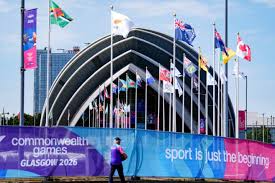
The 2026 Commonwealth Games have opened in Glasgow with a noticeable shift in tone and texture, as the traditional roar of stadium sport now shares space with the sharper, more digital rhythm of esports competition. We are watching a familiar multisport festival widen its frame, bringing competitive gaming and digital sports titles into a broader international roster that reflects how younger audiences already experience sport, identity, and national pride.
A Games that feels of its moment
Glasgow’s opening day carries the kind of atmosphere that only major international sport can create. The city’s streets, venues, and public screens are now part of a shared Commonwealth stage, while the event itself has taken on a more modern shape than many past editions. According to the official Games schedule, the 23rd Commonwealth Games in Glasgow run from July 23 to August 2 and include 74 nations and territories, with a streamlined ten sport program and six para sports alongside it.
[commonwealthsport](https://www.commonwealthsport.com/commonwealth-games/glasgow-2026)
That structure matters because it shows the Commonwealth Games are no longer trying to be everything to everyone. Instead, organizers appear to be making deliberate choices about relevance, logistics, and audience reach. The addition of esports is one of the clearest signs of that adjustment, and it gives the opening ceremony and the early competition days a different kind of energy: less ceremonial distance, more immediate connection with a generation that grew up with controllers, headsets, and online rankings as part of everyday competition.
Why esports belong here
Esports has often been treated as a separate world, but that boundary has been thinning for years. Competitive gaming now has national teams, structured tournaments, coaches, analysts, and devoted fan communities. In many countries, it already functions like a high performance sport, with training schedules, tactical preparation, and a culture of pressure that feels familiar to athletes in traditional disciplines.
By bringing esports into the Commonwealth Games, organizers are acknowledging a simple reality: sport is not frozen in one era. People still care about medals, representation, and rivalry, but they also care about the titles and platforms that define how young people compete now. The move does not replace athletics, swimming, or cycling. It broadens the conversation about what counts as international competition in 2026.
What Glasgow is hosting
Glasgow’s role as host carries symbolic weight as well as practical significance. The city last staged the Commonwealth Games in 2014, and its return gives the event a sense of continuity and reinvention at once. There is something fitting about that. Glasgow has the infrastructure, the sporting memory, and the civic confidence to host a Games that is smaller than some earlier editions yet more focused on how people actually consume sport today.
[espn](https://www.espn.com/olympics/story/_/id/41919855/2026-commonwealth-games-glasgow-confirmed-host-city)
The official program points to a concentrated schedule that includes athletics, boxing, gymnastics, weightlifting, lawn bowls, swimming, track cycling, and para sports, with competition spread across a handful of venues. That tighter format may help spectators move more easily between events, but it also leaves room for the digital competitions to stand out rather than vanish into a sprawling calendar.
[independent.co](https://www.independent.co.uk/sport/commonwealth-games/commonwealth-games-2026-schedule-start-times-tv-channel-b3019774.html)
The feel of a hybrid Games
What makes this moment interesting is not simply that esports is present, but that it sits inside a larger event with a long physical legacy. The contrast is vivid. In one venue, you can imagine the chalk dust, footfalls, and metallic clank of weightlifting platforms. In another, the glow of monitors and the burst of crowd reaction from a digital final create a different kind of arena, one shaped by reflexes, strategy, and split second decision making.
That coexistence reflects a broader cultural shift. Many younger fans do not separate sport into tidy boxes. They follow athletes on social platforms, watch highlight clips on phones, and treat gaming competition with the same seriousness they give to football or athletics. The Commonwealth Games, by opening the door wider to digital titles, are speaking in a language that more of that audience already understands.
The business of relevance
There is also a strategic side to this decision. Major sporting events face real pressure to remain commercially viable, culturally relevant, and globally watched. Adding esports is one way to reach viewers who may not sit through a full athletics session but will follow a live digital final with real attention. That can matter for rights holders, sponsors, broadcasters, and host cities alike.
Still, the value of the move should not be measured only in media terms. If the Games want to remain a meaningful gathering for Commonwealth nations, they must reflect the changing shape of competition without losing the emotional core that made them matter in the first place. The presence of esports suggests that organizers understand this balance. They are not abandoning the old script. They are rewriting part of it so more people can see themselves in it.
What athletes and fans gain
For athletes, the expanded roster can create new connections across disciplines. A sprinter, a boxer, and a gaming competitor may train in different spaces and use different tools, but they all know the pressure of national representation. They all know what it means to prepare for one moment that can alter public perception in an instant. That shared emotional load is one of the most human threads in any major Games.
Fans, meanwhile, gain more ways to connect. Some will arrive for athletics and find themselves drawn to the digital side. Others will come for esports and stay to watch a relay final or a weightlifting session. That cross pollination is healthy. It helps the event feel less like a museum of old sporting habits and more like a living festival that can still surprise people.
Glasgow’s role on the ground
For the city itself, the opening days bring the familiar mix of excitement and pressure that accompanies a major international event. Hotels fill, streets become busier, and transport systems feel the strain of thousands of visitors moving toward venues. Yet there is also the pride of hosting again, of seeing familiar landmarks become part of a global broadcast and hearing the city’s name spoken in homes across the Commonwealth.
That civic atmosphere gives the Games a tangible texture. This is not only about medals and schedules. It is about real people navigating a city that is temporarily brighter, louder, and more watched than usual. The crowds, the screens, the uniforms, and the applause all combine to create a shared space where sport feels both intimate and international.
Why this opening matters
The expanded esports integration may prove to be one of the defining decisions of the 2026 Games. It signals that the Commonwealth sporting movement is willing to adapt, and that adaptation is often the difference between staying culturally alive and becoming nostalgic background noise. The change will likely spark debate, which is healthy. Every major sporting institution should be asked what it values and why.
What seems clear already is that Glasgow is hosting a Games designed for the present rather than the past. The blend of traditional sport and digital competition creates a richer picture of what international rivalry looks like in 2026. For some viewers, that will be refreshing. For others, it may be unsettling. But for a generation that sees no contradiction between a stadium and a server, it feels entirely natural.
Where the story goes next
Over the coming days, the real test will be how smoothly the different parts of the program work together and how audiences respond. If the esports events draw strong engagement without overshadowing the core athletic competitions, organizers may have found a useful model for future editions. If not, the conversation will turn quickly to whether the balance tipped too far or not far enough.
Either way, the opening of the 2026 Commonwealth Games in Glasgow marks an important moment in the evolution of multi sport competition. The Games still carry the old emotions of rivalry, national pride, and shared spectacle, but they now also carry the pulse of digital competition. That makes this edition feel less like a break from tradition than a careful, revealing expansion of it.
For readers following the broader Commonwealth movement, the official Games hub at Commonwealth Sport and coverage from the BBC Sport provide useful background on the event’s structure and daily competition.