Commercial real estate is feeling a new kind of pull as major infrastructure and energy projects reshape where companies want to build, lease, and invest. Across global markets, demand is rising around artificial intelligence data centers, green energy hubs, logistics corridors, and the commercial spaces that support them, creating a fresh wave of construction procurement and property development.
A new engine for demand
For years, office markets and retail corridors dominated the conversation about commercial property. That story has changed. Today, the most active demand is often coming from industrial campuses, utility connected sites, and buildings designed to support digital infrastructure rather than traditional corporate occupancy. The rise of AI computing and renewable energy investment is pushing developers to think less about prestige addresses and more about power access, fiber connectivity, land assembly, and grid reliability.
That shift is visible in the language of brokers, builders, and public officials. When a company needs a data center, it does not just need four walls and a roof. It needs electricity, cooling, backup systems, water planning, security, and a location that can withstand long term scale. Green energy hubs demand similar coordination, especially when transmission upgrades, battery storage, and manufacturing supply chains are part of the same ecosystem. The result is a commercial property market shaped by infrastructure, not by speculation alone.
AI data centers change the map
Artificial intelligence has become one of the strongest forces behind new commercial property demand. Data centers are expanding quickly because AI systems need enormous computing power, constant uptime, and reliable physical sites. That has made certain parcels of land far more valuable than they were just a few years ago, especially in places where power can be delivered at scale and construction can move without major delay.
This is changing how site selection works. Developers are now competing for locations with strong substations, nearby transmission capacity, and room for phased expansion. The market is no longer only about square footage. It is about whether a site can support energy hungry systems for years without becoming obsolete. In that environment, commercial real estate and infrastructure planning are becoming inseparable.
Green energy hubs as anchors
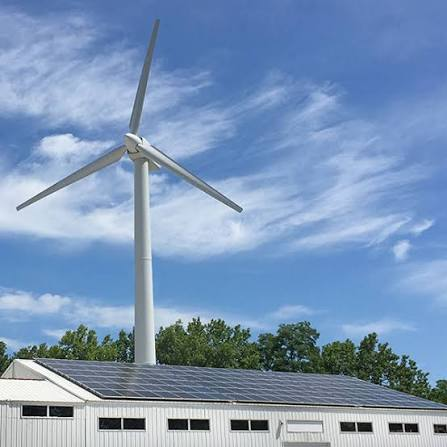
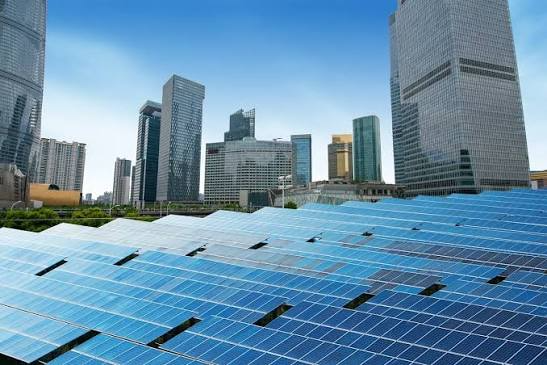
At the same time, green energy hubs are generating a different but equally powerful kind of demand. Solar, wind, hydrogen, battery storage, and related manufacturing projects often require land, warehousing, maintenance facilities, and office space for technical teams. These projects also tend to cluster in regions that can support long term industrial activity, creating secondary demand for nearby commercial buildings.
That matters because a single energy project can pull multiple property types into motion. A new hub may require contractor yards, project management offices, equipment storage, and service facilities long before it begins generating power. Once operational, it can support a larger local economy, drawing suppliers, technicians, and logistics partners into the area. Commercial property follows that gravity.
Construction procurement is shifting
The boom is not limited to finished buildings. It is also visible in procurement pipelines, where contractors and suppliers are seeing stronger demand for materials, engineering services, and specialized systems. Projects tied to AI infrastructure and energy transition work often have longer lead times, tighter technical requirements, and more complex coordination than conventional development. That creates opportunity for firms that can navigate electrical systems, cooling systems, structural work, and grid connected design.
For builders, this means the market favors firms with technical depth and reliable execution. The days when general commercial construction could be separated cleanly from energy or digital infrastructure work are fading. Contractors now need a better understanding of power loads, compliance standards, resilience planning, and supply chain timing. The procurement process itself is becoming more strategic, more specialized, and more dependent on early collaboration.
Why location matters more now
Commercial property demand is increasingly tied to where infrastructure already exists or can be expanded quickly. Regions with available power, transport access, and permitting clarity are drawing more interest than locations that once depended mostly on cheap land or broad tax incentives. In practical terms, this means a development site near transmission capacity may be more valuable than a larger site that lacks the right utility connections.
That logic is also affecting cities and industrial corridors beyond the obvious tech centers. Secondary markets with strong logistics networks and supportive energy planning are seeing fresh attention from investors who want both growth potential and lower congestion. The result is a more distributed map of opportunity, where commercial property demand can rise quickly in places that are well positioned for infrastructure buildout.
What this means for investors
For investors, the message is clear: commercial real estate is being revalued by utility access, digital need, and climate related investment. Properties linked to data processing, battery storage, clean energy manufacturing, and logistics support may carry stronger long term demand than more traditional asset classes. That does not mean every project will succeed, but it does mean the market is rewarding land and buildings that solve operational problems for major operators.
Risk still matters. High power costs, regulatory hurdles, and construction delays can affect returns quickly. Yet the underlying demand is coming from sectors that are not easily postponed. Companies building the digital and energy backbone of the future cannot simply wait for better market conditions. They need capacity now, and that urgency is supporting property development pipelines around the world.
The human side of the boom
There is also a human story behind these numbers. When a new industrial site or data center is announced, it can mean jobs for electricians, equipment operators, engineers, maintenance crews, and project managers. It can also mean more demand for local restaurants, housing, transport, and service work. The footprint of one major facility may be far larger than the parcel on which it sits.
At the same time, communities are asking harder questions about water use, land planning, emissions, and traffic. That tension is real and should not be glossed over. Residents want growth, but they want it to be thoughtful and durable. Developers and policymakers will need to show that these projects can coexist with community needs rather than overwhelm them.
How the market may evolve
The next phase of this trend will likely involve more integrated development planning. We are already seeing signs that power generation, storage, connectivity, and commercial site planning are moving closer together. In some places, that could produce new mixed industrial districts where energy assets and digital facilities sit near logistics and support services.
Over time, the most successful markets may be those that can coordinate permitting, infrastructure upgrades, and workforce availability. A site with land but no labor will stall. A region with labor but no power will stall. The winning formula will be a place that can support the full chain of development from construction to operation.
Why this matters now
Commercial property demand is not rising uniformly across every sector. It is concentrating where the economy is building something tangible and energy intensive. AI data centers and green energy hubs are not just headlines. They are active forces reshaping how capital flows into land, buildings, and construction services. That makes this moment different from a standard real estate cycle.
For anyone watching property markets, the lesson is straightforward. Infrastructure is no longer background support. It is the main event. The companies and cities that understand that reality are likely to capture the next wave of development, while those that keep treating property as a static asset may miss the scale of what is changing around them.
For readers following commercial property, infrastructure, and energy investment trends, useful background can be found through the International Energy Agency and the World Bank.