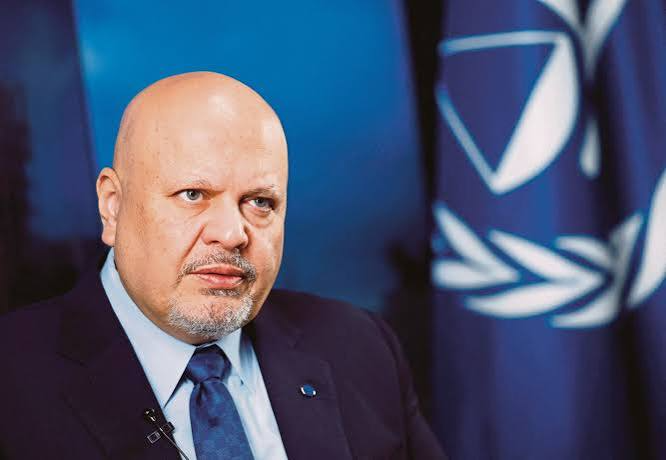
Karim Khan has stepped down as chief prosecutor of the International Criminal Court after high profile internal misconduct investigations pushed the institution into one of its most difficult moments in recent years. The resignation lands at a sensitive time for the court, which is handling major international cases and relies on the authority of its leadership to sustain confidence among judges, victims, governments, and human rights advocates.
What led to the resignation
The decision follows a period of intense scrutiny over alleged misconduct inside the prosecutor’s office. While the details of the probes have been closely guarded, the public consequence is unmistakable: the court’s top prosecutor no longer holds the position that anchors the ICC’s investigative and prosecutorial work. That change comes with legal, administrative, and symbolic weight, because the prosecutor is central to how the court selects cases, presents evidence, and manages the long timelines that define international justice.
For an institution built on the idea that no one should be above the law, questions about internal conduct cut especially deep. The ICC depends not only on legal procedures but also on trust. When that trust is shaken at the top, every case that relies on the office’s credibility can feel the ripple effects.
Why this matters for ongoing cases
The prosecutor’s departure could affect several ongoing international legal proceedings that require steady leadership and coordination across borders. The ICC works on some of the most politically sensitive cases in the world, often involving allegations of war crimes, crimes against humanity, and genocide. Those investigations can take years, and they depend on continuity, institutional memory, and a clear chain of command.
A leadership transition at this level can slow decision making even if day to day operations continue. Prosecutors must decide which leads to pursue, which witnesses to protect, and how to respond to legal challenges from defense teams and member states. Without a permanent chief prosecutor in place, colleagues may need to defer major strategic calls until new leadership is established or an interim arrangement gains full authority.
The institutional stakes
The ICC has long faced criticism from governments that question its reach, its pace, or its focus on certain regions. A misconduct related resignation gives skeptics another reason to argue that the court struggles with internal accountability. At the same time, supporters of the court are likely to see the resignation as evidence that the institution is at least capable of confronting misconduct rather than ignoring it.
That tension is central to how the story will be interpreted. Some will read the departure as a necessary correction that protects the court’s integrity. Others will see it as a destabilizing blow that arrives just when the ICC needs cohesion to support sensitive prosecutions. Both views can be true at once, which is part of why the moment feels so consequential.
What victims and advocates may feel
For victims and survivors who look to the ICC for accountability, leadership upheaval can be emotionally unsettling. These cases are not abstract files. They are often tied to mass violence, displacement, and years of waiting for recognition. When the court is distracted by internal controversy, the people most affected may worry that their cases will move more slowly or receive less attention.
Advocates for international justice are likely to call for transparency and reassurance. They will want to know whether evidence collection will continue without interruption, whether witness protection remains robust, and whether the court has safeguards in place to prevent one leadership crisis from spreading into broader dysfunction. In a system where trust is as valuable as precedent, even small lapses can carry outsized consequences.
The broader challenge of accountability
Resignations triggered by misconduct probes raise a familiar question for global institutions: how do you police those who are tasked with policing others? The ICC presents itself as a court of last resort, a place where the worst crimes can be examined when national systems fail. That mission depends on moral authority, but moral authority is only durable when the institution can also investigate itself rigorously and visibly.
This case will likely renew discussion about workplace culture, ethics enforcement, and oversight at international legal bodies. Courtrooms often project order and discipline, yet the organizations behind them can still face the same human failings as any large bureaucracy. The difference is that international institutions are judged not only on internal compliance but on the standards they ask the rest of the world to follow.
What happens next
The immediate question is who will fill the gap and how quickly the court can stabilize its leadership structure. The ICC will need to signal continuity to the public, its member states, and parties in active investigations. That may involve a temporary leadership arrangement, reassignment of key responsibilities, or formal steps toward naming a successor.
Longer term, the court may also face calls for an internal review of the processes that allowed the misconduct allegations to escalate into a crisis at the top. Such reviews can be uncomfortable, but they are often necessary if an institution wants to emerge with stronger procedures and clearer protections. Without that work, a resignation can become a stopgap rather than a solution.
Context and references
Readers who want background on the ICC’s role and structure can consult the court’s official site at icc cpi.int, which explains its mandate, jurisdiction, and ongoing proceedings. For broader coverage of international justice and accountability issues, reporting from Reuters often provides useful legal and diplomatic context.
For now, the resignation marks a serious turning point for the court. The ICC must manage the fallout from a leadership crisis while continuing work that affects conflicts, governments, and survivors across the world. The test ahead is not only whether the institution can appoint a new leader, but whether it can restore confidence in its own ability to uphold the standards it demands of others.