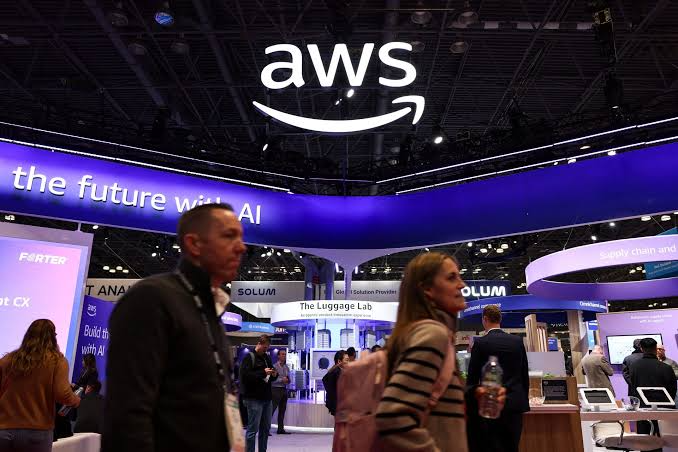
Amazon Business has crossed a defining threshold, reaching $60 billion in annualized gross sales as enterprise AI procurement tools begin taking over more of the buying process. The milestone cements Amazon’s grip on business to business ecommerce at a moment when procurement teams are under pressure to do more with less, buy faster, and keep spending visible enough for finance teams to trust.
A milestone built on scale and repetition
The number itself is striking, but the story behind it is even more revealing. Amazon Business now serves more than 11 million organizations worldwide, making it one of the most widely used corporate buying channels in the market. Its rise has been steady rather than sudden, built on recurring orders, negotiated pricing, approval workflows, and the simple fact that many companies want the convenience of consumer style ecommerce with the controls of enterprise procurement.
Amazon’s latest figure reflects annualized gross sales, meaning the company is measuring the pace of business across a full year based on recent performance. That is not merely a vanity metric. It signals the size of the purchasing volume moving through the platform, from office supplies and industrial components to lab equipment and maintenance goods. In a market where buyers often juggle dozens of vendors and internal approvals, Amazon Business has turned familiarity into infrastructure.
The scale also shows how much room there still is for digital procurement to grow. While many companies have adopted parts of the process online, the actual experience of buying for work remains fragmented, filled with emails, spreadsheets, and manual sign offs. Amazon Business has profited by making that process feel less like an administrative maze and more like a managed storefront. That is a subtle shift, but in business purchasing, subtle often wins.
AI procurement is changing the buyer journey
What makes this moment different is the arrival of enterprise AI procurement tools. These systems are beginning to automate buyer workflows that once required constant human oversight, including intake, supplier discovery, approval routing, and in some cases negotiation support. The result is a faster, more structured purchasing process that can match demand to approved suppliers with far less manual effort.
For procurement teams, that matters because every minute spent chasing a request or comparing vendors is a minute not spent on strategy. AI tools promise to handle repetitive tasks, surface preferred suppliers, flag policy violations, and suggest purchasing patterns based on past behavior. In plain terms, they are being asked to do the tedious work that keeps buying operations bogged down. That frees humans to focus on exceptions, relationships, and risk.
Amazon Business is well positioned for this shift because its platform already behaves like a guided purchasing environment. Buyers see catalogs, controls, and recommendations that steer them toward approved goods and negotiated terms. As AI becomes more common in procurement, those guided buying features feel less like a convenience and more like a foundation. The company is not just selling products. It is training organizations to buy in a more automated way.
What AI is automating now
- Purchase intake and request routing.
- Catalog matching and approved item selection.
- Supplier comparison and sourcing support.
- Policy checks, approvals, and spend controls.
Why Amazon Business has pulled ahead
Amazon Business has long benefited from a basic truth of procurement. Buyers want speed, broad selection, and predictable delivery. If a platform can reduce friction while keeping spend under control, it gains a powerful advantage. The company has used that formula to move from a useful option to a central purchasing channel for many organizations, including a large share of the Fortune 100.
Its appeal also lies in trust built through repetition. Procurement professionals may not love the idea of leaning too heavily on one platform, but they do value consistency. When a system handles recurring orders, supports invoice workflows, and tracks spend with enough clarity for finance teams, it becomes harder to dislodge. Amazon Business has made itself useful in exactly those places where procurement can be most painful.
The company’s growth is also tied to supplier economics. Many sellers on the platform gain access to a large pool of business buyers without having to build their own enterprise sales channels. That creates a two sided market in which convenience attracts buyers and volume attracts sellers. For many organizations, especially small and midsize businesses, the platform has become an efficient way to buy at scale without building an internal sourcing machine from scratch.
Readers following the broader shift in digital commerce can also watch the work of the National Institute of Standards and Technology, which tracks standards and trustworthy AI practices, and the supply chain and procurement reporting ecosystem that continues to map how automation is changing enterprise buying. Those context sources help explain why this milestone matters beyond one company’s balance sheet.
What procurement teams gain and risk
For buyers, AI procurement tools can be a genuine relief. They reduce repetitive approvals, shorten sourcing cycles, and can improve compliance by nudging employees toward preferred suppliers. They also make it easier to see where money is going, which matters when finance teams are demanding tighter controls and faster reporting. In a climate of cost pressure, efficiency is no longer a nice to have. It is a mandate.
Still, automation comes with tradeoffs. The more a company relies on guided buying and AI recommendations, the more important it becomes to monitor whether the system is reinforcing old spending habits or narrowing choice too aggressively. Procurement leaders will want to know whether the tools are surfacing the right suppliers, whether employees can still escalate exceptions, and whether the model is transparent enough to satisfy audit and compliance requirements.
There is also a human dimension that should not be lost. Procurement is not only about price. It is about continuity, trust, and knowing that the right item arrives at the right time. When AI handles more of the workflow, it can reduce friction, but it can also create distance between the buyer and the decision. The strongest systems will be the ones that keep judgment in the loop rather than trying to remove it entirely.
The competitive picture is shifting
Amazon Business is not the only player trying to shape the future of enterprise purchasing, but its scale gives it a powerful advantage. As AI procurement platforms become more common, many firms will try to layer automation on top of existing systems rather than replace them outright. That creates a competitive field where software vendors, sourcing platforms, and ecommerce giants all claim some part of the workflow.
That competition may actually benefit buyers. Companies now have more options for automating intake, comparison shopping, sourcing, and approvals than they did even two years ago. Yet Amazon’s edge remains its combination of breadth and familiarity. Employees already know how to search, filter, and order. When that experience is adapted for business use, adoption can happen faster than in more complex procurement systems.
What this means for the next year
Looking ahead, Amazon Business’s $60 billion milestone may prove less important as an endpoint than as a marker of momentum. The next stage of growth will likely depend on how well the company integrates AI into purchasing without losing the clarity and control that business customers expect. If it can make buying faster while keeping approvals, pricing, and audit trails intact, its role in enterprise commerce may deepen further.
For enterprises, the challenge will be deciding how much purchasing autonomy to hand over to software. Some will welcome the speed. Others will want tighter guardrails. Most will likely land somewhere in the middle, using AI to handle routine tasks while reserving human review for higher value or higher risk purchases. That balance may define procurement for years to come.
What is clear right now is that business buying is changing shape. The old image of procurement as a slow, paper heavy back office process is fading. In its place is a more digital, more data driven, and increasingly automated system. Amazon Business has helped lead that shift, and the arrival of enterprise AI tools suggests the next phase may arrive even faster than the last.