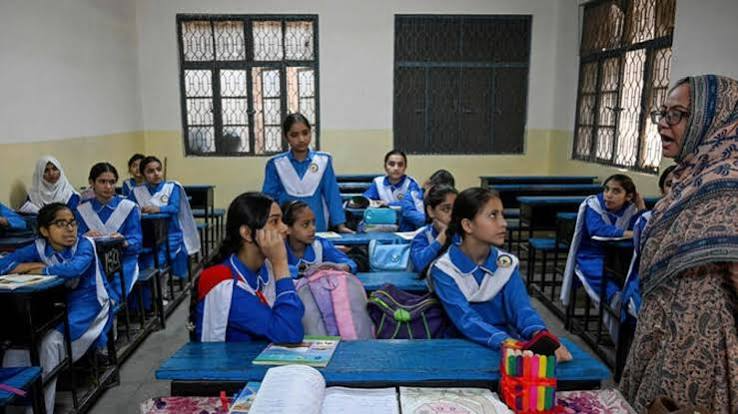
Schools across Sindh are set to reopen with a familiar but demanding rhythm: classes from Monday to Saturday. On August 1, 2026, the province’s School Education Department restored the mandatory six day working week for public educational institutions, a move aimed at recovering academic days lost to the summer break and keeping the school calendar on track.
Why the province made the change
The decision comes with a clear purpose. After weeks of summer vacation, education officials are trying to make sure students do not lose momentum just as the new academic cycle begins. In a province as large and varied as Sindh, even a small shift in the school schedule can affect everything from lesson planning to examination preparation, attendance patterns, and the daily routines of families who already organize their lives around school hours.
The restoration of a six day week is less about novelty than recovery. It is an effort to reclaim instructional time and maintain continuity in teaching and learning. For teachers, that means a tighter pace and fewer interruptions. For students, especially those preparing for board exams or trying to catch up after uneven schooling, it means more time in class and more room for steady progress. The School Education Department has framed the directive as a practical response to the academic calendar rather than a symbolic one.
Officials said the new schedule will apply across public educational institutions under the department’s control, with classes held from Monday through Saturday until further notice. Reports indicate the directive also extends to private institutions in some notifications, although later clarifications suggested that privately run schools may be allowed to set their own weekly schedule. That distinction will matter as schools prepare their timetables and parents sort out transport, tuition, and after school commitments.
What parents and teachers need to know
For families, the most immediate change is simple and visible. The school week will be longer, and the weekend will be shorter. That may sound minor on paper, but in daily life it changes the rhythm of the home. Morning preparations will stretch across one more day, bus routes will need to run a little longer, and household schedules will have to adjust around homework, fatigue, and the practical demands of getting children ready six mornings a week.
Teachers may feel the shift even more sharply. A six day week reduces the breathing space that many educators use for lesson planning, grading, and catching up on administrative work. Yet it also offers something that schools value deeply: consistency. Children tend to settle more quickly when attendance patterns are stable and lesson sequences are less broken up by repeated holidays or shortened weeks. In that sense, the policy is likely to help schools preserve structure at the start of the academic year.
Education systems often reveal their character in the smallest routines, and this one is no exception. A bell ringing on Saturday morning may seem ordinary, but it also signals a province trying to make time count. In classrooms with cracked paint, noisy fans, and crowded benches, every extra hour can matter. More days in school can mean more chances to read aloud, solve problems on the board, or revisit a lesson that students needed to hear twice.
Likely effects on school life
- More instructional time for core subjects.
- Less calendar disruption after summer vacation.
- Heavier weekly workload for teachers and school staff.
- Need for families to adjust transport and home routines.
How this fits into the wider education picture
Sindh’s decision follows a familiar pattern in public education policy: when academic time is lost, authorities often respond by tightening the schedule. That may happen after holidays, weather disruptions, or other interruptions that make it hard to complete the curriculum on time. In a system serving millions of children, even a few weeks away from the classroom can create a measurable gap, especially in early grades where reading and math skills depend on repetition.
There is also a broader policy lesson here. Schools are not just places where lessons happen. They are institutions that anchor daily life, support working parents, and create a shared timetable for communities. When the province restores a six day schedule, it is not only managing classrooms. It is also shaping the practical structure of family life, transport demand, and teacher workload across Sindh.
Readers looking at the bigger education context can also review the work of the UNESCO Institute for Statistics, which tracks enrollment and schooling trends around the world, and the World Bank, which regularly publishes research on learning loss, attendance, and the long term effects of missed school time. Those sources help explain why policymakers place so much value on regular instructional days.
Will the six day week last?
For now, the directive is in place until further orders, which means the schedule could be revisited later depending on administrative needs, weather conditions, or policy changes. That uncertainty is common in education systems that must adapt quickly to changing circumstances. Still, for the moment, the message from the province is unmistakable: schools are expected to reopen with full weekly activity and move ahead without delay.
Whether the policy remains in force may depend on how smoothly schools can absorb the added day. If attendance stays strong and academic pacing improves, the six day week could be seen as a useful correction after the summer break. If families struggle to adjust or schools find the schedule too compressed, officials may hear calls for a review. In either case, the first few weeks will tell a great deal about how workable the decision really is.
A practical change with human consequences
On the surface, this is an administrative announcement. In practice, it touches nearly every part of school life. Children will wake earlier, teachers will plan more tightly, and parents will have one less day to count on as a pause. Yet the purpose behind the change is rooted in something most families can recognize immediately: time lost in education is hard to recover, and the longer a school year drifts, the harder it becomes for students to stay on pace.
That is why the move will likely be judged not just by whether it fills a calendar, but by whether it helps children learn more consistently. If the extra day means stronger lessons, fewer gaps, and a better chance to finish the year with confidence, many families will accept the inconvenience. In the end, the real measure of the policy will not be the notification itself. It will be the quiet work that happens each Saturday morning, when students take their seats and the school day begins again.