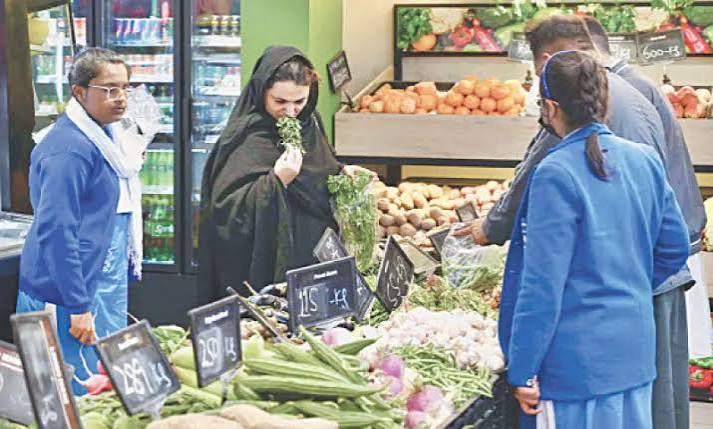
Shoppers around the world are feeling the pinch at the grocery store. As of August 1, 2026, short-term food inflation has surged more than 9 percent compared to the same period last year, driven by global supply disruptions and localized energy price spikes that have pushed household basket prices higher across major international markets.
[finance.yahoo](https://finance.yahoo.com/markets/commodities/articles/food-prices-rise-highest-three-084618179.html)
What is driving the 9 percent food inflation spike
The jump in short-term food costs is not random. It reflects a cascade of supply chain pressures that began in early 2026 and intensified through the spring and summer. The most significant trigger was the closure of the Strait of Hormuz following escalating conflict in the Middle East, which disrupted the flow of crude oil, diesel, and agricultural fertilizers that move through this critical maritime corridor. Roughly one third of global fertilizer trade passes through Hormuz, and the blockade has cut off millions of tonnes of urea and phosphate exports, pushing fertilizer prices to their highest levels since 2022.
[rbc](https://www.rbc.com/en/thought-leadership/geopolitics-trade-and-the-economy/a-perfect-storm-rippling-across-the-worlds-food-supply-chains/)
Higher energy and fertilizer costs translate directly into higher food prices. Farmers face steeper bills for diesel to run equipment, for nitrogen based fertilizers to grow crops, and for shipping to move goods to market. Those costs ripple through the supply chain, showing up as increased prices for cereals, vegetable oils, meats, and dairy products at retail. The United Nations Food and Agriculture Organization reported that its global food-commodity price index rose 1.6 percent in April 2026 compared with March, marking a 2.5 percent increase from the same month a year earlier and reaching the highest level in more than three years.
[finance.yahoo](https://finance.yahoo.com/markets/commodities/articles/food-prices-rise-highest-three-084618179.html)
Key factors behind the inflation surge
- Closure of the Strait of Hormuz disrupting oil, gas, and fertilizer flows
- Fertilizer prices rising 31 percent in 2026, with urea up 46 percent month-on-month during the peak disruption
- Higher crude oil prices expanding biofuel mandates and diverting edible oils
- Extreme weather and El Nino conditions affecting crop yields in key producing regions
- Ongoing attacks in the Black Sea region disrupting grain shipments from major exporters
How this shows up in household baskets
For families, the abstract concept of food inflation becomes concrete at the checkout line. A basket that once included affordable staples like rice, wheat flour, cooking oil, eggs, and chicken now costs noticeably more. In many markets, vegetable oils and meals have seen the steepest increases, surging 10 percent in the two months after the Middle East conflict began due to higher crude prices and expanded biofuel mandates that pull edible oils into energy production.
[finance.yahoo](https://finance.yahoo.com/markets/commodities/articles/food-prices-rise-highest-three-084618179.html)
Grain prices have risen more modestly but still meaningfully, with wheat up 19 percent and maize up 5 percent on a year-on-year basis, while rice prices are 6 percent lower. Meat and dairy categories reflect higher feed and transport costs, with poultry, beef, and processed meats all seeing price pressure as producers pass on increased input expenses. In the United States, the Consumer Price Index showed food prices up 3.1 percent over the 12 months ending in May 2026, with food at home up 2.7 percent, though short-term spikes in specific categories like oils and grains can push monthly bills higher than the annual average suggests.
[finance.yahoo](https://finance.yahoo.com/markets/commodities/articles/food-prices-rise-highest-three-084618179.html)
For households already stretched by elevated housing costs and interest rates, the additional burden of rising food bills can force difficult tradeoffs. Families may shift to lower cost brands, reduce portion sizes, or cut back on protein and fresh produce in favor of cheaper staples. In lower income countries, where food represents a larger share of household spending, the impact is even more severe, contributing to the 318 million people now facing crisis-level hunger in 2026.
[blogs.worldbank](https://blogs.worldbank.org/en/opendata/food-prices-feel-the-heat-as-war-in-the-middle-east-rattles-comm)
Regional differences in food price pressures
Not all markets are experiencing the same level of food inflation. Countries that rely heavily on imported fertilizers and energy, particularly in the Middle East, North Africa, and parts of Asia, have seen sharper increases in production and retail costs. Regions with strong domestic grain production or access to alternative fertilizer sources have been somewhat insulated, though global price transmission means few markets are entirely shielded.
[thedocs.worldbank](https://thedocs.worldbank.org/en/doc/40ebbf38f5a6b68bfc11e5273e1405d4-0090012022/related/Food-and-Nutrition-Security-Update-122-May-29-2026.pdf)
Europe and North America have seen more moderate food inflation on an annual basis, but short-term spikes in specific categories like cooking oils, cereals, and meats have been noticeable. In the United States, food at home inflation has hovered around 2 to 3 percent annually, but monthly data can show sharper increases in certain categories when supply disruptions hit. In contrast, some emerging markets have experienced double digit food inflation, with vulnerable populations facing acute affordability challenges.
[rbc](https://www.rbc.com/en/thought-leadership/geopolitics-trade-and-the-economy/a-perfect-storm-rippling-across-the-worlds-food-supply-chains/)
What households can do to manage rising food costs
While macro level forces like geopolitics and climate are beyond individual control, there are practical steps families can take to reduce the impact of food inflation on their budgets. Planning meals around sales and seasonal produce, buying in bulk for non perishable staples, and reducing food waste can all help stretch grocery dollars further. Substituting expensive proteins with more affordable options like legumes, eggs, or canned fish can lower the average cost per meal without sacrificing nutrition.
[blogs.worldbank](https://blogs.worldbank.org/en/opendata/food-prices-feel-the-heat-as-war-in-the-middle-east-rattles-comm)
Tracking prices across multiple stores and using digital coupons or loyalty programs can uncover savings that add up over time. For those with access to community supported agriculture, farmers markets, or food co-ops, buying directly from producers can sometimes offer better value than traditional retail channels, especially for fresh produce.
[bls](https://www.bls.gov/cpi/)
Households facing severe budget strain may qualify for assistance programs such as food banks, government nutrition support, or local charity initiatives. In the United States, resources like SNAP benefits and the WIC program provide critical support for low income families, while many communities have additional emergency food assistance available through religious organizations and nonprofits.
[bls](https://www.bls.gov/cpi/)
Outlook for food prices in the second half of 2026
The trajectory of food inflation depends on how quickly supply disruptions ease. The World Bank’s baseline scenario assumes that Middle East related supply constraints begin to ease around mid-year, limiting the severity and duration of the shock. Under that assumption, global food commodity prices are projected to rise modestly, with grains up 2 percent, oils and meals up 4 percent, and the overall food index up around 2.5 percent in 2026.
[blogs.worldbank](https://blogs.worldbank.org/en/opendata/food-prices-feel-the-heat-as-war-in-the-middle-east-rattles-comm)
However, risks remain tilted to the upside. If the closure of Hormuz persists longer than expected, or if extreme weather events such as El Nino worsen crop yields in key producing regions, food prices could exceed current projections. Trade restrictions, export bans, or further geopolitical tensions could also tighten supplies and push prices higher.
[rbc](https://www.rbc.com/en/thought-leadership/geopolitics-trade-and-the-economy/a-perfect-storm-rippling-across-the-worlds-food-supply-chains/)
For now, the World Bank projects the global agricultural price index to slip by about 2 percent in 2026, with food and agricultural raw material prices holding broadly steady as supply growth keeps pace with demand. Beverage prices, including coffee and cocoa, are expected to fall by around 7 percent as supply expands. That outlook offers some hope for relief, but it hinges on the assumption that major supply disruptions do not intensify in the coming months.
[blogs.worldbank](https://blogs.worldbank.org/en/developmenttalk/when-risks-stack-up–threats-to-global-food-markets-in-2026)
Where to find reliable food price data
For those tracking food inflation and planning household budgets, several authoritative sources provide timely data and analysis. The United Nations Food and Agriculture Organization publishes monthly updates on the FAO Food Price Index, covering cereals, vegetable oils, dairy, meat, and sugar prices globally. The World Bank’s Commodity Markets Outlook offers projections for energy, fertilizer, and agricultural prices, along with analysis of geopolitical and climate risks.
[finance.yahoo](https://finance.yahoo.com/markets/commodities/articles/food-prices-rise-highest-three-084618179.html)
In the United States, the Bureau of Labor Statistics releases the Consumer Price Index each month, including detailed breakdowns for food at home, food away from home, and specific categories like meats, dairy, and cereals. International organizations such as the International Monetary Fund and regional development banks also publish research on food security and commodity price trends that can help contextualize local price movements within the global picture.
[rbc](https://www.rbc.com/en/thought-leadership/geopolitics-trade-and-the-economy/a-perfect-storm-rippling-across-the-worlds-food-supply-chains/)
The human side of food inflation
Beyond the numbers and forecasts, food inflation is a deeply human issue. It affects what families put on the table, how parents explain to children why certain foods are no longer affordable, and the stress that comes with watching a grocery bill climb week after week. In countries facing famine conditions, such as Gaza and Sudan in 2026, the stakes are even higher, with millions confronting acute hunger and malnutrition.
[blogs.worldbank](https://blogs.worldbank.org/en/opendata/food-prices-feel-the-heat-as-war-in-the-middle-east-rattles-comm)
As we navigate this period of elevated food costs, it is important to remember that behind every percentage point of inflation are real people making real tradeoffs. Policymakers, businesses, and communities all have a role to play in ensuring that essential nutrition remains accessible, even as global supply chains and energy markets remain under pressure.
[foreignpolicyjournal](https://www.foreignpolicyjournal.com/2026/07/25/hormuz-closure-and-black-sea-attacks-drive-crop-prices-to-three-year-high-threatening-global-food-security/)