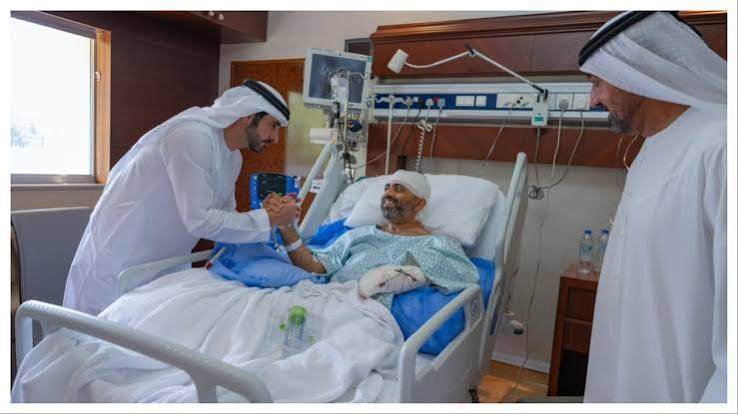
Captain Smit Machchhar is recovering well in an Abu Dhabi hospital after being seriously injured during a violent cockpit attack aboard a FlyDubai passenger flight, according to an update from Indian authorities on October 3, 2026. The senior pilot was attacked by his co pilot during Flight FZ1073 from Dubai to Tel Aviv on September 30, an incident that caused the aircraft to enter a steep descent before passengers and crew helped regain control. Machchhar’s condition has since stabilized, offering relief to his family, colleagues and the hundreds of people affected by the frightening episode.
Pilot Remains Under Medical Care in Abu Dhabi
The Indian Embassy in the United Arab Emirates said Captain Machchhar remains under excellent medical care and is recovering well. Officials said they remain in contact with his family and local authorities while he continues treatment.
The update follows a remarkable account from Machchhar himself, who spoke with Indian Prime Minister Narendra Modi from his hospital bed on October 2. Although he had suffered multiple injuries, the captain described the moment he realized that the aircraft was descending and that he needed to act despite his condition.
Machchhar told Modi that he understood the danger facing the passengers and managed to open the cockpit door. That decision allowed people outside the cockpit to intervene and restrain the attacker. Two off duty pilots also assisted with the aircraft before it was safely diverted to Tabuk in northwestern Saudi Arabia.
A Flight That Suddenly Became a Fight for Survival
Flight FZ1073 was carrying 174 passengers and was traveling from Dubai toward Tel Aviv when the cockpit attack occurred. Reports indicate that the aircraft descended thousands of feet in a very short period, creating a rapidly developing emergency for everyone aboard.
Machchhar was seriously injured during the confrontation and fell to the cockpit floor. Yet he realized that the aircraft was continuing to descend. From his hospital account, the decision to reach the cockpit door became a critical moment in the sequence of events.
Reuters reported that Machchhar described opening the cockpit door while injured, allowing passengers and crew members to enter. The intervention helped stop the attacker and gave other trained pilots an opportunity to assist with controlling the aircraft. :contentReference[oaicite:0]{index=0}
The episode illustrates how aviation emergencies can depend on several layers of protection working together. Pilot training, cockpit procedures, cabin crew response and the actions of passengers can all become significant when an unexpected threat develops inside an aircraft.
UAE Authorities Call the Incident a Terrorist Attempt
UAE authorities have officially described the cockpit assault as an attempted terrorist act. The co pilot allegedly attacked Machchhar during the flight and attempted to gain control of the aircraft. Investigators are examining the circumstances surrounding the incident, including the attacker’s background and possible motive.
Authorities have identified the co pilot as an Omani national. Reports have raised questions about his previous aviation history and whether concerns about his background should have affected his ability to work in a cockpit. Those matters remain part of the investigation and should be separated from claims that have not been independently established.
The Federal Aviation Administration and international aviation authorities maintain extensive security and safety frameworks for commercial aviation, including measures covering flight crew procedures and cockpit security. Incidents involving a member of the flight crew attacking another pilot can therefore generate scrutiny well beyond the individual airline involved.
Passengers and Off Duty Pilots Helped Stabilize the Situation
The response inside the aircraft was not limited to the captain. Once the cockpit door was opened, passengers and crew members moved to restrain the attacker. Two off duty pilots who were traveling on the aircraft also became involved in helping stabilize the flight.
The aircraft was ultimately diverted to Tabuk, Saudi Arabia, where it landed safely. The successful landing brought an end to one of the most frightening periods of the journey, but it did not end the medical or investigative consequences.
For passengers, the experience was likely marked by confusion and fear. A normal international flight suddenly involved a rapid descent, a cockpit emergency and an emergency landing in another country. The fact that the aircraft reached the ground safely did not erase the trauma experienced during those minutes.
Machchhar’s Hospital Account Offers a Clearer Picture
Machchhar’s conversation with Modi provided one of the clearest accounts of his experience. Speaking from hospital, he described being badly injured and realizing that he could not simply remain on the cockpit floor while the aircraft continued to descend.
The pilot has worked in aviation for 17 years and has served as a captain for about 11 years, according to reports. His experience became particularly significant during the emergency because he understood what the aircraft was doing even while he was injured.
The International Civil Aviation Organization provides global standards and guidance for international aviation safety and security. Events such as the FlyDubai incident can prompt authorities and airlines to examine how established procedures perform under circumstances that are difficult to anticipate.
Questions About Cockpit Security and Crew Screening
The incident has naturally raised questions about how airlines assess flight crew members before allowing them to operate commercial aircraft. Those questions are especially sensitive when an alleged threat comes from inside the cockpit rather than from a passenger attempting to breach it.
Commercial aviation has invested heavily in cockpit security, particularly since the attacks of September 11, 2001. Reinforced cockpit doors, controlled access procedures and communication protocols were designed to prevent unauthorized people from gaining control of an aircraft.
An incident involving a member of the cockpit crew presents a different security challenge. The person already has authorized access, aviation training and knowledge of aircraft systems. That makes recruitment standards, background checks, professional monitoring and reporting procedures important subjects for investigators and regulators.
Areas Likely to Receive Greater Scrutiny
- Background screening for commercial flight crew
- Communication between aviation employers and national authorities
- Procedures for reporting concerns about crew members
- Cockpit access and emergency door procedures
- Training for cabin crews facing an internal cockpit threat
Any changes will depend on the findings of the investigation rather than assumptions made immediately after the event. Aviation authorities generally need evidence from flight data, witness statements, security records and medical reports before determining whether procedures or regulations require revision.
Focus Shifts From the Crisis to Recovery
For Machchhar’s family and colleagues, the latest medical update changes the focus from the immediate danger to recovery. The captain remains under medical supervision in Abu Dhabi, where he is receiving treatment after sustaining serious injuries.
The Indian government has expressed gratitude to UAE authorities for providing medical care and support. Officials have also remained in contact with Machchhar’s family as he continues his recovery.
For the passengers who survived the incident, recovery may take a different form. Physical injuries can be treated, but an unexpected emergency at cruising altitude can leave a lasting emotional impact. Airlines involved in serious incidents often have to consider passenger welfare alongside operational and investigative requirements.
Aviation Community Watches the Investigation
The FlyDubai incident is now being examined across several jurisdictions because the flight involved Dubai, Israel and Saudi Arabia, while the captain is Indian and the co pilot is Omani. Such a multinational investigation requires cooperation between aviation authorities, security agencies and law enforcement bodies.
Investigators will need to establish exactly how the confrontation began, what actions were taken inside the cockpit, how the aircraft entered its rapid descent and how control was restored. They will also examine the co pilot’s background and any information available to the airline before the flight.
Those findings will matter not only for FlyDubai but for the wider commercial aviation industry. Aviation safety depends heavily on learning from unusual events, particularly when an incident exposes a potential vulnerability that standard procedures were not designed to address.
Captain’s Recovery Offers Relief After a Terrifying Flight
Captain Smit Machchhar’s stable recovery provides an important piece of positive news after an incident that placed hundreds of lives at risk. His decision to act despite serious injuries became central to the response, while passengers, cabin crew and off duty pilots also played roles in bringing the aircraft to safety.
The investigation will determine what happened inside Flight FZ1073 and whether additional aviation security measures are necessary. For now, the immediate priority is the health of the injured captain and the wellbeing of everyone affected by the ordeal.
Machchhar’s recovery is still underway, but the latest update from Indian authorities has brought reassurance to those following his condition. After a flight that could have ended very differently, the captain remains in hospital, receiving care and recovering from the injuries sustained while trying to protect the people entrusted to his aircraft.