Glasgow woke up to the sound of a championship week in full swing, with medals being decided across boxing, triple jump, judo, and adaptive events as the Commonwealth Games tightened into its most unforgiving phase. On August 1, the competition felt less like a festival and more like a proving ground, where every clean landing, every late surge, and every final round became part of a larger story about composure under pressure and the pride that comes with standing on the podium.
A day where margins mattered
Once the field events and combat sports began to settle into final rounds, the mood around the Games changed. The easy optimism of opening days gave way to the sharper pulse of medal rounds, where the difference between silver and gold could be measured in a breath, a foot placement, or a single judges’ decision. For athletes, that is both thrilling and cruel. For viewers, it is exactly what makes this stage of a major multi sport competition so compelling.
India emerged as one of the strongest stories of the day, but the broader picture stretched well beyond any single team. Athletes from across the Commonwealth were claiming early podium finishes in events that demand very different kinds of excellence. Boxing rewarded sharp reflexes and discipline. Triple jump asked for rhythm and perfect timing. Adaptive events reminded everyone that elite sport is not defined by one body type or one route to competition. The result was a day that carried both speed and gravity.
Boxing delivered the loudest drama
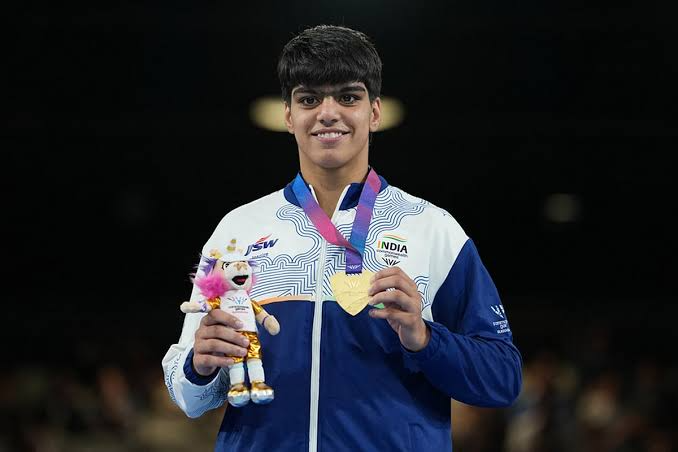
The boxing finals produced the kind of intensity that can make a venue feel electric even on television. Several title bouts turned into momentum swings, with athletes absorbing pressure early and then forcing their way back into contention. India’s boxers were central to that narrative, collecting a remarkable cluster of medals that underlined how dominant the team had become by the time the day was over. That included golds for Sakshi Chaudhary, Preeti Pawar, Jaismine Lamboria, Priya Ghanghas, Arundhati Choudhary, Sachin Siwach, and Ankush Panghal, along with silver medals for Lovlina Borgohain, Jadumani Singh, and Narender Berwal.
What stood out was not only the medal count but the way some of those victories were built. Sachin Siwach and Ankush Panghal both had to recover from difficult early rounds before turning their finals around. That kind of comeback speaks to the mental burden of boxing at this level. A fighter can train for months, even years, yet still need to stay calm when a judge’s card or a knockdown changes the tone of the bout in seconds. The best champions are often the ones who can keep their breathing steady while the rest of the arena seems to sharpen around them.
Why the ring felt so tense
Boxing in Glasgow has been more than a medal factory. It has been a test of emotional control, with athletes confronting the pressure of expectation in front of packed crowds and national flags. Each bout brought a different emotional texture. Some ended with decisive control, others with visible strain, and several with the kind of split decision that leaves one corner cheering and the other standing still for a moment before regrouping. That tension is part of the sport’s honesty. There is nowhere to hide once the bell rings.
Triple jump added quiet brilliance
Track and field delivered its own moment of precision through the men’s triple jump, where Praveen Chithravel secured silver and Selva Prabhu Thirumaran earned bronze. The event may not always command the same immediate volume as the ring sports, but it carries a beauty that rewards close attention. Triple jump is a choreography of speed, balance, and explosive confidence, a sequence where one hesitation can spoil everything and one perfect approach can create a medal.
For the athletes, that means long minutes of waiting followed by a few seconds that can define the entire competition. The runway grows narrow in the mind long before the body reaches it. When the board, hop, step, and jump finally align, the result can look almost effortless, though anyone familiar with the event knows it is anything but. Chithravel and Thirumaran gave India another reminder that medal success in a Games setting often depends on depth, not only on star power.
Adaptive sport had its own spotlight
Among the most meaningful performances of the day were those in adaptive competition, where athletes continued to push the definition of elite performance in ways that deserve wider attention. These events do not sit at the margins of the Games. They are central to its spirit. They demand strength, tactical intelligence, and resilience under a level of public scrutiny that can be just as intense as any marquee final.
Adaptive events carry a different kind of emotional weight because they remind us that sporting excellence is not a single story. It is many stories, often unfolding at once. Every medal won there represents years of training and advocacy, and every finish matters because it widens the frame of who gets to be seen as a champion. In Glasgow, that visibility felt especially important, as the Games moved deeper into the medal phase and crowds responded with growing appreciation for the breadth of competition on display.
Glasgow’s atmosphere deepened
Part of what makes a Commonwealth Games compelling is the way it layers local pride over international competition. Glasgow has given the event an atmosphere that feels intimate even at scale. The venues, the crowd noise, the rhythm of walking from one contest to the next, all of it contributes to the feeling that these are not abstract results moving through a ticker. They are lived moments, cheered by people who can see the strain in an athlete’s face as clearly as the score.
That atmosphere matters because it sharpens the stakes. A medal in a stadium filled with anticipation carries a different weight than one won in silence. When the crowd rises after a final round or a final leap, it gives athletes a visible sense of the achievement they have just produced. For many of them, that recognition is as memorable as the medal itself.
What the medal chase now looks like
By the end of the day, the medal table was beginning to reflect a clear hierarchy without losing its volatility. Strong boxing performances pushed several teams upward, while field and adaptive events added important balance to the standings. The overall picture still had room to shift, because a multi day championship rarely settles neatly until the final sessions are complete. That uncertainty is part of the charm. A Games can feel decided one minute and opened back up the next.
For athletes still waiting to compete, the message from August 1 was simple. The margins are small, the crowd is alert, and the pressure is real. Those who can handle the rhythm of final rounds and final attempts are the ones most likely to leave Glasgow with medals around their necks and a lasting place in the memory of these Games.
What to watch next
The coming sessions will likely continue to hinge on the same ingredients that defined this high stakes day: composure, tactical discipline, and the ability to respond when the contest turns. Boxing finals are never far from surprise. Triple jump can swing on one perfect effort. Adaptive events may not always dominate headlines, but they continue to shape the emotional core of the competition. In a schedule this crowded, momentum can change faster than the scoreboard suggests.
For readers tracking the event closely, the official Commonwealth Games result pages remain the best place to follow standings and event progress, while broader coverage from Commonwealth Sport and the Olympics.com medal tracker can help place Glasgow’s results in a wider international context. As the medal rounds intensify, the Games are beginning to feel like what they always promise to be: a concentrated test of nerve, talent, and national pride.