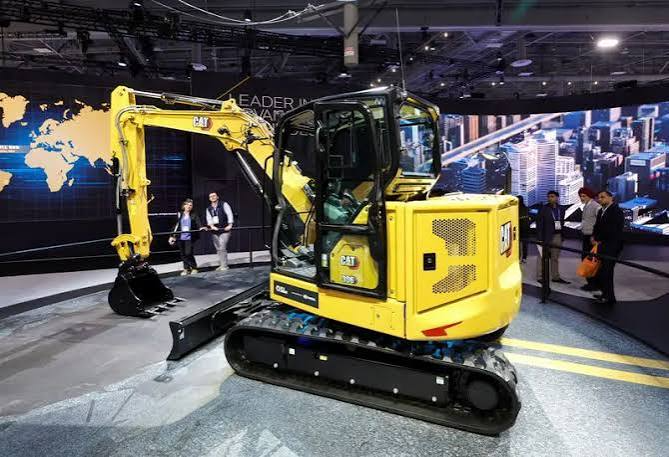
Caterpillar delivered a quarter that stopped Wall Street in its tracks. The heavy equipment giant surged 11.3 percent after reporting second quarter revenue above $20 billion, a milestone that reflected strong demand for residential construction and infrastructure machinery, sturdy pricing, and a backlog that suggests customers are still booking equipment well into the future.
A record quarter with real weight behind it
The numbers were hard to miss. Caterpillar said second quarter sales and revenues climbed 24 percent to $20.5 billion, the first time in company history that it crossed the $20 billion mark in a single quarter. Adjusted earnings came in at $8.17 per share, far above the prior year period and above analyst expectations. For a company often treated as a bellwether for the industrial economy, that is not just a beat. It is a loud signal that demand remains broad based.
Chief executive Joe Creed framed the results as a reflection of the work customers are doing every day and the company’s ability to solve difficult problems at scale. That language matters because Caterpillar is more than a stock ticker. Its machines sit on job sites, in mines, at energy projects, and along roads where the physical economy is being built piece by piece. When Caterpillar posts a quarter like this, it usually means cranes are moving, foundations are being poured, and capital spending is still flowing.
Construction demand is still doing the heavy lifting
The strongest part of the story was not a one off pricing spike. It was volume. Caterpillar said sales volume added $3.1 billion in the quarter, supported by stronger orders across its core segments. That is important because volume growth tends to carry a better long term message than price alone. It suggests customers are buying more machines, not simply paying more for the same equipment.
Residential construction remains a key driver, but the broader picture is even more interesting. Infrastructure spending, utility projects, road building, and industrial construction are all feeding demand for equipment that can move dirt, lift steel, and power remote work sites. In that sense, Caterpillar is riding a wave that is both public and private, both cyclical and structural. The market likes that combination because it gives the company multiple engines of growth.
Why the market reacted so strongly
Investors often reward Caterpillar when the company beats expectations, but an 11.3 percent jump tells us the market saw more than a simple earnings surprise. It saw evidence that the cycle may be stronger than many feared. It also saw confirmation that demand is not limited to one region or one type of project. The company said its order rates were strong and backlog was growing, a pairing that typically supports confidence in future revenue.
That matters for anyone watching industrial shares, construction equipment makers, or the broader capital goods sector. A strong Caterpillar quarter can lift sentiment across peers because it hints that dealers, contractors, and project owners are still willing to commit money to big purchases. The physical economy is slow to change direction, and that makes this kind of earnings report especially valuable. It is a snapshot of what companies are actually doing, not just what they are saying.
Margins, cash flow, and capital returns
There was also quality beneath the top line growth. Caterpillar reported operating profit margin of 20.9 percent, up from 17.3 percent a year earlier, while adjusted operating margin reached 21.9 percent. That kind of margin expansion suggests the company is benefiting from scale, disciplined pricing, and favorable product mix. In plain English, Caterpillar is not just selling more. It is selling more profitably.
The company also produced $4.4 billion in enterprise operating cash flow and ended the quarter with $6.7 billion in enterprise cash. It returned $2.2 billion to shareholders through buybacks and dividends, a reminder that industrial giants often compete on more than growth. They also compete on trust, consistency, and the ability to share cash with investors while still funding the factory floor and dealer network.
For readers following company filings and market context, Caterpillar’s own investor relations pages remain the clearest source for quarterly releases and segment detail, while the broader industrial backdrop is often tracked through the company’s second quarter results release and market coverage from major financial outlets.
What this says about the broader economy
Caterpillar is often described as a bellwether because its machinery is tied to real economic activity. A company does not buy a bulldozer or an excavator unless it expects work ahead. A contractor does not expand fleets unless it sees projects coming. A utility does not invest in specialized equipment unless infrastructure spending, grid work, or industrial expansion creates a need. That is why investors pay such close attention to Caterpillar’s tone, not just its numbers.
This quarter suggests the underlying tone is still constructive. Residential building has not vanished. Infrastructure remains a durable source of demand. Large scale energy and industrial projects continue to support equipment orders. Even in a market full of uncertainty, the need to build, repair, and expand remains stubbornly real. That resilience is one reason Caterpillar can post a record quarter at a moment when many industries are still trying to read the next move in rates, tariffs, and global growth.
Why construction equipment stocks moved with it
When Caterpillar beats, investors often look for second order effects. That includes other heavy equipment makers, parts suppliers, industrial distributors, and companies tied to construction and mining services. The logic is simple: if the largest name in the category is seeing healthy demand, there may be room for the rest of the sector to benefit as well. Shares can move not only on direct competition, but also on the idea that the entire market is still in a favorable phase.
That is exactly what seemed to happen here. Caterpillar’s rise helped fuel a broader rally in construction equipment and industrial stocks, as traders absorbed the message that customer demand remains solid. The market has a habit of turning one strong earnings report into a wider narrative, and this report fit neatly into a thesis that industrial spending has more staying power than skeptics expected.
The human side of a machine driven story
It is easy to reduce a company like Caterpillar to revenue, earnings, and margin percentages. But behind those figures are people working in mines, on highways, at ports, in housing developments, and inside factories. There are mechanics, operators, engineers, buyers, and site managers whose days begin early and end covered in dust. The machines Caterpillar sells are tools for that labor, and a strong quarter usually means those people are busy.
That human layer is part of why the results resonate. Construction equipment does not trade on sentiment alone. It is tied to concrete activity, to the smell of asphalt on a hot morning, to the low rumble of engines at sunrise, and to the steady rhythm of a job site trying to meet a deadline. When demand holds up, it tells us that the work of building is still moving forward, even if the broader economy feels uneven.
What to watch next
The next question is whether this strength can persist into the second half of the year. Investors will watch order trends, dealer inventories, construction spending, and infrastructure funding closely. They will also look for signs that margin strength can hold if pricing pressure returns or if global growth slows. For now, though, Caterpillar has delivered a quarter that gives bulls plenty to point to.
The message from this report is clear. Heavy equipment demand is still alive, construction activity has not run out of steam, and Caterpillar is converting that demand into record sales and stronger profits. For a market looking for evidence that the industrial economy can keep pulling its weight, this was a quarter worth noticing.