Global financial markets are moving into a more selective phase of growth as investors reassess interest rate expectations, international capital flows and the relative value of major economic sectors. On August 18, 2026, the central question for investors is no longer simply whether markets can continue rising, but which assets and industries can justify their valuations as monetary policy, economic growth and global liquidity continue to shift.
Investors Are Becoming More Selective About Growth
The latest market transition reflects a change in investor behavior. During periods of abundant liquidity and falling borrowing costs, capital can move quickly toward riskier assets as investors search for higher returns. When expectations become less certain, the decision becomes more demanding. Investors begin examining company earnings, cash flow, debt levels and long term growth prospects with greater care.
That shift can create a market that appears calm on the surface while experiencing substantial movement underneath. Money may leave one sector and enter another without producing a dramatic change in major indexes. Technology companies, financial institutions, industrial businesses, energy producers and defensive sectors can experience very different investor demand even when the broader market remains relatively stable.
We are therefore entering a period in which capital allocation matters as much as headline market performance. The strongest opportunities may not necessarily be found in the fastest growing industries. Investors may instead favor businesses with sustainable earnings, manageable financing costs and the ability to maintain demand during periods of economic uncertainty.
Interest Rate Expectations Remain Central to Market Decisions
Interest rates influence almost every major part of financial markets. They affect the cost of borrowing, the attractiveness of bonds, corporate investment decisions, household spending and the valuation investors assign to future earnings.
When markets expect interest rates to decline, investors often become more willing to pay higher prices for assets whose expected returns arrive further in the future. Growth companies can benefit because the present value of future earnings becomes more attractive when borrowing costs and discount rates decline.
When expectations shift toward higher or prolonged rates, that calculation changes. Investors may begin favoring companies with current profits and strong balance sheets over businesses whose valuations depend heavily on earnings expected many years from now.
This is why even small changes in central bank expectations can produce noticeable movements across equities, bonds and currencies. Markets respond not only to the actual interest rate but also to what investors believe policymakers will do next.
Central Banks Remain Closely Watched
Monetary policy remains one of the most important forces shaping global capital allocation. Investors are watching inflation, employment, consumer spending and economic growth for clues about the future path of interest rates.
The International Monetary Fund continues to monitor global economic conditions, including growth, inflation and financial stability, all of which influence the environment in which investors make cross border decisions.
The challenge for central banks is delicate. Cutting rates too quickly can risk renewed inflationary pressure, while keeping monetary policy restrictive for too long can weaken economic activity. Investors must therefore interpret economic data while also considering how policymakers may respond to it.
Capital Flows Are Shifting Across Regions
International capital rarely remains in one place when investors perceive changes in economic opportunity. Money can move between developed and emerging markets, equities and bonds, or one industry and another as expectations change.
Currency movements can add another layer of complexity. A foreign investment can generate a strong return in local currency but produce a weaker result for an international investor if exchange rates move unfavorably.
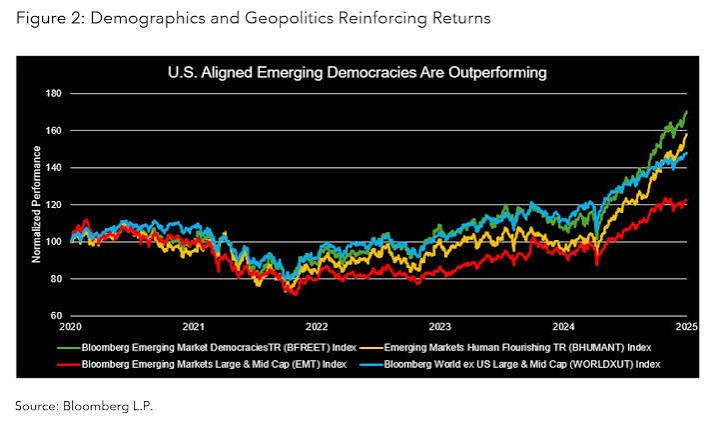
Emerging markets can be particularly sensitive to global capital flows. When international investors become more comfortable with risk, money can move toward countries offering stronger growth prospects or attractive valuations. When financial conditions tighten, those flows can reverse quickly.
For governments and businesses in developing economies, maintaining credible economic policies and stable financial systems can therefore become increasingly important. Reliable institutions can help reduce the risk that temporary market sentiment becomes a prolonged capital shortage.
Sector Valuations Are Coming Under Greater Scrutiny
One of the clearest characteristics of a selective market is the growing importance of valuation. Investors may remain optimistic about economic growth while questioning whether certain companies or sectors already reflect too much positive news in their share prices.
A company can have excellent long term prospects and still represent an unattractive investment if its market valuation assumes unrealistic growth. Conversely, a company facing temporary difficulties may become attractive if its shares are priced well below what investors believe its underlying business is worth.
This distinction is especially important in industries that have attracted substantial investor attention. Artificial intelligence, advanced computing, financial technology, renewable energy and other high growth themes have received significant capital in recent years. Investors are increasingly asking whether earnings and cash flow can eventually support the valuations assigned to those businesses.
Technology Remains Important but Expectations Are Higher
Technology companies continue to occupy an important position in global markets because businesses and governments are investing heavily in artificial intelligence, cloud computing, cybersecurity and automation.
Yet strong demand does not automatically justify every valuation. Investors are becoming more focused on the cost of developing new technologies, competition between major companies and the ability of businesses to convert technological investment into sustainable profits.
This creates a more demanding environment for technology companies. Firms with strong revenue growth and improving profitability may continue to attract capital, while businesses dependent on constant financing may face greater scrutiny.
Bonds Are Becoming More Important in Capital Allocation
The reassessment of interest rates is also changing the role of fixed income markets. When bond yields become attractive relative to expected equity returns, investors may have greater reason to allocate part of their portfolios toward government and corporate debt.
Bonds can provide income and, depending on market conditions, diversification against equity volatility. However, they are not free from risk. Changes in interest rates can affect bond prices, while corporate debt carries the possibility of credit deterioration.
The balance between stocks and bonds is therefore becoming increasingly dependent on the expected path of monetary policy. Investors who previously relied heavily on equity appreciation may now have more opportunities to consider income generating assets.
The Bank for International Settlements provides extensive analysis of global financial conditions, monetary policy and international banking, areas that remain closely connected to changes in interest rates and capital movements.
Corporate Borrowing Costs Could Influence Investment
Businesses are also adapting to the changing financial environment. Companies deciding whether to build factories, acquire competitors, expand internationally or invest in technology must consider the cost of financing those decisions.
Higher borrowing costs can discourage marginal investments, particularly for companies with large debt burdens. Lower financing costs can encourage expansion and increase the attractiveness of projects that previously appeared too expensive.
This means interest rate expectations can influence the real economy well before any central bank decision takes effect. Companies often adjust investment plans based on anticipated financing conditions rather than waiting for policy changes to become official.
Households Remain Part of the Market Equation
Global capital allocation is not limited to institutional investors. Households also respond to interest rates through mortgages, savings accounts, consumer credit and retirement investments.
When savings rates are attractive, households may choose to hold more cash or fixed income assets. When borrowing becomes cheaper, consumers may increase spending on homes, vehicles and other large purchases. Those decisions influence corporate revenues and economic growth.
This connection is one reason financial markets cannot be separated from everyday economic life. A shift in bond yields in one major market can eventually influence borrowing costs for businesses and families elsewhere.
Investors Are Watching Economic Growth More Closely
The transition toward selective growth also means investors are paying close attention to the quality of economic expansion. Strong headline growth is useful, but markets increasingly need to know what is driving it.
Growth supported by sustainable consumer demand, business investment and productivity can provide a stronger foundation than growth driven primarily by temporary fiscal measures or unusually easy financial conditions.
Investors are also examining regional differences. Some economies may experience stronger consumer activity, while others face weaker manufacturing conditions or slower housing markets. This creates opportunities for investors who can distinguish between countries and sectors rather than treating the global economy as a single market.
What a Selective Market Means for Investors
The current environment does not necessarily indicate that investors are abandoning risk. Instead, it suggests that the standard for taking risk is becoming higher. Capital is still available, but investors want clearer evidence that an asset can deliver an appropriate return for the risks involved.
For long term investors, several principles become particularly relevant:
- Evaluate valuations rather than focusing only on recent price gains.
- Pay attention to company cash flow, debt and earnings quality.
- Consider how interest rate changes could affect different sectors.
- Review exposure to currency movements when investing internationally.
- Maintain diversification across asset classes and geographic markets.
- Distinguish temporary market volatility from changes in long term fundamentals.
These principles do not eliminate investment risk. They can, however, help investors make decisions based on underlying economic conditions rather than short term market excitement.
Emerging Markets Could See Both Opportunities and Risks
Emerging economies may experience significant changes in capital flows as investors reassess global growth prospects. Countries with strong economic fundamentals, improving productivity and stable financial systems could attract international investment.
At the same time, economies dependent on external financing may face greater pressure if global interest rates remain elevated. Currency depreciation can make foreign debt more expensive, while capital outflows can tighten domestic financial conditions.
This creates an uneven environment in which investors may become more selective even within emerging markets. Countries with similar growth rates can receive very different levels of capital depending on their debt positions, policy credibility and exposure to global trade.
The Market Is Moving From Broad Optimism to Greater Discipline
The most significant feature of the current transition may be the return of discipline to capital allocation. Investors still have reasons to seek growth, particularly in industries benefiting from technological investment, infrastructure development and productivity gains. But the willingness to pay any price for that growth is declining.
That change can be healthy for financial markets. When valuations become closely connected to earnings and cash generation, companies have stronger incentives to demonstrate that investment can produce tangible economic results.
For businesses, this may mean greater pressure to manage expenses, improve productivity and demonstrate a credible path toward profitability. For investors, it means more attention to financial statements, economic data and the assumptions embedded in market prices.
Global Markets Enter a More Discriminating Phase
The August 18 market environment reflects a financial system adjusting to a more complicated combination of interest rate expectations, capital movements and sector specific valuations. Investors are not simply asking whether the global economy can grow. They are asking where that growth will occur, how durable it will be and whether current asset prices already reflect the good news.
That distinction will likely remain important as central banks assess inflation and economic activity while companies navigate changing financing conditions. Capital will continue moving across borders and sectors, but the direction of those flows may increasingly depend on evidence rather than broad optimism.
For markets, this selective growth phase can create both volatility and opportunity. Strong businesses with sustainable earnings may attract capital even when broader sentiment becomes cautious, while assets supported mainly by optimistic assumptions may face greater pressure.
We should therefore view the current transition not simply as a question of whether markets rise or fall, but as a reallocation of financial confidence. Investors are reassessing what deserves capital, what risks are worth taking and which economic trends can support valuations over the years ahead. That process will shape global markets long after the latest interest rate expectations have faded from the headlines.