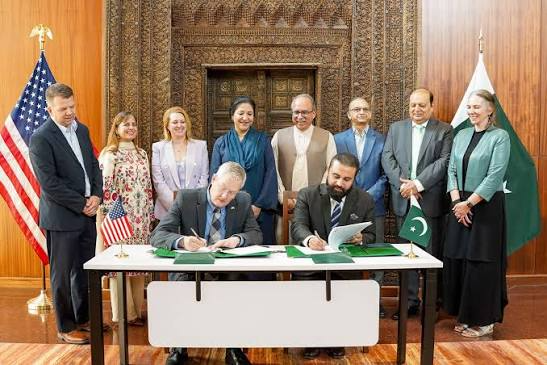
We sat with the news on August 18, 2026, the way many families across South Asia likely did, with a mixture of cautious hope and lingering questions. Officials from across the region met this week to discuss academic exchange programs and student safety protocols, framing the conversation against a backdrop of shifting political relationships that have made cross border education feel, at times, like a moving target. For students who dream of studying outside their home country, and for parents who worry about their children’s wellbeing thousands of miles away, this round of talks carries real weight.
A Region Where Education Has Always Crossed Borders
South Asia has a long, layered history of students traveling between countries for university degrees, research fellowships, and vocational training. Long before visa regimes and formal bilateral agreements existed, scholars moved along trade routes and through shared linguistic and cultural ties. That history has not disappeared, but it has become more complicated. Political tensions, security concerns, and inconsistent visa policies have periodically slowed the flow of students, leaving many young people caught between ambition and uncertainty. This week’s discussions signal that policymakers recognize education as a bridge worth protecting, even when broader diplomatic relations remain strained.
Why Now
Timing matters in diplomacy, and this round of talks arrives at a moment when many South Asian governments are reassessing how education fits into their foreign policy priorities. Universities in the region and beyond have reported growing interest from students seeking opportunities that were once out of reach due to logistical or political barriers. Organizations that track global education trends, including the Institute of International Education, have noted that student mobility often expands fastest when governments actively coordinate on safety, credential recognition, and visa simplification rather than leaving these matters to individual institutions.
Student Safety Takes Center Stage
Perhaps the most emotionally resonant part of this week’s talks was the focus on student safety. Anyone who has sent a child abroad for the first time knows the particular kind of worry that settles in, the late night phone calls, the checking of news alerts, the quiet relief when a message finally arrives saying everything is fine. Diplomats reportedly discussed updated protocols for emergency communication, campus security coordination, and consular support for students living in another country. These are not abstract policy points. They translate directly into whether a student stranded during a regional crisis can reach help quickly, or whether a family back home receives timely, accurate information instead of rumors.
What Improved Safety Measures Could Look Like
While specifics from closed door diplomatic sessions are rarely made fully public, similar past agreements in the region have typically included dedicated helplines for international students, clearer coordination between host country universities and home country embassies, and streamlined evacuation planning during periods of unrest. If this week’s talks produce even a fraction of those measures, it would mark meaningful progress for the tens of thousands of students who cross South Asian borders each academic year for higher education.
Academic Exchange as a Quiet Form of Diplomacy
There is something genuinely moving about watching two nations, otherwise separated by political friction, agree that their young people deserve access to each other’s classrooms, laboratories, and libraries. Academic exchange has often served as a quieter, steadier form of diplomacy than formal treaties or trade deals. A student who spends four years studying engineering in a neighboring country returns home not just with a degree, but with friendships, perspectives, and professional networks that outlast any single political administration.
Universities themselves have pushed for this kind of cooperation for years, arguing that restricting student mobility ultimately harms both sending and receiving countries. Research institutions lose access to talented minds, and students lose opportunities to specialize in fields underrepresented at home. The renewed emphasis on academic exchange in these talks suggests that policymakers may finally be listening to that argument with fresh urgency.
The Human Stories Behind the Policy
Behind every clause in a bilateral education agreement is a student like the one we imagine sitting in a crowded classroom, notebook open, trying to absorb a lecture delivered in an unfamiliar accent while quietly missing home cooked meals and a mother’s voice on the phone. It is easy for policy discussions to feel distant from that reality, but the two are inseparable. When governments simplify visa renewals or agree to recognize each other’s academic credentials, they are removing small but significant obstacles from a young person’s path toward a better future.
What Comes Next
Diplomatic talks rarely produce immediate, sweeping change, and this round is unlikely to be an exception. What matters now is follow through. Will the safety protocols discussed this week translate into functioning helplines and coordinated embassy support within the next academic year. Will credential recognition agreements actually shorten the bureaucratic delays that currently frustrate students applying to graduate programs abroad. Global bodies such as UNESCO’s education division have long advocated for exactly this kind of follow through, noting that mobility frameworks only succeed when paired with consistent monitoring and genuine political will.
For the students themselves, the practical advice remains steady regardless of how diplomatic winds shift. Staying informed through official university channels, registering with home country embassies upon arrival abroad, and maintaining open communication with family remain the most reliable safeguards available, even as governments work out the finer points of policy.
A Cautiously Hopeful Outlook
We do not want to overstate what a single round of bilateral talks can accomplish. Geopolitical relationships in South Asia remain complex, shaped by histories that stretch back generations and are not easily resolved through education policy alone. Yet there is something quietly encouraging about diplomats choosing, even amid broader tension, to protect the pathways that allow young people to learn beyond their own borders. Education has a way of outlasting political cycles, and if these talks lead to even modest improvements in student safety and academic access, they will have served a purpose far larger than the meeting rooms in which they took place.
As families continue to weigh the opportunities and risks of sending their children abroad, we will be watching closely for concrete follow up measures, because for the students at the center of this story, policy details are never just paperwork. They are the difference between a dream deferred and a future within reach.