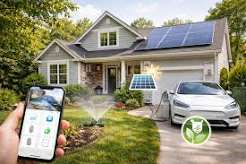
Energy efficient home improvements are gaining momentum across major European and North American cities as households look for practical ways to reduce seasonal utility costs. From smart thermostats and automated heating controls to insulation upgrades and connected energy monitoring systems, homeowners are increasingly turning ordinary properties into more efficient homes. The trend reflects a simple pressure felt at kitchen tables everywhere: when electricity and heating bills rise, people want more control over where their money goes.
Households Are Taking Energy Efficiency Into Their Own Hands
The latest rise in sustainable home upgrades shows that energy efficiency is no longer limited to large construction projects or expensive renovations. Many homeowners are starting with relatively manageable changes that can be completed without rebuilding an entire property.
DIY insulation improvements, window sealing, programmable thermostats, LED lighting, smart plugs, energy monitors, and automated heating schedules are among the measures gaining attention. Individually, these changes may appear modest. Together, however, they can reduce unnecessary energy consumption and give households a clearer picture of how electricity and heating are being used throughout the day.
We are seeing a particularly practical form of sustainability emerge. Homeowners are not necessarily making changes because they want the latest technology. Many are responding to a very direct financial calculation. If a device or retrofit can reduce wasted energy and eventually pay for itself through lower utility bills, the decision becomes easier to justify.
Smart Energy Management Is Becoming a Household Tool
One of the biggest changes is the growing use of smart home energy management systems. These systems connect devices around a property and provide homeowners with information about consumption patterns. Depending on the setup, residents can monitor electricity use, adjust heating and cooling schedules, and automate appliances according to household routines.
A smart thermostat, for example, can reduce heating or cooling when a home is empty and restore a comfortable temperature before residents return. Smart plugs can prevent certain appliances from consuming electricity unnecessarily. Energy monitoring devices can show when consumption rises, helping households identify equipment or habits that may be driving higher bills.
The appeal is partly psychological. A traditional utility bill tells a homeowner how much energy was consumed over a billing period. A connected energy monitor can provide a much more immediate picture. Seeing consumption change after adjusting a heating schedule can make energy efficiency feel tangible rather than abstract.
Small Changes Can Add Up
Not every household needs an expensive smart home system. A practical energy saving strategy can begin with a basic audit of the property and a few targeted improvements.
- Seal gaps around doors and windows where heated or cooled air escapes.
- Replace older lighting with efficient LED bulbs.
- Use programmable or smart thermostats to control heating and cooling schedules.
- Monitor major appliances to identify unusually high electricity consumption.
- Improve insulation where the building structure allows it.
- Reduce standby electricity use with appropriate smart plugs or power controls.
The most effective combination will vary by building age, climate, household size, energy prices, and existing equipment. A homeowner in a cold European city may gain more from insulation and heating controls, while someone in a warmer North American metropolitan area may see greater value from efficient cooling management.
Seasonal Utility Spikes Are Driving Interest
The timing of the trend is significant because household energy consumption can change sharply with the seasons. During cold periods, heating systems can become one of the largest sources of household energy demand. During hot periods, air conditioning can create similar pressure on electricity consumption.
That makes seasonal preparation particularly important. A homeowner who waits until the first extreme weather arrives may have fewer opportunities to identify inefficiencies or complete improvements at a comfortable pace.
Smart controls can help households respond to these patterns. Instead of heating or cooling an empty home at the same level throughout the day, automated systems can adjust settings according to occupancy and schedules. The objective is not simply to consume less energy. It is to avoid paying for energy that provides little practical benefit.
European Cities Are Paying Attention to Building Efficiency
Urban housing across Europe presents a particularly important opportunity for energy efficiency improvements. Many cities contain older residential buildings with aging windows, insulation challenges, and heating systems that were installed long before modern efficiency standards became common.
For residents of older apartments and houses, the challenge can be more complicated than purchasing a smart device. Building ownership arrangements, landlord approval, heritage restrictions, and shared heating systems can limit what an individual household can change.
Even so, residents can often begin with measures that do not require major structural work. Smart radiator controls, efficient lighting, window treatments, draft reduction, and consumption monitoring can provide useful improvements where larger renovations are not immediately possible.
The broader European policy environment also continues to focus heavily on building energy performance. The European Commission’s information on energy performance in buildings provides a useful reference for understanding the wider push toward more efficient residential and commercial properties.
North American Homeowners Are Taking a Similar Approach
Across North American metropolitan areas, homeowners are also examining ways to make existing properties more efficient. The motivations differ from city to city, but utility costs, extreme weather, home comfort, and interest in household technology are common factors.
Older homes can present significant opportunities. Drafty windows, insufficient attic insulation, inefficient heating equipment, and poorly controlled cooling systems can all contribute to unnecessary energy use. Modern homeowners increasingly have access to inexpensive sensors and connected devices that can reveal these problems without requiring sophisticated technical knowledge.
For people living in apartments or rental properties, options can be more limited. Portable energy monitors, efficient lighting, smart plugs, and certain thermostat solutions may provide alternatives where structural renovations are not permitted.
The Financial Case May Matter More Than the Environmental Message
Environmental concerns remain part of the conversation, but household economics are often the strongest immediate motivation. A family facing a large winter heating bill may be more interested in reducing monthly expenses than in discussing long term emissions targets.
That does not make the environmental benefits irrelevant. When many households reduce unnecessary energy consumption, the combined effect can be meaningful. Energy efficiency can therefore connect individual financial decisions with broader environmental objectives.
We should also recognize the importance of affordability. Smart home technology can become counterproductive if homeowners purchase expensive devices that provide little practical savings. The best upgrades are not necessarily the most sophisticated ones. A relatively inexpensive improvement that addresses a genuine source of energy waste can be more valuable than a costly collection of connected gadgets.
Smart Technology Works Best When It Solves a Real Problem
There is a temptation to treat every connected household device as an energy solution. That approach can lead to unnecessary spending and disappointing results. A smart device is useful when it changes behavior or improves control over a meaningful source of consumption.
For example, an energy monitor can be valuable when it helps a household discover that a particular appliance consumes far more electricity than expected. A smart thermostat can be worthwhile when a household has predictable schedules and significant heating or cooling demand.
By contrast, purchasing several connected devices without examining actual energy consumption may provide little benefit. The technology should follow the household’s needs rather than the other way around.
Homeowners Need to Think About Safety and Compatibility
DIY energy improvements can be accessible, but homeowners should distinguish between simple household upgrades and work that requires professional expertise. Installing an LED bulb or applying appropriate weather sealing is very different from modifying electrical wiring, heating equipment, gas systems, or major building structures.
Before purchasing equipment, residents should check whether it is compatible with their home’s existing systems. Smart thermostats, for example, may require specific wiring or heating configurations. Energy monitoring equipment also needs to be installed correctly if it connects directly to electrical systems.
The U.S. Department of Energy’s Energy Saver resources offer practical guidance on home energy efficiency, heating, cooling, insulation, appliances, and other household energy decisions.
Rental Housing Could Become an Important Part of the Trend
Home ownership is not a requirement for participating in energy efficiency improvements. Renters are increasingly looking for solutions that can move with them from one property to another.
Portable energy monitors, efficient lamps, smart plugs, thermal curtains, draft reduction products, and certain non permanent controls can help renters improve comfort and manage consumption without making structural changes.
Landlords also have an incentive to pay attention. More efficient buildings can be more comfortable for residents and potentially less expensive to operate. In competitive rental markets, energy performance may become an increasingly visible feature when people compare properties.
The Next Stage Could Connect Homes With the Wider Energy System
The growth of household energy management may eventually extend beyond individual homes. As smart meters, home batteries, solar systems, electric vehicles, heat pumps, and connected appliances become more common, households could have greater control over when they consume and store electricity.
That creates the possibility of homes responding more intelligently to electricity demand. Appliances could operate during suitable periods, batteries could store available energy, and heating or cooling systems could adjust according to household requirements and energy conditions.
Such systems will require careful attention to privacy, cybersecurity, interoperability, and consumer protections. A home filled with connected devices creates a larger digital footprint, and residents need confidence that information about their household routines and energy consumption is handled responsibly.
A Practical Shift Toward Smarter, More Efficient Homes
The growing adoption of sustainable home upgrades reflects a broader change in how people think about residential energy. Efficiency is becoming less about one dramatic renovation and more about a series of decisions that make a property easier to manage.
For some households, the starting point may be sealing a drafty window. For others, it may be installing a smart thermostat or examining an energy consumption report. The most useful strategy is the one that identifies an actual source of waste and addresses it at a reasonable cost.
We expect this practical approach to remain important as cities face changing weather patterns, household budget pressures, and rising expectations for efficient buildings. Smart home technology will not solve every energy problem, and no single device can make an inefficient building efficient overnight. But when thoughtful technology is combined with sound building improvements and informed household habits, the result can be meaningful.
The strongest trend is therefore not simply the popularity of smart devices. It is the growing desire among urban households to understand their energy use and take greater control of it. As that habit spreads, the modern home may become not only more connected, but also more deliberate about when, where, and why it consumes energy.