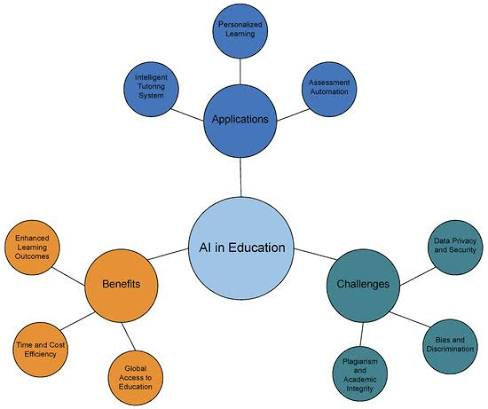
Universities around the world are moving toward a more coordinated approach to artificial intelligence in undergraduate education, as global university consortia publish new international standards for the ethical use of AI assisted coursework and policy enforcement. The development marks a significant change in how colleges are preparing students for classrooms where generative AI can influence research, writing, coding, assessment, and academic collaboration.
Higher Education Is Moving Beyond Informal AI Policies
For many universities, the arrival of generative AI initially produced a confusing mixture of excitement and concern. Students could suddenly use powerful tools to summarize complex material, generate ideas, explain difficult concepts, translate text, write computer code, and assist with research. At the same time, professors faced difficult questions about plagiarism, authorship, assessment integrity, privacy, and the boundaries between legitimate assistance and academic misconduct.
The new international standards represent an effort to bring greater consistency to those decisions. Rather than leaving individual instructors to determine acceptable AI use on their own, universities are increasingly developing institution wide frameworks that explain when AI tools may be used, how students should disclose their use, and where automated assistance crosses an academic integrity boundary.
We see this as a practical response to a problem that has become impossible for higher education to ignore. Banning AI completely is difficult to enforce and may prevent students from developing skills they will eventually need in professional workplaces. Allowing unrestricted use creates a different problem because universities still need to determine whether submitted work represents the student’s own knowledge and reasoning.
New Standards Focus on Ethical AI Assisted Coursework
The emerging frameworks place ethics at the center of AI integration. That means universities are not simply asking whether a student used an AI system. They are asking how the system was used, what responsibility remained with the student, and whether the resulting work accurately reflects the student’s learning.
A student who uses an AI assistant to brainstorm potential research questions may be engaging with technology in a fundamentally different way from a student who submits an automatically generated essay without reviewing or verifying it. Similarly, using an AI tool to identify programming errors can support learning, while relying on generated code without understanding how it works may undermine the educational purpose of a programming course.
This distinction is likely to become increasingly important as institutions refine their policies. The focus is shifting from simple detection toward responsible use, transparency, verification, and demonstrated understanding.
What Students May Be Expected to Do
Under emerging university policies, students may increasingly be asked to disclose meaningful use of AI systems when completing assignments. Depending on the institution and course, disclosure could involve identifying the tool used, describing how it contributed to the work, or retaining records of important interactions with an AI system.
Students may also be expected to verify AI generated information independently. This is particularly important because generative systems can produce confident but inaccurate answers. A polished paragraph or convincing citation is not necessarily evidence that the underlying information is correct.
- Check factual claims against reliable academic sources.
- Understand and be able to explain submitted work.
- Follow course specific rules regarding AI assistance.
- Disclose AI use when institutional or instructor policy requires it.
Assessment Methods May Change Alongside AI Policies
AI integration is also forcing universities to reconsider how they measure learning. Traditional take home essays and unsupervised written assignments can be difficult to evaluate when students have unrestricted access to generative systems.
That does not mean universities must abandon essays or independent research. Instead, instructors may increasingly combine written assignments with oral examinations, classroom discussions, project presentations, practical demonstrations, supervised assessments, and reflective explanations of how a student reached a conclusion.
We believe this could ultimately produce a healthier relationship between technology and education. When students know they may need to explain their reasoning in person, the incentive shifts away from simply obtaining a finished answer. The educational goal becomes demonstrating comprehension, judgment, and independent thought.
Professors Face a New Set of Responsibilities
The policy changes are not only about students. Faculty members are being asked to rethink course design and communicate expectations with much greater precision.
A professor who tells students not to use AI without explaining what that means can create unnecessary confusion. Does the rule prohibit grammar assistance? Does it prohibit translation? Can students use AI to generate practice questions? Is coding assistance acceptable during homework but prohibited during examinations?
Clear policies can answer these questions before misunderstandings develop. Universities may also need to provide faculty training so instructors understand both the capabilities and limitations of current AI systems.
The human side of this transition should not be overlooked. Many professors entered higher education when written assignments were straightforward evidence of individual effort. Now they must adapt assessment practices while continuing to support students who are themselves learning how to navigate unfamiliar technology.
International Standards Could Reduce Confusion Across Borders
The international character of the new frameworks is particularly significant. Students increasingly move between countries through exchange programs, international degrees, online courses, and collaborative research. Different definitions of acceptable AI use can create serious confusion when academic work crosses institutional boundaries.
A student may be permitted to use an AI assistant for brainstorming at one university but face disciplinary action for the same practice at another institution. Internationally aligned principles could provide a clearer baseline while still allowing universities to establish additional rules according to their academic traditions and legal requirements.
Organizations such as the UNESCO AI and education program have also contributed to broader discussions about responsible artificial intelligence use in education, including questions of inclusion, ethics, governance, and human oversight.
Privacy Is Becoming a Major Part of the Conversation
AI assisted coursework also raises privacy questions that students and universities cannot afford to overlook. When students paste essays, research notes, personal information, unpublished research, or other sensitive material into an external AI service, that information may be processed outside the university’s own systems.
Universities therefore have to consider which AI platforms can be used for coursework and what protections are available for student data. Institutional policies may need to explain whether students can upload personal information, confidential research material, interview transcripts, or proprietary project information into an AI system.
Privacy rules are particularly important for students conducting research involving human participants. An AI tool should not become an accidental destination for information that researchers are legally or ethically required to protect.
Academic Integrity Is Being Redefined
The arrival of generative AI does not eliminate the principle of academic integrity. Instead, it is forcing universities to define that principle in a more precise way.
Academic integrity has traditionally focused on plagiarism, unauthorized collaboration, fabrication, and misrepresentation of another person’s work. AI introduces another layer because a student may produce original looking text without personally generating every sentence.
The central question becomes whether the student has demonstrated the learning that an assignment was designed to measure. If the purpose of an essay is to assess analytical reasoning, submitting AI generated reasoning without meaningful intellectual contribution defeats that purpose. If the assignment is specifically designed to teach students how to evaluate and improve AI output, however, using such a tool may be entirely appropriate.
This distinction gives universities an opportunity to move toward more thoughtful academic policies rather than relying entirely on automated AI detection systems.
AI Detection Alone Cannot Solve the Problem
Universities are likely to remain cautious about using automated detection as the primary method for identifying unauthorized AI use. AI generated text can be difficult to distinguish reliably from human writing, particularly after students revise or combine generated material with their own work.
A false accusation can have serious consequences for a student. It can damage trust between learners and faculty and create an environment in which students feel that technology is being used to monitor them rather than support their education.
A stronger approach is likely to combine clear expectations with assessment methods that allow instructors to observe genuine learning. Discussions, drafts, research notes, presentations, practical demonstrations, and reflective explanations can provide valuable evidence that a student understands the submitted work.
Universities Are Preparing Students for AI Integrated Careers
There is another reason institutions are moving toward responsible AI integration rather than simply trying to eliminate these tools. Graduates will enter workplaces where AI assisted research, programming, writing, analysis, customer service, design, and administrative tasks are increasingly common.
A university that teaches students only to avoid AI may leave them unprepared for professional environments. A university that teaches students to use AI without critical judgment creates a different risk.
The stronger educational goal is AI literacy. Students need to know what these systems can do, where they fail, how to verify their outputs, how to protect confidential information, and when human judgment must take priority.
That means AI education may eventually become relevant across disciplines. Business students may evaluate generated market analysis. Engineering students may inspect AI assisted calculations and code. Humanities students may examine questions of authorship and interpretation. Health related programs may focus heavily on evidence, privacy, and professional responsibility.
What the New Frameworks Could Mean for the Future of Degrees
The adoption of international AI standards could gradually change the structure of undergraduate education itself. Course syllabi may include dedicated AI policies. Assignment instructions may specify acceptable levels of assistance. Universities may introduce AI literacy modules for first year students, while advanced courses could teach discipline specific applications and risks.
We may also see greater attention given to process rather than final output. Instead of judging only the finished essay, instructors could evaluate research development, source selection, revisions, reasoning, and reflection. That approach has value even without AI because it gives students a clearer picture of how strong academic work is developed.
A More Human Approach to Artificial Intelligence in Education
The most meaningful test of these new standards will not be whether universities can write perfect AI policies. It will be whether those policies help students become more capable thinkers.
A university classroom should remain a place where students can struggle with difficult questions, make mistakes, revise their ideas, and discover answers through sustained effort. AI can assist with parts of that process, but it should not remove the intellectual experience that education is meant to provide.
The new international frameworks signal that higher education is moving toward a middle ground. Universities are recognizing that artificial intelligence is too significant to ignore, yet too powerful to adopt without rules. The challenge now is to create policies that protect academic integrity while giving students the skills to use emerging technology responsibly.
For students entering university in the coming years, AI literacy may become as ordinary as research skills or digital literacy. The strongest graduates will not necessarily be those who use AI most frequently. They will be those who know when to use it, when to question it, when to verify it, and when their own judgment matters more than any generated answer.