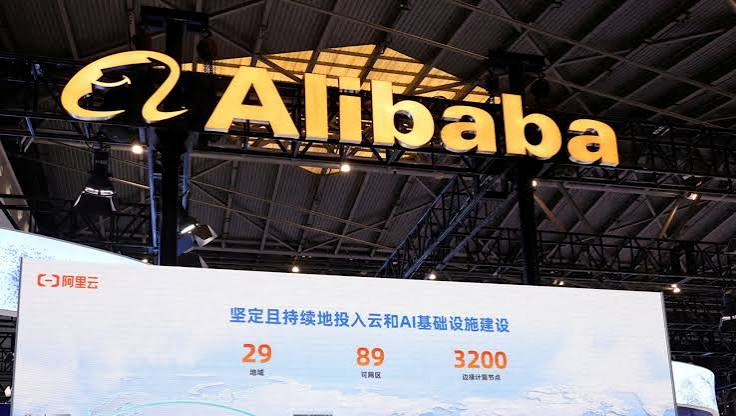
Something shifted in the world of global technology finance this week, and it happened quietly, on a Sunday, the kind of day most corporate boardrooms sit empty. Alibaba Group, the Hangzhou based company that reshaped how the world shops online, announced it would raise roughly $10.2 billion through a new share placement in Hong Kong. The money has one destination: artificial intelligence. Not a slice of it, not a portion set aside for experimentation, but the entire net proceeds, funneled directly into what the company calls its full stack AI capabilities. For anyone who has watched Alibaba’s slow, sometimes bumpy transformation from an e commerce marketplace into a cloud and AI powerhouse, this moment feels less like a surprise and more like a culmination.
What Alibaba Actually Announced
On August 23, 2026, Alibaba confirmed plans to sell 710 million newly issued ordinary shares at HK$112.70 apiece, a discount of about 3.6 percent to the stock’s most recent closing price. The offering, worth HK$80 billion, marks the largest primary follow on share sale ever conducted by a company listed in Hong Kong, and ranks as the third largest such offering anywhere in the world this year, trailing only recent capital raises by Alphabet and Intel. According to the company’s own regulatory filing, the placement is expected to close on August 26, 2026, pending customary conditions.
What stands out is not just the size of the raise but the singular focus behind it. Alibaba stated plainly that it intends to use one hundred percent of the net proceeds to expand and strengthen its AI infrastructure, a category that spans everything from chips and data centers to the models that power its products. This is not a diversified spending plan. It is a concentrated wager that computing power and model capability will determine who wins the next decade of technology.
A Company That Rarely Asks the Market for Money
To understand why this raise matters, it helps to look backward. Alibaba had not returned to the equity markets to raise fresh capital in roughly seven years. During that stretch, the company weathered slowing e commerce growth, a wave of regulatory scrutiny in China, and a gradual pivot toward cloud computing as its primary growth engine. Instead of issuing new shares during that period, Alibaba often did the opposite, buying back its own stock to reassure investors. The decision to reopen its access to equity capital now, and to do so at this scale, sends a signal that leadership views this AI moment as different in kind, not just in degree, from previous cycles of investment.
There is a certain honesty in that choice. Raising money by issuing new shares dilutes existing shareholders, and markets typically punish that kind of move, at least in the short term. Alibaba’s American listed shares fell roughly 3.4 percent in premarket trading following the news, a reaction that reflects investor unease about near term profitability even as many analysts continue to view the long term AI strategy favorably.
The Financial Backdrop: Profits Down, Spending Up
The timing of this raise is not accidental. It arrives just days after Alibaba reported a steep 75 percent drop in quarterly net profit, a figure that startled some observers until they looked at the cause. Capital expenditure jumped 75 percent year over year to 67.7 billion yuan, roughly $9.5 billion, as the company poured resources into AI infrastructure. Quarterly revenue still grew about 9 percent year on year to nearly $40 billion, driven in part by demand tied to Alibaba’s open source Qwen family of AI models, a product line that has earned genuine attention from developers and researchers well beyond China’s borders.
That tension, rising revenue alongside collapsing profit, tells a familiar story in the current AI investment cycle. Companies across the industry are choosing to sacrifice near term earnings in exchange for infrastructure they believe will define competitive advantage for years to come. Alibaba is far from alone in this posture. Its domestic rival Tencent saw its own capital expenditure rise 65 percent quarter over quarter to 52.8 billion yuan as it continues building out computing capacity for its AI ambitions. Meanwhile, in the United States, the four major hyperscalers, Microsoft, Amazon, Alphabet, and Meta, are together expected to spend approximately $725 billion in capital expenditures during 2026, much of it tied to AI data centers, custom chips, and cloud infrastructure. Alibaba’s move situates the company squarely within this global arms race for computing capacity.
Who Is Financing the Deal
The placement drew strong interest from institutional buyers, including long term investors and sovereign wealth funds, and the offering was reportedly increased in size after demand outpaced initial expectations. Morgan Stanley, HSBC, UBS, and CICC are serving as joint bookrunners on the transaction. Because the shares are being sold to non US persons outside the United States as an offshore transaction, American retail investors are not eligible to participate directly in the placement itself, though existing US listed shareholders remain exposed to the dilution and strategic direction it represents.
What This Means for Alibaba’s Broader AI Ambitions
This raise builds on a commitment Alibaba made roughly a year earlier, when the company pledged to invest at least 380 billion yuan, close to $53 billion, into cloud computing and AI infrastructure over a three year period. The new $10.2 billion injection appears designed to accelerate that plan rather than replace it, giving Alibaba more room to compete for the scarce resources that define this era of AI development: advanced chips, data center capacity, and the engineering talent capable of turning raw computing power into usable products.
For everyday users of Alibaba’s platforms, from small business owners relying on its cloud services to developers experimenting with its open source models, this spending push could translate into faster, more capable tools over the coming years. For shareholders, the calculation is more complicated, weighing near term dilution and profit pressure against the possibility that Alibaba secures a durable position in a technology race that shows no signs of slowing.
Equity analysts covering the company have offered a measured but generally constructive view. One senior advisor speaking to financial media noted that Alibaba is well positioned to pursue this growth given its combination of a strong cloud computing arm and a capable AI model lineup, while acknowledging that profits could remain under pressure in the near term even as capital spending continues to climb.
A Bigger Story Than One Company
What makes this moment worth pausing on is not simply the dollar figure, impressive as it is. It is what the raise represents about how seriously the world’s largest technology companies now treat artificial intelligence infrastructure, not as a side project or a marketing narrative, but as the central battleground for the next phase of growth. Alibaba spent years rebuilding investor trust after a period of regulatory turbulence and slower expansion. Choosing to reenter the equity markets now, at this scale, and for this singular purpose, suggests the company views the current AI buildout as too important to fund through conservative, incremental means.
Whether that bet pays off will depend on factors well beyond any single earnings report, including how quickly AI infrastructure translates into products people actually pay for, and how global competition for chips and computing capacity evolves over the next several years. For now, Alibaba has placed a very large, very public marker on the table, and the technology world, along with its shareholders, will be watching closely to see how it plays out.