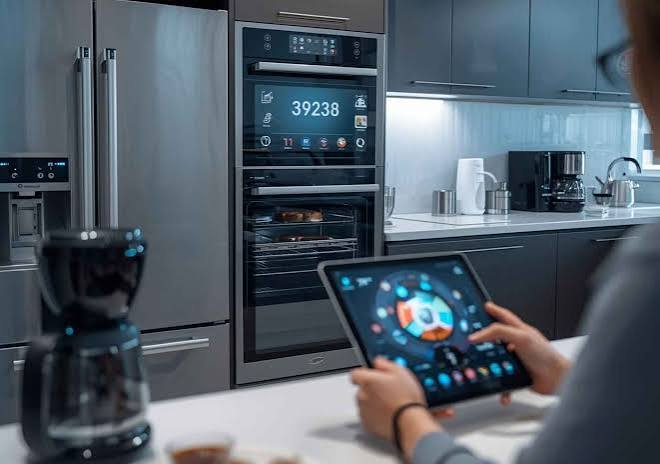
Smart kitchen appliances are entering a new phase of international growth as trade in subsidies and energy efficiency incentives encourage households and businesses to replace older equipment with connected, lower consumption alternatives. Commercial reports highlighted the rapid rise on August 23, 2026, pointing to a market increasingly shaped not only by convenience and technology, but also by household energy costs, environmental concerns, and government efforts to encourage more efficient consumption.
Why Smart Kitchen Appliances Are Gaining Momentum
The modern kitchen has become one of the most technology intensive areas of the home. Refrigerators can monitor temperatures, ovens can adjust cooking programs, dishwashers can optimize water use, and induction cooktops can deliver precise heat while reducing energy waste. Increasingly, these appliances can also communicate with smartphones and home energy systems.
For consumers, however, technology alone has not been enough to drive replacement decisions. Many households keep appliances for years because replacing a functioning refrigerator, oven, or dishwasher can be expensive. The recent growth in trade in programs changes that calculation by giving consumers a financial reason to retire older equipment earlier.
We are seeing a market where environmental policy and consumer economics are beginning to reinforce each other. A household that receives a trade in credit and expects lower electricity bills may find a new efficient appliance considerably easier to justify.
Trade In Programs Are Changing the Replacement Cycle
Traditional appliance replacement usually happens when a product breaks or becomes too expensive to repair. Trade in programs introduce another reason to upgrade. Consumers can exchange older equipment for a financial credit, discount, rebate, or other incentive when purchasing a newer model.
This approach can be particularly attractive when older appliances consume significantly more electricity than newer certified products. The consumer receives an immediate financial benefit while potentially reducing future operating expenses.
Retailers also have a strong incentive to participate. Trade in programs can generate additional sales, bring customers back into stores, and create opportunities to sell connected appliances and related services. Manufacturers benefit from increased demand while gaining access to older equipment that can potentially enter formal recycling channels.
Energy Efficiency Is Becoming a Purchasing Factor
Energy efficiency has moved from being a secondary specification to a meaningful purchasing consideration. Electricity prices vary widely between countries and households, but energy consumption remains a recurring operating expense throughout an appliance’s useful life.
A refrigerator operates continuously. A dishwasher may run several times each week. Ovens and cooktops can consume substantial amounts of energy during periods of heavy use. Even relatively small improvements in efficiency can therefore become meaningful when measured over several years.
The United States Department of Energy’s Energy Saver resources provide consumers with practical information about household energy efficiency and appliance use.
For buyers comparing similar products, the purchase price is only part of the calculation. Expected electricity consumption, maintenance costs, product lifespan, repairability, warranty coverage, and available incentives can all affect the total cost of ownership.
Smart Features Are Becoming More Practical
Connected kitchen appliances were once marketed primarily as luxury technology. Today, some features have a more practical purpose. Remote monitoring can alert users when a refrigerator door has been left open. Smart ovens can provide notifications when cooking is complete. Energy management systems can help households understand when appliances are consuming electricity.
These features can become more useful when appliances communicate with broader home energy systems. A connected dishwasher, for example, could potentially operate during periods when electricity demand is lower, depending on the household’s energy provider and available technology.
However, consumers should distinguish useful automation from unnecessary complexity. A smart appliance is not automatically a better appliance. Buyers should consider whether connected functions genuinely improve convenience, energy management, or safety before paying more for them.
Environmental Benefits Depend on Responsible Replacement
Replacing an old appliance can reduce energy consumption, but the environmental equation is more complicated than simply purchasing a newer product. Manufacturing appliances requires raw materials, electricity, transportation, packaging, and industrial processing.
That means the environmental benefit of an upgrade depends partly on how efficiently the old appliance operates, how long the new product remains in service, and what happens to the retired equipment.
Proper recycling is particularly important. Refrigerators and cooling equipment can contain materials that require specialized handling. Metals, plastics, electronic components, and other materials can also be recovered from discarded appliances when recycling systems are properly managed.
The United States Environmental Protection Agency recycling guidance offers consumers information about responsible disposal and recycling practices for household products.
Retailers Are Becoming Part of the Recycling Chain
Trade in programs can make retailers an important link between consumers and recycling infrastructure. Instead of leaving an old appliance unused in a garage or sending it into an informal waste stream, customers can hand it over as part of a structured replacement program.
That creates a potentially valuable circular flow. A customer purchases a more efficient appliance, the retailer collects the old equipment, reusable materials are recovered where possible, and waste is directed toward appropriate treatment facilities.
The success of this model depends on logistics. Large appliances are expensive to transport and store, and recycling facilities need suitable capacity. A rapid increase in trade in activity could therefore create new demands on collection networks and processing centers.
Manufacturers Are Responding to a More Demanding Market
Manufacturers are competing on more than appearance and basic functionality. Energy consumption, connectivity, noise levels, water use, durability, repair options, and software support are becoming increasingly relevant to buyers.
Connected appliances also create a continuing relationship between manufacturers and customers. Software updates can add functionality, improve security, or change how an appliance interacts with other devices. This creates new opportunities but also raises questions about how long manufacturers will support older connected products.
A refrigerator that physically works for fifteen years may still face digital limitations if its software becomes unsupported. Consumers should therefore consider the expected duration of software support when buying expensive connected equipment.
Households Need to Look Beyond the Initial Discount
A large trade in credit can make a purchase look attractive, but consumers should calculate the complete financial picture before replacing an appliance.
Questions worth asking before an appliance upgrade
- How much electricity does the existing appliance consume each year?
- What is the expected annual energy use of the replacement?
- How much is the trade in credit after all conditions are applied?
- Are there government rebates or energy efficiency incentives available?
- How long is the warranty and how much will repairs cost after it expires?
- How long will software and security updates remain available?
- Will the retailer recycle the old appliance responsibly?
These questions help separate genuine long term savings from discounts that mainly encourage faster purchasing.
Commercial Kitchens Could See Significant Benefits
The trend extends beyond residential households. Restaurants, hotels, hospitals, schools, catering businesses, and institutional kitchens operate appliances for long periods and can therefore have substantial energy expenses.
For these organizations, efficiency improvements can become a direct operating cost issue. A commercial dishwasher or refrigeration system that operates continuously may create much greater energy savings than a similar improvement in a lightly used household appliance.
Businesses also have additional reasons to modernize. Smart monitoring can help maintenance teams identify unusual temperatures, excessive energy consumption, or equipment problems before a complete failure occurs.
Data Privacy Is an Increasing Consideration
Smart appliances can collect information about how and when they are used. A connected refrigerator may record temperature information, while other devices can maintain usage histories or communicate with cloud services.
Consumers should therefore examine privacy policies before connecting kitchen appliances to home networks. A device that provides remote control may also create another potential entry point into a household’s digital environment.
Strong passwords, current software, secure home networks, and manufacturer support are increasingly important when purchasing connected appliances. Convenience should not come at the cost of basic digital security.
Global Markets Will Not Move at the Same Speed
The smart appliance trade in boom is unlikely to look identical in every country. Wealth levels, electricity prices, government incentives, housing conditions, internet access, appliance ownership patterns, and recycling infrastructure differ considerably between markets.
In wealthier markets, consumers may prioritize connectivity and premium features. In other regions, energy savings, affordability, durability, and repairability may matter much more than advanced software.
This difference could encourage manufacturers to develop broader product ranges rather than assuming that one smart kitchen model will satisfy consumers everywhere.
The Risk of Creating More Electronic Waste
A rapid replacement cycle carries an environmental risk. If consumers replace appliances too frequently, the amount of discarded equipment could rise even when newer products are more efficient.
The strongest environmental outcome comes when efficiency improvements are combined with responsible product lifecycles. Manufacturers can contribute through durable designs, repair support, recyclable materials, and collection programs. Governments can help by establishing clear recycling requirements and encouraging responsible disposal.
Consumers also have a role. A functioning appliance does not necessarily need immediate replacement simply because a newer model has more features. The decision should consider energy use, repairability, remaining lifespan, and the environmental cost of manufacturing a replacement.
What the Trade In Boom Means for the Appliance Industry
The rapid growth of trade in programs suggests that the appliance market is moving toward a model in which purchasing, energy efficiency, connectivity, and recycling are increasingly connected.
Manufacturers can use incentives to encourage customers to replace inefficient products. Retailers can combine sales with collection services. Governments can support efficient appliances through rebates and standards. Consumers can reduce operating costs while gaining access to newer technology.
That combination could make the transition toward more efficient kitchens faster than relying on consumers to replace appliances only when they fail.
A More Efficient Kitchen Still Requires Smart Consumer Choices
The rise of smart kitchen appliances offers a promising opportunity to reduce household energy consumption while bringing useful technology into everyday life. Yet the success of the market should not be measured simply by the number of connected refrigerators, ovens, and dishwashers sold.
The more meaningful question is whether consumers receive genuine value from replacing older equipment and whether the environmental benefits continue throughout the product lifecycle. Effective trade in programs should make responsible recycling easier, while energy incentives should encourage products that deliver measurable efficiency improvements.
We are entering a period in which the kitchen appliance is becoming part household machine, part energy management device, and part connected technology product. For consumers, that creates more choices but also more responsibility to compare long term costs rather than focusing only on attractive discounts.
If manufacturers, retailers, policymakers, and consumers align their interests, the current trade in boom could become more than a temporary sales trend. It could help establish a replacement system in which older equipment is collected responsibly, newer appliances consume less energy, and smart technology serves a practical purpose inside homes and commercial kitchens around the world.