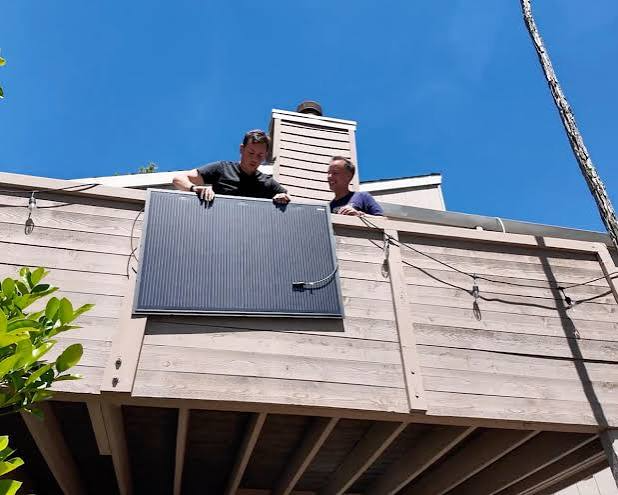
Great Britain has approved 800 watt plug in solar kits designed for balconies and other suitable locations, opening a new route for renters and homeowners to generate electricity without installing a conventional rooftop solar system. The development could make small scale solar power considerably more accessible, particularly for people living in apartments or rented properties where permanent panels may be difficult to install.
Why Plug In Solar Is Attracting So Much Attention
Traditional rooftop solar often requires a suitable roof, professional installation, structural checks, electrical work, and permission from a property owner or building authority. Those requirements can make solar power difficult for renters and apartment residents, even when they have a strong interest in reducing household energy costs.
Plug in solar systems approach the problem differently. A compact panel can be positioned on a balcony, terrace, garden structure, or another appropriate location and connected to the household electrical system through a standard outlet, subject to the applicable safety requirements.
For someone living in a rented apartment, that difference can be meaningful. A tenant may not be able to invest in a permanent rooftop installation, but a portable solar system could potentially move with them when they change homes.
How an 800 Watt Balcony Solar System Works
An 800 watt system refers to the maximum rated power output of the solar equipment under suitable conditions. Actual electricity production will vary throughout the day because solar panels do not produce their maximum rated output continuously.
Weather, season, orientation, shading, panel angle, and the amount of available sunlight all affect generation. A balcony facing the right direction with clear sunlight can perform very differently from one surrounded by tall buildings.
During daylight hours, the panels generate electricity that can be used by appliances operating inside the home. Depending on the system and local rules, excess electricity may interact with the wider electrical network under approved arrangements.
This makes the technology particularly interesting for households with daytime electricity consumption. Running a refrigerator, computer, router, lighting, or other appliances while the panels are producing power can allow more of the generated electricity to be consumed directly.
Could Balcony Solar Really Provide 20 Percent of Household Electricity?
The claim that an 800 watt plug in system can provide up to 20 percent of household electricity should be treated as a potential figure rather than a guaranteed result for every home. Household consumption varies enormously, and so does solar generation.
A small household with relatively modest electricity use and a well positioned balcony could obtain a meaningful share of its annual electricity from a compact solar installation. A larger household with high consumption may see a considerably smaller percentage.
The distinction between installed capacity and annual energy production is also important. An 800 watt system does not produce 800 watts every hour of every day. Solar generation rises when sunlight is strong and falls during cloudy periods, evenings, and winter conditions.
Factors that determine how much electricity a household can generate
- Balcony orientation and available sunlight
- Seasonal daylight hours
- Local weather conditions
- Shading from buildings, trees, and nearby structures
- Household electricity consumption patterns
- Panel positioning and installation quality
- Electrical system compatibility and safety controls
The Biggest Potential Winner Could Be Renters
Solar power has traditionally been easier for homeowners than renters. A homeowner can decide to install panels on a roof and potentially remain in the property long enough to benefit from the investment. A renter may face restrictions from a landlord or simply may not want to spend thousands of pounds improving a property they do not own.
Portable balcony solar changes that calculation. If the equipment can be legally and safely installed without permanent changes to the building, tenants may have a much lower barrier to entry.
That could be especially significant in densely populated British cities where apartment living is common and suitable roof space is limited. A balcony that previously served mainly as a place for plants, laundry, or a small table could become a modest source of renewable electricity.
Lower Installation Barriers Could Broaden Solar Adoption
Conventional solar installations can involve multiple steps before the first unit of electricity is generated. Plug in systems are designed around simplicity, although simplicity should not be confused with the absence of safety requirements.
Users still need to ensure that the equipment is approved for the intended application and that the electrical connection complies with applicable British requirements. Building rules, landlord agreements, balcony restrictions, and network requirements can also affect whether a particular installation is permitted.
The UK Department for Energy Security and Net Zero provides official information on British energy policy and renewable energy developments, making it a useful source for households researching changes to the energy system.
Safety Remains Central to Plug In Solar
The convenience of connecting solar equipment to a wall outlet naturally raises questions about electrical safety. Solar panels connected to a household circuit can interact with the home’s electrical system in ways that require proper protection and equipment designed specifically for the purpose.
Consumers should therefore avoid treating a balcony solar kit as an ordinary household appliance. The panel, inverter, wiring, mounting equipment, and electrical connection all need to be appropriate for the installation.
Balcony mounting also presents physical safety considerations. Panels must be securely positioned so that strong winds cannot dislodge them. The installation should not obstruct emergency exits, create hazards for people below, or interfere with building structures.
For households considering the technology, checking official guidance and using equipment from reputable manufacturers is far safer than assembling an improvised system from unrelated electrical components.
Solar Power Could Help Households Shift Daytime Electricity Use
The financial benefit of a small solar installation depends partly on when a household consumes electricity. Solar generation occurs during daylight, which means users can benefit most when electricity demand overlaps with production.
A household that runs appliances during the day may consume a larger proportion of its solar electricity directly. Someone who uses most of their electricity late at night may have less direct consumption and could require an approved storage or export arrangement to make fuller use of generation.
This makes household behavior relevant. Simple changes such as running certain appliances during sunny periods can increase the amount of generated electricity that is used within the property rather than wasted or exported.
Balcony Solar Is Not a Replacement for Every Rooftop System
It would be misleading to present an 800 watt balcony installation as equivalent to a large rooftop solar array. A conventional home solar system can contain considerably more panels and therefore generate substantially more electricity when conditions are suitable.
The strength of balcony solar lies elsewhere. Its appeal is accessibility, portability, and the possibility of generating renewable electricity where a conventional installation is impractical.
For some households, the choice may not be between a large rooftop system and a small balcony kit. The real choice may be between a small solar installation and no solar generation at all.
What This Could Mean for Britain’s Energy System
Millions of small installations can become significant when considered collectively. One balcony producing a modest amount of electricity may have little effect on the national grid. A large number of households generating power during daylight hours could have a more noticeable impact on local electricity demand.
Distributed generation can also change the relationship between consumers and the energy system. Instead of households being purely electricity customers, some can become small scale producers as well.
That shift creates new questions for electricity networks. Grid operators need systems capable of managing two way flows of electricity, monitoring local capacity, and maintaining stable voltage and frequency as more distributed generation connects to the network.
Potential Benefits Beyond Household Bills
Lower electricity costs are likely to be one of the main reasons people consider balcony solar, but the technology could have wider benefits. Greater use of renewable electricity can reduce reliance on fossil fuel generation over time, particularly when solar production coincides with periods of high daytime demand.
Small solar systems can also give households a more direct relationship with their electricity consumption. Seeing electricity being generated in real time can make energy use feel less abstract. A bright afternoon can become something a household notices not only through sunlight entering the room but also through the amount of power its panels are producing.
Questions Consumers Should Ask Before Buying
Anyone considering an 800 watt plug in solar kit should look beyond the headline power rating. The expected annual electricity generation, installation position, inverter specifications, warranty, electrical safety certification, mounting system, and rules affecting the property all deserve attention.
Renters should also check whether their tenancy agreement or landlord imposes restrictions. Apartment residents may need to consider building management policies, balcony loading limits, appearance requirements, and responsibilities for equipment attached to or positioned on communal structures.
The Office of Gas and Electricity Markets provides information about Britain’s electricity and energy market framework, including consumer related energy information and regulatory developments.
A New Option for People Shut Out of Traditional Solar
The approval of 800 watt plug in solar kits represents an important change in how small scale renewable energy can be approached in Britain. Solar power no longer has to mean a large permanent installation covering a residential roof.
For renters, apartment residents, and homeowners without suitable rooftops, a properly approved balcony system could offer a practical entry point into renewable electricity generation. The financial savings will vary from household to household, and the claim of generating up to 20 percent of household electricity should not be treated as a universal result.
Still, the underlying idea is compelling. A small piece of unused balcony space can potentially become a source of clean electricity without requiring a major building project.
We should expect the next stage of this market to focus on affordability, safety, installation standards, grid integration, and consumer awareness. If those areas develop responsibly, plug in solar could become an increasingly familiar part of Britain’s residential energy system.
The most significant change may ultimately be psychological as much as technological. For millions of people who once assumed solar power was something available only to homeowners with suitable roofs, an 800 watt balcony system offers a different possibility: generating at least some of their own electricity from the sunlight reaching the place where they live.