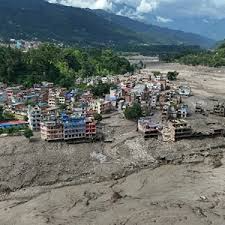
Severe flash flooding along the Nepal China border has disrupted international travel across major Himalayan routes, leaving hundreds of tourists stranded as floodwater, landslides, and damaged infrastructure complicate movement through remote mountain areas. The disaster has exposed how quickly extreme weather can overwhelm tourism networks in some of the world’s most spectacular travel destinations, where narrow roads, suspension bridges, mountain passes, and limited emergency access already make transportation challenging.
Flash Flooding Brings Himalayan Travel to a Sudden Halt
The affected region is known for dramatic landscapes, high altitude trekking routes, historic settlements, and access points connecting Nepal with China. During the tourism season, these routes carry travelers, guides, porters, local residents, traders, and supplies. When heavy rainfall triggers sudden flooding, the consequences can extend far beyond a temporary road closure.
For travelers caught in the affected areas, the disruption can be frightening. A journey that began with plans for mountain views, cultural visits, or trekking can quickly become a search for safe shelter, reliable communication, food, transportation, and information about when roads will reopen. In remote Himalayan communities, even a relatively short interruption can create serious logistical difficulties.
We should view the incident not simply as a tourism disruption but as a warning about the vulnerability of mountain infrastructure. Roads and bridges in these areas often operate between steep slopes and fast moving rivers. Heavy rainfall can change the landscape within hours, cutting off communities and leaving travelers dependent on emergency services that may themselves face difficult access conditions.
Why Himalayan Tourism Is Particularly Vulnerable to Floods
Mountain tourism depends heavily on infrastructure that has little room for error. A single road may provide the primary connection between a popular destination and a larger town. One bridge can determine whether buses, supply trucks, ambulances, and rescue vehicles can continue through a valley.
When flooding damages that connection, there may be no convenient alternative. Helicopter evacuation can be difficult because of weather and terrain, while rerouting by road can add many hours or even days to a journey.
The geography itself increases the danger. Steep slopes can accelerate water movement, while saturated ground can trigger landslides. Rivers can rise rapidly after intense rainfall, carrying rocks, trees, and debris into roads and settlements. A route that appears safe during one part of the day can become hazardous later when weather conditions change.
The infrastructure most at risk
Tourism in the Himalayan region relies on a broad network of physical systems, many of which can be damaged simultaneously during severe flooding:
- Mountain highways and narrow access roads
- Bridges crossing rivers and mountain streams
- Airports and helicopter landing areas affected by poor weather
- Hotels, guesthouses, and trekking lodges in exposed valleys
- Telecommunications infrastructure serving remote communities
- Water and electricity systems supporting tourist centers
The loss of several connections at once can turn a local weather event into a regional travel crisis.
Tourists Stranded Far From Major Cities Face Difficult Choices
Travelers stranded in remote areas face different challenges from people affected by flooding in major urban centers. In a large city, alternative transportation, hospitals, supermarkets, hotels, and communication services may remain available. In the mountains, those options can be separated by difficult terrain and long distances.
Tourists may also have limited knowledge of local geography. A route that appears close on a map may require hours of travel under normal conditions. After flooding, the same journey can become impossible. This makes local guidance particularly important during emergencies.
For international visitors, language barriers and unfamiliar emergency procedures can add another layer of stress. Travel operators, hotels, guides, embassies, local authorities, and transportation companies therefore have an important role in helping visitors understand what is happening and what options remain available.
Travel Operators May Face a Major Financial Impact
The immediate priority during a flood is safety, but prolonged disruption can create substantial economic consequences for the tourism sector. Nepal’s Himalayan destinations depend on visitors for income across hotels, restaurants, trekking companies, transportation services, shops, guides, porters, and local cultural attractions.
A major disruption during a busy travel period can result in cancellations, postponed expeditions, reduced hotel occupancy, and lost income for small businesses. The effect can continue after floodwater recedes because travelers may delay future bookings if they believe routes remain unreliable.
For small tourism operators, even a short season of reduced activity can be difficult. Many businesses operate with limited financial reserves and rely heavily on predictable visitor numbers. A natural disaster can therefore affect household incomes as well as commercial revenue.
Climate Risk Is Becoming a Tourism Planning Issue
Flooding has always been part of the natural risk profile of the Himalayan region, but tourism planners increasingly have to consider how changing weather patterns could affect infrastructure and travel reliability. More intense rainfall events can place additional pressure on roads, drainage systems, bridges, and settlements located near rivers.
The World Meteorological Organization provides extensive information on extreme weather, climate monitoring, and early warning systems, areas that are increasingly relevant to destinations exposed to heavy rainfall and flooding.
For the tourism industry, climate preparedness is not simply about predicting bad weather. It means designing systems that can continue functioning when weather conditions become dangerous and creating reliable procedures for moving people to safety when they cannot.
Early Warning Systems Could Save Lives
One of the most valuable improvements for vulnerable tourism regions is timely communication. Tourists may not recognize the warning signs of an approaching flash flood, particularly when they are unfamiliar with mountain environments.
Clear alerts can give travelers and residents valuable time to move away from riverbanks, suspend road journeys, cancel trekking departures, or seek higher ground. Communication becomes even more important when cellular networks are disrupted or roads are already becoming impassable.
Tour operators can strengthen preparedness by giving visitors emergency instructions before departures. Travelers should know the local emergency numbers, understand which areas are unsafe during heavy rainfall, and maintain communication with their accommodation or guide.
International visitors can also monitor official travel information through government resources. The World Health Organization provides international guidance on emergencies and public health risks that can become relevant when disasters disrupt access to food, clean water, healthcare, and sanitation.
Tourism Infrastructure Needs More Than Routine Maintenance
Flood damage can expose weaknesses that were already present. Roads built without sufficient drainage may deteriorate quickly under heavy rainfall. Bridges may lack enough capacity to withstand unusually strong river flows. Buildings constructed close to waterways can face greater exposure when rivers rise rapidly.
Rebuilding after a disaster therefore presents an opportunity to improve resilience rather than simply restore what existed before. Stronger drainage, improved bridge design, better slope stabilization, reinforced roads, and more reliable communication networks can reduce the consequences of future events.
Tourism authorities also need to consider where infrastructure is located. Rebuilding an important road in exactly the same vulnerable position may restore travel temporarily without solving the underlying problem. Long term planning requires an assessment of flood zones, landslide risks, river behavior, and changing patterns of extreme rainfall.
Travelers Should Prepare Differently for Remote Mountain Destinations
The latest disruption offers a practical lesson for anyone planning travel in remote Himalayan areas. Beautiful scenery should not create a false sense of security. Mountain conditions can change rapidly, and travelers need contingency plans even when the weather forecast initially appears favorable.
Before traveling through remote routes, visitors should consider several precautions:
- Check official weather and travel advisories before departure.
- Keep flexible travel dates when visiting during periods of heavy rainfall.
- Carry essential medication, food, water, identification, and communication equipment.
- Keep accommodation and transportation contacts available offline.
- Follow instructions from local authorities and experienced guides.
- Avoid river crossings and damaged roads even when other travelers appear to be continuing.
Travel insurance can also be valuable when visiting areas where weather related cancellations and evacuation costs can become significant. Visitors should carefully review whether their policy covers natural disasters, trekking activities, transportation disruption, and emergency evacuation.
Local Communities Carry Much of the Burden
Behind the images of stranded tourists are communities that must deal with the disaster long after visitors leave. Residents depend on the same roads and bridges for schools, medical care, food deliveries, employment, and family connections. When tourism infrastructure fails, local life can become even more difficult.
Tourism recovery should therefore include local residents rather than focusing exclusively on restoring visitor access. Rebuilding transportation networks, communication systems, health services, and basic utilities can help communities recover while also creating safer conditions for future travelers.
There is also an opportunity for tourism businesses to strengthen relationships with local emergency services. Hotels, trekking companies, guides, and transport providers can establish shared communication procedures and evacuation plans before the next disaster occurs.
A Warning for the Future of Himalayan Travel
The severe flooding along the Nepal China border demonstrates how quickly natural disasters can disrupt international tourism in mountainous regions. Hundreds of stranded travelers can attract global attention, but the deeper issue is the vulnerability of the infrastructure that connects remote communities with the rest of the world.
Himalayan tourism will continue to depend on reliable roads, bridges, communications, accommodation, and emergency services. Protecting those systems requires investment, careful environmental planning, accurate weather information, and stronger disaster preparedness.
For travelers, the lesson is equally clear. Mountain adventures require more than a destination, a reservation, and a packed bag. They require respect for weather, geography, and local advice. When conditions deteriorate, changing an itinerary is inconvenient. Ignoring the danger can be far more serious.
The Himalayan landscape remains one of the world’s great travel destinations, but its beauty comes with genuine environmental and logistical risks. Building tourism that can withstand those risks will be essential for protecting visitors, supporting local communities, and keeping international travel routes open when the next major storm arrives.