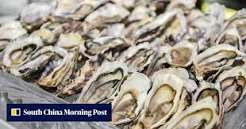
Australia’s shellfish industry is facing a major setback after an estimated 400,000 oysters were stolen from coastal farms, wiping out about 30 percent of the affected local stock and raising fresh concerns about security across seafood supply chains. For oyster growers, the loss is measured in far more than the market value of the shellfish. Months and sometimes years of careful cultivation can disappear overnight, leaving farms with damaged inventory, disrupted customer commitments, and difficult questions about how vulnerable valuable marine crops can be when they are raised in open coastal environments.
A Costly Theft for an Industry Built on Patience
Oyster farming is unlike many conventional agricultural businesses. A grower cannot simply replace a stolen crop by planting another one the following morning. Oysters require time to grow, regular monitoring, suitable water conditions, and careful handling before they are ready for consumers. The journey from young oysters to a marketable harvest can stretch across years depending on the species, location, and farming method.
That makes the reported theft of 400,000 oysters especially damaging. Losing roughly 30 percent of local stock can affect future harvests as well as immediate sales. Farmers may have already invested heavily in equipment, labor, leases, transportation, monitoring, and husbandry before the oysters ever reach a restaurant or seafood market.
We often associate agricultural theft with tractors, livestock, or crops stored in warehouses. Marine farming presents a different security challenge. Much of the inventory sits in the water, distributed across leases, baskets, racks, trays, or other cultivation systems. The environment itself makes continuous physical surveillance difficult.
Why Oysters Can Be Surprisingly Valuable Targets
Oysters may appear like an unusual target for organized theft, but mature shellfish can represent significant commercial value when stolen in large quantities. A large harvest can be moved relatively quickly, particularly if thieves have access to boats, storage facilities, transportation, and buyers.
The seafood industry also operates through complex networks. Shellfish may move from farms to processors, wholesalers, restaurants, markets, and exporters. Once products leave their original production environment, establishing exactly where they came from can become more difficult unless businesses maintain strong traceability records.
That is why the reported Australian theft has implications beyond one coastal farming operation. It highlights a broader question facing seafood producers internationally: how can valuable biological inventory be protected when it is growing in an environment that is inherently difficult to secure?
Open Water Creates a Unique Security Problem
A conventional warehouse can be protected with gates, cameras, alarms, locks, security staff, and controlled entry points. An oyster farm has a much larger perimeter. Boats can approach from the water, while cultivation areas may be spread across a considerable distance.
Farmers therefore have to balance security with the practical realities of marine agriculture. Equipment needs regular access. Workers need to inspect stock. Boats must move through farming areas. Weather conditions can change rapidly. A security system that works on land cannot simply be copied onto the water.
For growers, this creates a difficult equation. Increasing surveillance may require additional boats, cameras, sensors, lighting, tracking systems, or personnel. Yet every additional security expense reduces margins in an industry already exposed to weather, disease, environmental changes, labor costs, and fluctuations in seafood demand.
Potential weak points across a marine farm
The theft also illustrates why seafood businesses may need to think about security throughout the entire supply chain rather than only at the farm itself. Vulnerabilities can appear at several stages:
- Marine cultivation areas where stock is growing
- Boats and equipment used for harvesting
- Temporary holding facilities before transportation
- Processing and packing locations
- Transport routes between farms and buyers
- Wholesale and retail transactions where product origin must be verified
A weakness at any one stage can create problems for producers and legitimate buyers.
Theft Can Affect More Than One Harvest
The immediate financial loss is only part of the story. If a substantial portion of mature oysters disappears, a farm may have fewer products available to fulfill existing orders. Restaurants and distributors that depend on regular deliveries may then have to find alternative suppliers.
For a small coastal community, the effects can spread even further. Oyster farming supports workers, boat operators, equipment suppliers, transport companies, processors, hospitality businesses, and other local enterprises. When production falls sharply, those businesses can feel the consequences even though they were not directly involved in the theft.
There is also a less visible cost: uncertainty. Farmers need confidence that the inventory they spend years cultivating will still be available when harvest season arrives. A major theft can force producers to reconsider security spending, harvesting schedules, stock placement, and relationships with buyers.
Seafood Traceability Becomes More Important
Security at the farm is only one part of the response. Traceability can help legitimate businesses distinguish legally harvested seafood from products that may have entered the market through theft.
Strong traceability systems can record information such as the farm of origin, harvest date, batch details, handling location, and movement through the supply chain. Digital records and standardized documentation can make it harder for unlawfully obtained products to disappear into legitimate commerce.
Australia already has extensive regulatory systems covering seafood production and food safety. Information from Australia’s Department of Agriculture, Fisheries and Forestry provides a broader view of the country’s agricultural and fisheries regulatory environment.
For producers, traceability is not simply a compliance exercise. It can become a practical security tool. If buyers consistently require documented provenance, stolen products may become more difficult to sell through established channels.
Technology Could Give Farmers Better Visibility
Marine farmers are increasingly looking at technology to monitor operations that cannot be observed continuously by employees. Depending on the size and location of a farm, tools can include surveillance cameras, vessel tracking, GPS equipment, remote sensors, electronic inventory records, and alerts for unusual activity.
Technology cannot eliminate theft. Cameras may be limited by darkness, weather, water conditions, and the physical distance between equipment and cultivation areas. Sensors can also create false alarms or require maintenance in harsh marine environments. But a combination of monitoring tools can make suspicious activity easier to detect and investigate.
We expect the strongest security strategies to combine technology with human knowledge. Farmers understand the normal rhythms of their leases. They know when workers should arrive, which vessels typically operate nearby, and what harvesting activity looks like. Technology becomes much more useful when it supports that knowledge rather than attempting to replace it.
What Buyers and Seafood Businesses Can Do
Security is not solely the responsibility of growers. Buyers, wholesalers, restaurants, processors, and distributors can also help reduce the market for stolen seafood by maintaining careful purchasing practices.
Businesses can examine supplier records, request documentation for unusually large or discounted shipments, and maintain clear purchasing histories. When legitimate buyers consistently demand evidence of provenance, it becomes harder for stolen products to enter established commercial channels without raising questions.
Consumers can also contribute by choosing reputable seafood businesses and asking where products were harvested when information is available. Seafood sustainability and responsible sourcing organizations such as the Food and Agriculture Organization of the United Nations fisheries program provide broader information about responsible seafood production and fisheries management.
The Broader Lesson for Global Seafood Supply Chains
The Australian oyster theft is a reminder that seafood supply chains face risks that can be very different from those affecting conventional agriculture. Marine farms operate in spaces that are productive but difficult to control. Their inventory can be valuable long before it reaches a processing facility, while environmental conditions make constant physical protection challenging.
As global demand for seafood continues to support increasingly sophisticated aquaculture operations, security may become a larger part of business planning. Farmers will have to consider not only how to grow healthy shellfish but also how to document, monitor, protect, and account for those products throughout their commercial journey.
For investors and insurers, incidents such as this may also encourage closer examination of aquaculture risk. Insurance policies, security assessments, inventory controls, and emergency response plans may become more significant as farms scale up and their stock becomes more valuable.
Protecting the People Behind the Harvest
Behind the numbers are farmers who have invested time, money, and personal effort into producing food from challenging coastal environments. An oyster farm may look peaceful from the shoreline, with baskets floating quietly on the water, but maintaining that operation requires constant work. Every missing oyster represents a small piece of that effort.
The reported loss of 400,000 oysters therefore carries a human dimension that can be easy to overlook. Growers must continue paying employees, maintaining equipment, managing leases, and meeting business obligations even when a large portion of their inventory suddenly disappears.
That is why the response should extend beyond recovering stolen stock. Stronger cooperation between farmers, law enforcement, regulators, buyers, insurers, and local communities can help protect legitimate producers while preserving confidence in the seafood trade.
A Warning for the Future of Aquaculture
The theft of hundreds of thousands of oysters demonstrates how valuable aquaculture inventory can become and how difficult it can be to secure when production takes place in open water. For Australian shellfish farmers, the immediate priority is recovering losses and protecting remaining stock. For the wider seafood industry, the incident offers a broader warning.
As aquaculture grows, security will need to evolve alongside production. Better monitoring, stronger traceability, responsible purchasing practices, and closer cooperation across the supply chain can reduce the opportunities available to thieves.
The image of an oyster farm is often one of quiet coastal waters and patient cultivation. But behind that calm surface sits a sophisticated commercial operation with real financial value. Protecting that value will increasingly require the same level of planning and vigilance that producers already devote to growing the seafood itself.