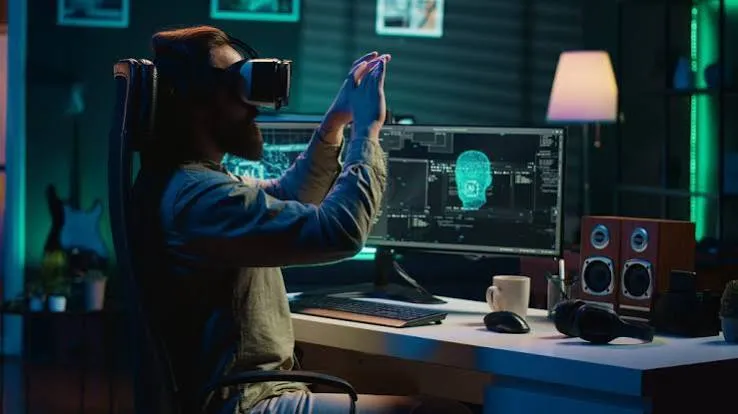
Developers and creators from around the world converged for the international AI Game Jam 2026 on August 30, showcasing real-time game asset creation powered by generative AI and signaling a fundamental shift in how video games are built. What unfolded was not just a competition but a glimpse into a future where the barrier between idea and playable prototype has all but dissolved.
[ovietnam.vietnamnews](https://ovietnam.vietnamnews.vn/quotdigital-entertainment-leadership-forum-2026quot-concludes-three-day-run-with-over-4000-participants-exploring-al39s-role-in-reshaping-digital-entertainment-and-cultural-creative-industries-post411924.html)
A Weekend Where Ideas Became Playable Worlds
I watched teams huddle around glowing screens, typing plain-language prompts while AI agents spun characters, environments, and mechanics into existence within minutes. The atmosphere felt less like a traditional hackathon and more like a collaborative laboratory where the rules of production were being rewritten in real time.
[ovietnam.vietnamnews](https://ovietnam.vietnamnews.vn/quotdigital-entertainment-leadership-forum-2026quot-concludes-three-day-run-with-over-4000-participants-exploring-al39s-role-in-reshaping-digital-entertainment-and-cultural-creative-industries-post411924.html)
Organized by Honor U Ministry Ltd and the Hong Kong Game Development Association, the Hong Kong AI Game Jam 2026 paired competition with hands-on workshops, inviting participants to build using the latest AI tools under the guidance of industry veterans. The event formed part of the broader Digital Entertainment Leadership Forum 2026, which drew more than 4,000 participants to explore AI’s role in reshaping digital entertainment.
[ovietnam.vietnamnews](https://ovietnam.vietnamnews.vn/quotdigital-entertainment-leadership-forum-2026quot-concludes-three-day-run-with-over-4000-participants-exploring-al39s-role-in-reshaping-digital-entertainment-and-cultural-creative-industries-post411924.html)
From Prompt to Prototype in Minutes
The standout demos shared a common thread: speed. Where asset creation once took days or weeks, teams now generated 3D models, textures, and even animated sequences in seconds. Manycore Tech’s Lux3D model, unveiled just days earlier at gamescom, exemplified this shift by producing detailed 3D assets from text or images in as little as 20 seconds.
[briefglance](https://briefglance.com/articles/manycores-lux3d-aims-to-build-3d-worlds-in-20-seconds)
Participants described the workflow as conversational. A designer might say, “Create a cyberpunk street market at night with neon signs and rain,” and watch as the AI populated the scene with geometry, lighting, and ambient sound. The result was not always perfect, but it was editable, importable into engines like Unity and Unreal, and ready for iteration.
[thinkchina](https://www.thinkchina.sg/technology/game-studios-have-bought-ai-players-still-arent-sold)
Why This Matters for the Global Industry
The implications extend far beyond faster prototyping. For small studios and independent creators, generative AI lowers the cost and skill threshold for producing high-quality assets, enabling teams of two or three to compete with larger studios on creative ambition. This democratization mirrors earlier shifts brought by accessible game engines, but with a crucial difference: AI handles not just the scaffolding but the content itself.
[ciobulletin](https://ciobulletin.com/blogs/ai-in-gaming-vfx-2026-production-guide)
Industry analysts note that 60 percent of generative AI disclosures on Steam already relate to virtual asset generation, covering characters, backgrounds, and art. The AI Game Jam 2026 demonstrated how this trend is moving from backend pipelines to front-line creative workflows, where designers direct AI agents rather than manually place every rock and tree.
[ciobulletin](https://ciobulletin.com/blogs/ai-in-gaming-vfx-2026-production-guide)
Real-Time Creation, Real-World Constraints
Despite the excitement, developers at the event were clear about current limits. Single generative models still struggle with the deterministic logic and operational stability required for full games. What AI excels at today is producing spatial assets and visual content, not the complex systems that govern gameplay mechanics, physics, or narrative branching.
[thinkchina](https://www.thinkchina.sg/technology/game-studios-have-bought-ai-players-still-arent-sold)
Several teams adopted a hybrid approach, using AI for rapid asset generation and then refining outputs in traditional engines. Tencent’s Hunyuan 3D world model, released earlier this year, supports this workflow by allowing developers to import AI-generated assets directly into Unity or Unreal for manual editing. This balance between automation and human control emerged as a recurring theme throughout the jam.
[thinkchina](https://www.thinkchina.sg/technology/game-studios-have-bought-ai-players-still-arent-sold)
Parallel Movements Across the Globe
The AI Game Jam 2026 did not happen in isolation. Across Europe and Asia, similar initiatives signaled a broader industry pivot toward AI-native development. At gamescom in Cologne, Combos, an AI game creation platform by Converge.AI, made its global debut with more than 10 playable titles built by community creators using natural language prompts.
[morningstar](https://www.morningstar.com/news/pr-newswire/20260825cn33274/combos-makes-its-global-debut-at-gamescom-bringing-ai-created-games-by-everyday-creators)
Meanwhile, Tencent Games Motus showcased an end-to-end AI animation pipeline that turns static character models into production-ready animations by automating rigging, skinning, and motion generation. In Hong Kong, the Digital Entertainment Leadership Forum featured AI short film creation, animated clip generation, and XR game-making workshops, all designed to let participants experience the full creative workflow from concept to finished product.
[aapnews.aap.com](https://aapnews.aap.com.au/aapreleases/cision20260827AE35036)
Europe’s Answer: IMMENS and Agent-First Engines
Perhaps the most ambitious parallel development came from Europe, where former Unreal Engine and Guerrilla Games veterans unveiled IMMENS, a new game engine built from the ground up for collaboration with AI agents. Led by Arjan Brussee, co-founder of Guerrilla Games, the project aims to redefine how developers interact with engines, treating AI agents as co-creators rather than mere tools.
[smartpress](https://smartpress.by/news/igry-budut-delat-ii-agenty-v-evrope-predstavili-novyy-dvizhok-immens/)
Academic research is pushing this idea even further. A team from Nanjing University and Nanyang Technological University recently proposed VibeGame, an intelligent agent framework that treats game development as a “prompt-to-game” process, where AI agents playtest, reflect, and evolve prototypes autonomously. These efforts suggest that the next generation of engines will not just support AI but be designed around it.
[finance.sina.com](https://finance.sina.com.cn/tech/roll/2026-08-31/doc-iniqearc7692815.shtml)
What Creators Took Home
Beyond the demos and panels, participants left with practical skills and new connections. Workshops covered AI applications in character design, game logic, and digital content creation, with sessions tailored for creators aged six and up. The event also featured screenings of AI-produced animations and short films, highlighting how generative tools are reshaping storytelling across media.
[manilatimes](https://www.manilatimes.net/2026/08/27/tmt-newswire/media-outreach-newswire/digital-entertainment-leadership-forum-2026-opens-tomorrow/2413477)
For many, the most valuable takeaway was confidence. Seeing AI handle the heavy lifting of asset creation freed them to focus on what makes games memorable: mechanics, narrative, and player experience. As one participant put it, “The AI builds the world. We decide what happens in it.”
Looking Ahead: The Next Phase of AI-Assisted Development
The AI Game Jam 2026 marked a turning point, but it also raised questions about quality, originality, and the role of human creativity in an AI-saturated pipeline. Players remain skeptical, with many concerned that AI-generated content could flood the market with cheaper but less compelling games. Studios will need to balance efficiency with artistic vision to maintain player trust.
[thinkchina](https://www.thinkchina.sg/technology/game-studios-have-bought-ai-players-still-arent-sold)
For those interested in exploring these tools, resources like the Unity AI solutions page and Unreal Engine learning portal offer tutorials and documentation on integrating generative AI into existing workflows.
[thinkchina](https://www.thinkchina.sg/technology/game-studios-have-bought-ai-players-still-arent-sold)
As the dust settles on the 2026 jam season, one thing is clear: the era of AI-assisted game development has arrived. The question now is not whether to adopt these tools, but how to wield them in ways that expand creative possibility without sacrificing the human touch that makes games worth playing.