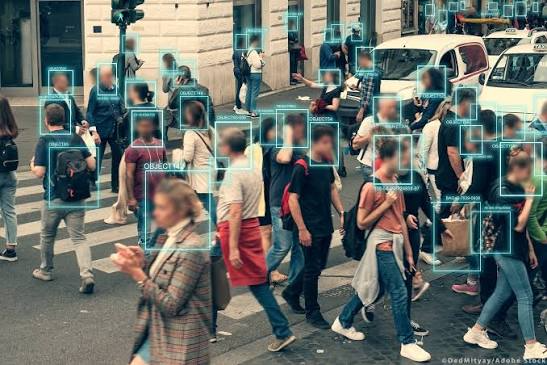
Governments and regional authorities are facing growing pressure to place clear limits on automated surveillance as debate intensifies over the use of artificial intelligence for public security. As of August 31, 2026, questions surrounding government funded AI monitoring systems are moving beyond technology policy and into the broader issues of civil liberties, accountability and personal privacy. For people walking through a city square, entering a public building or passing a security camera, the central question is increasingly simple: how much monitoring should a society accept in exchange for greater security?
Public Surveillance Is Entering a More Difficult Policy Debate
Artificial intelligence has changed what surveillance systems can do. Traditional cameras could record images, but newer systems can analyze footage, identify patterns and potentially track movement across multiple locations. When connected to large databases and other digital systems, automated monitoring can give authorities capabilities that would have required substantial human effort in the past.
That technological shift is creating a difficult policy challenge. Governments have legitimate responsibilities to protect public spaces and respond to serious threats. At the same time, people have reasonable expectations that they should be able to move through public life without being subjected to unlimited automated observation.
The latest international debate reflects this tension. Regional governing bodies are reviewing or blocking public funding for some state wide AI monitoring initiatives, while civil liberty organizations and policymakers call for stronger standards governing autonomous tracking. The disagreement is not simply about whether surveillance technology should exist. It is increasingly about where it can be used, what information can be collected, how long that information can be retained and who is permitted to access it.
Why Autonomous Tracking Raises Bigger Privacy Questions
There is a major difference between a camera recording an event and an automated system attempting to identify or follow a person. A recording can remain passive until someone reviews it. An autonomous tracking system can potentially make decisions continuously, linking observations from different locations and creating a detailed picture of a person’s movements.
That distinction matters because information that appears harmless in isolation can become highly revealing when combined. A series of observations can potentially indicate where someone works, which public facilities they visit, who they regularly meet or how frequently they travel through particular areas.
We should therefore judge surveillance not only by the accuracy of the underlying technology but also by the consequences of its use. Even a highly accurate system can create serious privacy concerns if it operates without meaningful oversight or if people have no practical way to challenge misuse.
Public Funding Has Become a Key Battleground
Government funding decisions can determine how quickly large surveillance networks expand. A privately operated security camera may affect a limited location, but a publicly funded monitoring system can potentially operate across entire cities, transportation networks or regions.
That scale makes public accountability especially important. When taxpayers finance surveillance infrastructure, they should be able to understand what the system is designed to accomplish and what safeguards are attached to it.
Authorities considering funding for AI surveillance can examine several basic questions before approving large deployments:
- What specific public safety problem is the system intended to address?
- Is continuous monitoring necessary, or would a narrower system achieve the same objective?
- What categories of personal information will be collected?
- How long will information be stored?
- Who can access the data and under what circumstances?
- What independent body can investigate complaints or misuse?
These questions can help shift surveillance policy from a technology first approach toward a public interest approach.
Civil Liberty Groups Are Calling for Stronger Safeguards
Civil liberty advocates have long argued that surveillance can affect more than individual privacy. Persistent monitoring can influence how freely people participate in public life. Someone who believes their movements, associations or activities are constantly being analyzed may behave differently even when they have done nothing wrong.
That concern becomes more significant when automated systems are used to identify people or infer suspicious behavior. Machine learning systems can produce errors, and the consequences of those errors can be serious when an automated alert contributes to police intervention or other government action.
Organizations focused on privacy and civil rights are therefore pushing for safeguards that address both data collection and automated decision making. The United Nations human rights framework on privacy provides an important international reference point for discussions about privacy, surveillance and the protection of fundamental rights.
Policymakers Face the Challenge of Setting Global Standards
One of the hardest problems is that surveillance regulation differs substantially between jurisdictions. A system restricted in one country may be permitted under broader rules somewhere else. Companies developing surveillance technologies can also operate across borders, while data may be processed or stored in different jurisdictions.
This creates pressure for governments to establish clearer international principles. Global standards do not necessarily require every country to adopt identical laws. They can instead establish minimum expectations around necessity, proportionality, transparency, data security, human oversight and independent review.
The goal should be to prevent a situation in which technological capability moves faster than legal accountability. Once a large surveillance network is deployed, changing it can be considerably more difficult than setting appropriate rules before public money is committed and infrastructure is installed.
Facial Recognition and Automated Identification Need Particular Scrutiny
Facial recognition is among the most sensitive applications of automated surveillance because it can connect a physical person with a digital identity. Used under carefully controlled circumstances, identification technology may assist legitimate investigations. Used broadly and continuously, however, it can create a very different relationship between citizens and public authorities.
Accuracy also requires careful consideration. Performance can vary depending on lighting, camera quality, demographic factors, image quality and operating conditions. An incorrect identification may affect an innocent person who has little knowledge that the system produced the alert in the first place.
For this reason, automated identification should not be treated as an unquestionable source of truth. Human review, documented procedures and meaningful avenues for correction can be essential safeguards when surveillance technology influences decisions about individuals.
Privacy Protection Does Not Have to Mean Ignoring Public Safety
The debate is sometimes presented as a choice between security and privacy. We believe that framing is too narrow. A responsible security system should protect people from serious threats while also protecting them from unnecessary government intrusion.
That balance can be achieved through carefully defined limits. Surveillance systems can be restricted to specific purposes, locations or circumstances. Access to sensitive information can be logged and audited. Retention periods can be limited so that data does not remain available indefinitely. Independent oversight can provide a mechanism for investigating abuse.
The National Institute of Standards and Technology AI Risk Management Framework also provides a useful foundation for thinking about responsible AI deployment, particularly around identifying and managing risks associated with artificial intelligence systems.
Transparency Could Become One of the Most Important Safeguards
People cannot meaningfully debate surveillance programs if they do not know where and why those systems operate. Public authorities can improve confidence by publishing clear information about surveillance policies, approved uses, retention practices and oversight procedures.
Transparency does not require governments to disclose sensitive security information. It does require enough public information for citizens and independent institutions to evaluate whether a surveillance program is proportionate to its stated purpose.
Regular audits can provide another layer of accountability. An independent review can examine whether personnel accessed information appropriately, whether retention rules were followed and whether the technology produced unacceptable levels of error.
What Responsible Regulation Could Look Like
Strong surveillance regulation should focus on practical protections rather than broad promises. Policymakers can establish clear rules covering collection, storage, access, sharing and deletion of personal information. They can also require documented human oversight when automated systems generate alerts or recommendations involving individuals.
Effective regulation could include several core principles:
- Clear legal authority before large scale surveillance begins.
- Specific and limited purposes for collecting personal information.
- Strict retention periods and secure deletion procedures.
- Independent oversight with authority to investigate misuse.
- Human review for consequential decisions involving individuals.
- Public reporting on system performance, complaints and compliance.
- Regular reassessment to determine whether continued surveillance remains necessary.
These safeguards can also benefit governments. Clear rules reduce uncertainty for agencies, technology providers and the public while creating a more consistent standard for responsible deployment.
The Human Cost of Getting the Balance Wrong
Behind every surveillance policy is an ordinary human experience. It may be a commuter who notices another camera above a train platform, a family entering a public event or a young person wondering whether a system is recording and analyzing their face. These moments may appear insignificant individually, but millions of such interactions can shape how people experience public space.
Security technology should make people feel protected, not permanently watched. That distinction may become increasingly important as artificial intelligence gives surveillance systems greater analytical power.
The Next Phase Will Depend on Accountability
The debate unfolding around public funding for AI monitoring systems signals a broader reassessment of how societies want surveillance to function. Governments will continue to face genuine security challenges, and technology can play a useful role in addressing them. But technological capability alone should not determine public policy.
As of August 31, 2026, the strongest argument for responsible surveillance is not that governments should abandon advanced security tools. It is that these tools should operate within boundaries that people can understand, challenge and trust.
The coming years will likely test whether policymakers can establish those boundaries before automated monitoring becomes deeply embedded in everyday infrastructure. If regulation keeps pace with capability, societies can pursue public safety without treating privacy as an expendable right. If oversight falls behind, the systems introduced for security could gradually redefine what ordinary freedom in public spaces means.