There is a particular kind of unease that settles over public health circles when two very different outbreaks demand attention at once. On September 3, 2026, that unease became official policy. Health agencies across multiple regions issued updated international travel advisories, responding to targeted vaccine deployment efforts against a tropical viral threat spreading through Central Africa and a sporadic but genuinely alarming resurgence of diphtheria in Southern Europe. For travelers, aid workers, and public health professionals alike, this is not a moment for panic, but it is absolutely a moment for attention.
I have watched enough disease outbreaks unfold over the years to recognize the particular rhythm of this one. It begins quietly, with case counts ticking upward in a handful of provinces, then spreads into the kind of cross border concern that eventually reaches every traveler checking a departure board. What makes this moment distinct is the pairing of two very different pathogens, one viral and hemorrhagic, the other bacterial and largely preventable, both demanding coordinated international response at the same time.
The Situation Unfolding in Central Africa
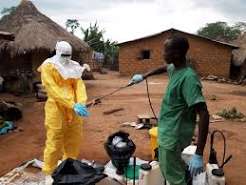
The tropical viral threat driving heightened advisories across Central Africa traces back to an Ebola outbreak first reported in the Ituri Province of the Democratic Republic of the Congo in May 2026. What distinguishes this outbreak from previous ones that have periodically struck the region is the causative strain itself. This epidemic stems from the Bundibugyo ebolavirus, a rarer variant first identified in Uganda back in 2007, and one that complicates response efforts considerably because existing Ebola treatments and vaccines were developed primarily for the more commonly encountered Zaire strain.
The World Health Organization declared the outbreak a Public Health Emergency of International Concern shortly after it emerged, with confirmed and suspected cases climbing into the thousands and hundreds of deaths recorded across the Democratic Republic of the Congo and neighboring Uganda, including cases reaching as far as Kampala. Africa CDC leadership has publicly committed to securing a dedicated vaccine and treatment specifically targeting the Bundibugyo strain, a process that has involved international collaboration and, notably, promising vaccine candidates emerging from multiple research efforts. Reaching that milestone matters enormously, because the region has effectively been fighting this outbreak using only the blunt tools of contact tracing, quarantine measures, and basic infection control, without the targeted pharmaceutical weapons that helped bring earlier Ebola epidemics under control more swiftly.
Why the Bundibugyo Strain Demands Extra Caution
I want to be honest about why this particular outbreak has generated such intense concern among epidemiologists. The Democratic Republic of the Congo borders nine separate countries, and the constant flow of people across those borders for trade, work, and family obligations makes containment extraordinarily difficult under the best of circumstances. Add to that the remoteness of many affected communities, where healthcare infrastructure is thin and roads can turn impassable during rainy seasons, and you have a genuinely challenging environment for any outbreak response team to operate within.
Vaccine deployment efforts now underway represent the most meaningful shift in this outbreak’s trajectory since it began. Health authorities have been racing to get vaccine candidates into affected communities, prioritizing frontline health workers and individuals with confirmed exposure, a strategy that mirrors successful ring vaccination approaches used in previous Ebola responses. The World Health Organization’s disease outbreak news service continues tracking the situation closely, and travelers with any planned itinerary touching affected provinces should consult current guidance before departure rather than relying on information that may be days or weeks out of date.
An Unexpected Return in Southern Europe
While attention has understandably focused on Central Africa, a quieter but equally telling story has been developing across Southern Europe. Diphtheria, a disease many people assume belongs to history textbooks rather than modern headlines, has resurfaced in a way that caught public health officials’ attention this summer. A fatal case involving an unvaccinated four year old child in Palermo, Sicily, confirmed in late August, has become a stark symbol of what happens when vaccination coverage gaps meet a bacterium that never actually disappeared.
The child’s death, along with a second probable case involving a young cousin who was hospitalized with milder symptoms, prompted Italy’s National Institute of Health to confirm the presence of Corynebacterium diphtheriae and the associated toxin gene. Contact tracing and monitoring efforts began immediately, reflecting how seriously health authorities treat even isolated cases of a disease that, thanks to decades of high vaccination coverage, had become genuinely rare across the European Union and European Economic Area.
Understanding Why Diphtheria Is Creeping Back
What makes this resurgence particularly poignant, at least to me, is how preventable it fundamentally is. Diphtheria vaccination has existed for generations, and the disease’s near disappearance from wealthy nations represents one of modern medicine’s genuine triumphs. Its return, however partial, stems from a combination of factors that public health researchers have been tracking closely across the continent, including declining childhood vaccination rates in certain communities, waning immunity among adults who received their last booster decades ago, and increased population movement that can introduce the bacterium into pockets of unprotected people.
Earlier clusters traced across multiple European countries in recent years revealed a pattern worth understanding. Cases have disproportionately affected individuals with uncertain or incomplete vaccination histories, often linked to migration journeys through crowded transit points where close contact facilitates transmission. The disease can present as either a dangerous respiratory infection, capable of causing the characteristic throat membrane that gives diphtheria its lethal reputation, or as a milder cutaneous skin infection, which has actually represented the majority of recent European cases even though the respiratory form carries the greater mortality risk.
What This Means for Travelers Right Now
If you have travel plans touching either region in the coming weeks, I would encourage you to treat this moment as an opportunity for genuine preparation rather than a source of anxiety. A few practical steps make an enormous difference.
- Confirm your routine vaccinations are current, particularly diphtheria tetanus pertussis boosters, which many adults have not updated since childhood despite guidance recommending renewal roughly every ten years.
- Check official government travel advisory pages immediately before departure rather than relying on advice gathered weeks in advance, since outbreak situations evolve quickly.
- If traveling to affected provinces in the Democratic Republic of the Congo or Uganda, consult a travel medicine specialist about current guidance regarding exposure risk and available protective measures.
A Broader Lesson in Global Health Interconnection
These two outbreaks, separated by thousands of miles and caused by entirely different organisms, share a common thread that I think deserves more attention than it typically receives. Both reveal what happens at the seams of our global health infrastructure, in the gaps between vaccination programs, in the border regions where surveillance systems struggle to keep pace with population movement, and in the communities where access to preventive care has quietly eroded over time.
Health agencies coordinating these updated advisories are not overreacting. They are doing precisely what public health infrastructure exists to do, watching closely, responding quickly, and communicating clearly so that individual travelers can make informed decisions rather than uninformed ones. The vaccine deployment underway in Central Africa and the heightened surveillance across Southern Europe both represent systems working as intended, even when the news they deliver feels unsettling. For those of us watching from a distance, the most useful response is not fear but attentiveness, staying current on guidance, supporting the health workers doing genuinely difficult work in challenging conditions, and recognizing that the diseases making headlines this week are, in nearly every case, ones we already know how to fight.