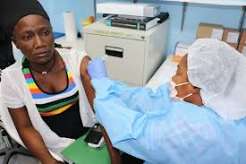
There is a moment in every outbreak response when hope and urgency collide, when a shipment of vaccine vials finally arrives in a place that has spent months bracing against an invisible threat. On September 3, 2026, international health organizations pushed further into that moment, mobilizing expanded ring vaccination operations using the Ervebo vaccine to contain an ongoing viral outbreak and shield the frontline healthcare workers who have been standing between their communities and a devastating disease.
I have followed enough outbreak responses to know that vaccine rollouts rarely make for tidy headlines. They unfold in fits and starts, across muddy roads and overcrowded clinics, carried forward by health workers who often risk their own safety to protect others. This latest mobilization, centered on the Democratic Republic of the Congo, represents one of the more consequential vaccination efforts the region has seen in years, and it deserves a closer look at both the science driving it and the human stakes riding on its success.
What Ervebo Actually Is and Why It Matters
Ervebo, developed by Merck and known scientifically as the recombinant vesicular stomatitis virus based Ebola Zaire vaccine, has been a cornerstone of outbreak response since it received prequalification approval in 2019. Administered as a single intramuscular injection, the vaccine does not contain a complete Ebola virus and therefore cannot cause the disease itself, a detail that matters enormously when convincing frightened communities to accept vaccination during an active crisis. The vaccine works by prompting the immune system to recognize and respond to a key surface protein associated with Zaire ebolavirus, building protection that has demonstrated strong effectiveness in prior outbreak related studies, particularly when administered before a person is exposed to the virus.
What makes this deployment particularly significant is the strain involved. The current outbreak driving this response stems from the Bundibugyo ebolavirus, a rarer variant that Ervebo was not originally designed to target, since the vaccine’s established protection applies specifically to Zaire ebolavirus and does not extend with confirmed efficacy to Bundibugyo, Sudan, or other Ebola species. Health authorities in the Democratic Republic of the Congo made the consequential decision to deploy Ervebo under a compassionate use framework regardless, prioritizing protection for frontline responders while simultaneously launching a formal clinical trial to measure the vaccine’s actual effectiveness against this less familiar strain.
The Mechanics of Ring Vaccination
Ring vaccination is not a new strategy, but it remains one of the most elegant tools available in outbreak containment. Rather than attempting to vaccinate an entire population, which would be logistically impossible during a fast moving crisis, health teams identify everyone who has had contact with a confirmed case, then vaccinate that inner circle along with the contacts of those contacts, effectively building a protective barrier around each new infection before it has the chance to spread further outward.
This approach, refined through prior deployments including the massive vaccination campaigns during earlier outbreaks in the Democratic Republic of the Congo, has produced compelling evidence of impact. Historical data from ring vaccination programs conducted between 2018 and 2020 showed that Ebola virus disease rates among vaccinated contacts fell substantially faster than among comparable groups where vaccination was delayed, with the protective effect becoming measurable within roughly ten days of ring formation. Frontline healthcare and support workers, who face repeated and often unavoidable exposure while caring for patients, receive priority access alongside direct contacts, a decision reflecting how essential these workers are to sustaining any outbreak response over the weeks and months it typically requires.
The Scale of the Current Effort
The numbers behind this rollout are genuinely striking. More than fifty thousand doses of Ervebo have arrived in the country, with a portion of that allocation dedicated specifically to the Phase 3 clinical trial assessing efficacy against the Bundibugyo strain, and the remainder directed toward protecting frontline and healthcare workers across the affected provinces. Health Minister Roger Kamba personally launched the vaccination campaign in Kisangani, capital of Tshopo Province, underscoring the political and public health urgency attached to this effort.
The outbreak itself has spread across six provinces, including Ituri, North Kivu, South Kivu, Tshopo, Haut Uele, and Bas Uele, with case counts and fatality figures that reflect just how dangerous this particular strain has proven to be. This scale of geographic spread makes the ring vaccination strategy considerably more complex to execute than in more contained outbreaks, requiring coordination across multiple provincial health systems, transportation networks capable of maintaining strict cold chain requirements since Ervebo must be stored at extremely low temperatures, and community engagement teams working to build trust in areas where prior outbreaks have sometimes left lingering skepticism toward health interventions.
Why Frontline Worker Protection Cannot Wait
I want to dwell on something that I think gets lost in outbreak statistics: the sheer courage required of healthcare workers entering treatment centers day after day, knowing the disease they are fighting has historically carried case fatality rates exceeding fifty percent in some reporting periods. Every nurse, physician, and burial team member operating in these zones faces genuine personal risk, and protecting them is not merely a matter of workforce sustainability, though that matters too. It is a matter of basic human dignity toward the people who have chosen to stand at the most dangerous point of contact between a community and a lethal virus.
Health Minister Kamba’s public framing of the vaccination priorities, protecting healthcare providers first alongside those who have already been in contact with confirmed patients, reflects an ethical logic that has guided outbreak response for years. Organizations coordinating this effort, including the World Health Organization through its ongoing partnership with national health authorities, continue emphasizing that vaccination works best when paired with rapid case detection, careful contact tracing, safe and dignified burial practices, and genuine community engagement rather than functioning as a standalone solution.
What Success Looks Like From Here
I will not pretend this outbreak response has reached its conclusion, because it clearly has not. The clinical trial data emerging from this compassionate use deployment will take time to analyze, and health authorities will need that evidence to determine whether Ervebo genuinely offers meaningful protection against the Bundibugyo strain or whether an entirely different vaccine candidate will ultimately be required. In the meantime, the ring vaccination operations underway represent the best available tool for slowing transmission while that scientific picture becomes clearer.
What gives me genuine encouragement, watching this unfold, is the sheer coordination on display. International vaccine stockpiles, national health ministries, frontline workers willing to face real risk, and researchers racing to generate usable data are all moving in the same direction at once. The Centers for Disease Control and Prevention’s ongoing outbreak resources continue tracking developments for travelers and health professionals alike, offering a reminder that global health security depends on exactly this kind of layered, persistent response. Outbreaks like this one test the limits of public health infrastructure in profound ways, but they also reveal, again and again, just how much can be accomplished when the world’s health institutions choose to move together rather than apart.