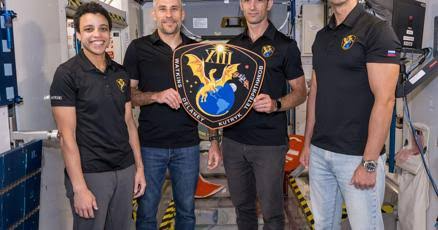
A propulsion system leak detected on a SpaceX Dragon spacecraft has delayed the planned Crew 13 mission to the International Space Station, turning what would normally be a carefully rehearsed launch sequence into another detailed safety review. The issue has placed renewed attention on the reliability of commercial crew spacecraft and the rigorous checks required before astronauts can be cleared for flight. For the astronauts waiting to travel to orbit, the delay is more than a scheduling change. It is a reminder that every launch ultimately depends on making sure thousands of components work together exactly as intended.
Why a Thruster Leak Can Stop an Entire Mission
Spacecraft propulsion systems operate under demanding conditions. Dragon uses propulsion hardware for critical activities that include maneuvering the spacecraft and maintaining control during different phases of its mission. A leak in such a system can therefore require careful examination before flight, even when the problem appears limited to one component.
Engineers must determine where the leak originated, what caused it, whether other components could have the same weakness, and whether the spacecraft remains safe under launch and orbital conditions. The investigation can also require inspections of related hardware because a small anomaly may reveal a larger issue that cannot be identified simply by replacing the visibly affected component.
That process can be frustrating for people watching the launch schedule, but the conservative approach is deliberate. Human spaceflight leaves little room for assumptions. A countdown can be restarted, while a crew cannot simply be brought back once a serious problem develops in orbit.
Crew 13 Faces a Longer Road to the International Space Station
The Crew 13 mission is designed to carry astronauts aboard a SpaceX Dragon spacecraft to the International Space Station. A delay caused by propulsion hardware means the mission timeline must now accommodate additional technical assessments and preparation before another launch opportunity can be considered.
For astronauts, launch delays can produce an unusual mixture of disappointment and relief. Crews spend months preparing physically and mentally for a precise sequence of events. They train for normal operations, emergency procedures, spacecraft systems, station activities, and unexpected situations. When engineers identify a problem before launch, however, astronauts also benefit from knowing that the concern was discovered while there was still time to address it.
The human side of a launch delay is easy to overlook. Families and support teams may have planned around the original launch date, while mission specialists and ground controllers must remain ready as technical teams work through the investigation. A delayed launch can therefore affect hundreds of people even though the public may see only a revised date.
Commercial Crew Safety Remains Under Close Attention
The Dragon program is part of NASA’s broader commercial crew strategy, which relies on private companies to provide transportation services for astronauts. That arrangement has changed the structure of human spaceflight by giving NASA another pathway to reach low Earth orbit while allowing commercial providers to operate spacecraft under strict government safety requirements.
The relationship requires clear accountability. SpaceX develops and operates the spacecraft, while NASA maintains extensive oversight of crew safety, mission readiness, and certification requirements. When a propulsion anomaly occurs, the resulting review is therefore relevant not only to one spacecraft but also to the broader process governing commercial human spaceflight.
NASA’s Commercial Crew Program provides useful background on how government and commercial partners work together to transport astronauts to the International Space Station. The program’s safety framework reflects the reality that commercial spaceflight still requires extensive testing, certification, monitoring, and operational discipline when people are aboard.
What Engineers Will Need to Establish Before Launch
The immediate priority is identifying the source and significance of the propulsion leak. Engineers will likely need to inspect affected hardware, evaluate test data, and determine whether the issue can be corrected without introducing another risk.
Several questions become especially important during such a review. Was the leak caused by manufacturing, installation, wear, contamination, temperature exposure, pressure conditions, or another factor? Can the affected component be replaced or repaired? Does similar hardware exist elsewhere on the spacecraft? Could the same issue appear on another Dragon vehicle?
Engineers may also conduct additional testing after corrective work. These tests help establish whether the system performs as expected under conditions that resemble those encountered during launch and space operations. The objective is not simply to make the leak disappear but to demonstrate that the underlying cause has been understood and controlled.
The review can involve several stages
- Inspection of the affected propulsion components
- Analysis of pressure and leak detection data
- Testing of repaired or replaced hardware
- Evaluation of related spacecraft systems
- Assessment of potential effects on other Dragon vehicles
- Formal review before NASA grants permission to proceed
Why Launch Schedules Can Change Quickly
Space missions operate according to tightly coordinated schedules. A crewed launch depends not only on the spacecraft but also on the launch vehicle, launch site, ground systems, weather, the International Space Station’s orbital position, and other operational requirements.
When a technical problem appears, engineers cannot simply move the launch back by a few hours and continue. The spacecraft may require inspection, repair, testing, documentation, and approval. Each stage can introduce additional time because safety decisions are based on evidence rather than a predetermined calendar.
This is especially important for commercial crew missions because the spacecraft must satisfy requirements associated with both launch and human occupancy. A component that might be acceptable for an uncrewed mission can receive a much more conservative assessment when astronauts are depending on it.
The International Space Station Adds Another Layer of Complexity
The International Space Station is a continuously operating orbital laboratory with crews, experiments, cargo, spacecraft, and complex schedules. A crew transport mission must therefore fit into a larger system rather than functioning as an isolated launch.
NASA and its international partners coordinate station operations carefully. Delaying one crewed flight can influence training schedules, crew rotations, spacecraft availability, and other mission planning. The station can accommodate changes because its operations are designed with contingencies, but every adjustment requires coordination.
For the astronauts already aboard the station, the delay also means that their eventual replacements may arrive later than originally expected. Station crews routinely prepare for schedule changes, and mission planners maintain contingency procedures for unexpected events.
What This Means for the Future of SpaceX Dragon Missions
A propulsion leak does not by itself determine the long term reliability of the Dragon program. Spacecraft are complex machines, and anomaly investigations are an established part of aerospace engineering. What matters most is how effectively the problem is identified, corrected, tested, and incorporated into future operations.
One of the most valuable outcomes of an investigation can be knowledge. If engineers determine why a component failed or developed a leak, that information can be used to improve inspections, manufacturing processes, testing procedures, maintenance schedules, and future spacecraft designs.
This is one reason aerospace organizations place so much weight on anomaly reporting. A problem discovered before launch can become an opportunity to prevent a more serious event later. The process may temporarily slow the mission, but it can strengthen the system when the findings are properly applied.
Commercial Spaceflight Depends on Patience as Much as Speed
The growth of commercial spaceflight has created understandable excitement around frequent launches and increasingly ambitious missions. Yet crewed spaceflight operates under a different standard from many commercial industries. Reliability must take priority over maintaining an attractive launch calendar.
For SpaceX, NASA, and the astronauts assigned to Crew 13, the propulsion leak is therefore a test of the safety culture surrounding the mission. A successful response means resisting pressure to move quickly when more information is needed. It means allowing engineers to investigate uncomfortable findings and requiring convincing evidence before the spacecraft returns to the launch pad.
That philosophy has value for the entire commercial space industry. As private companies take on more responsibility for transporting people into orbit, public confidence will depend not only on successful launches but also on how companies respond when something goes wrong.
What Happens Next for Crew 13
The next major milestone will be the completion of the propulsion system investigation and the corrective actions required by the findings. Once engineers are satisfied with the spacecraft’s condition, additional testing and formal readiness reviews can determine whether the mission is prepared to move toward another launch attempt.
For the Crew 13 astronauts, the waiting period will likely involve continued preparation while technical teams work through the issue. Their training does not stop simply because a launch date changes. Instead, the crew remains prepared for the moment when the spacecraft is finally cleared.
For the public, the delay offers a useful reminder about what happens behind every successful spaceflight. A launch broadcast may last only a few minutes, but the safety work supporting those minutes can take years. Every valve, sensor, seal, thruster, computer, and structural component must perform as expected.
A Delay Can Be a Sign of a Working Safety System
The Crew 13 delay may be disappointing for space enthusiasts who were looking forward to another Dragon launch, but a technical hold can also demonstrate that safety procedures are functioning as intended. Detecting a leak on the ground provides engineers with an opportunity that would not exist once the spacecraft was thousands of miles from Earth.
The broader lesson is straightforward. Commercial human spaceflight can move quickly without treating speed as the highest priority. The strongest programs are those capable of identifying problems early, investigating them honestly, correcting them thoroughly, and refusing to launch until the evidence supports a safe decision.
As NASA and SpaceX continue reviewing the Dragon propulsion system, attention will remain focused on when Crew 13 can safely begin its journey to the International Space Station. The eventual launch date will matter, but the quality of the work completed before that date will matter far more. In human spaceflight, arriving later is acceptable. Arriving before a problem is understood is not.