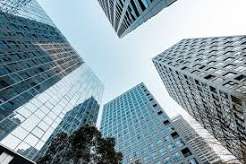
Commercial real estate markets around the world are entering a more demanding period as long term borrowing costs reach multiyear highs and investors reassess what properties are worth. Office towers, shopping centers, warehouses, hotels and other income producing assets are all being affected by a financial environment in which the cost of capital has become harder to ignore. For property owners and investors, the central question is no longer simply whether rents can grow. It is whether future income can justify higher financing costs and more cautious valuations.
Why Higher Long Term Yields Matter for Property Values
Commercial property is unusually sensitive to changes in interest rates because buildings are generally valued according to the income they can produce over many years. Investors compare expected property returns with the returns available from government bonds and other relatively lower risk investments. When long term bond yields rise, real estate has to offer enough additional return to remain attractive.
That relationship can put downward pressure on property prices even when a building itself has not changed. A well located office building does not suddenly become less useful because bond yields increase, but the financial value assigned to its future rental income can change significantly.
We are therefore seeing a market in which valuation decisions are becoming more selective. Buyers are paying closer attention to debt costs, tenant quality, lease terms, vacancy rates, maintenance requirements and expected rental growth before committing capital.
Office Properties Remain Under Particular Pressure
Office real estate continues to face an especially complicated environment. Many companies have changed how employees work, leaving some buildings with lower occupancy than property owners expected several years ago. At the same time, older buildings may require substantial investment to remain competitive with newer properties that offer better energy performance, amenities and technology.
Higher financing costs make those upgrades more difficult to justify. A property owner may need to spend heavily on renovations while also dealing with weaker demand and more expensive debt. The financial calculation becomes considerably harder when borrowing costs remain elevated for an extended period.
Prime buildings in strong locations can still attract tenants and investors, but the gap between high quality properties and weaker assets may continue to widen. Investors increasingly want evidence that a building can maintain occupancy and generate reliable cash flow rather than simply relying on broad assumptions about a city or property sector.
Retail and Industrial Real Estate Face Different Pressures
Retail properties are being evaluated through another set of considerations. Shopping centers with strong foot traffic, established tenants and convenient locations can remain valuable, while properties with declining demand may require redevelopment or a different mix of tenants.
Industrial and logistics real estate has generally benefited from the growth of distribution networks and online commerce, but higher financing costs can still affect prices. Investors have to balance strong operational demand against the cost of purchasing or developing warehouses and distribution facilities.
This distinction matters because commercial real estate is not one uniform market. A warehouse near a major transportation hub, a downtown office tower and a neighborhood shopping center can experience completely different financial conditions even when they operate in the same interest rate environment.
Debt Is Becoming a Central Issue for Property Owners
For owners carrying substantial debt, the current environment can be particularly uncomfortable. A property purchased when financing was inexpensive may have appeared highly profitable at the time. When that loan needs to be refinanced at a much higher cost, however, the property’s cash flow may no longer support the same financial structure.
Refinancing risk is therefore becoming a major consideration across commercial real estate. Owners with loans approaching maturity may need to contribute additional capital, negotiate new terms with lenders or consider selling properties that no longer meet their investment objectives.
The situation can become more difficult when a building also needs major repairs or has significant vacancies. A higher interest bill combined with lower rental income can place considerable pressure on operating cash flow.
What Higher Yields Mean for Investors
For investors, rising long term yields create both challenges and opportunities. Real estate may become less attractive when compared with bonds, but higher required returns can eventually create opportunities to purchase quality assets at more reasonable prices.
The transition can take time because sellers do not always want to accept lower valuations. A property owner who purchased an asset during a period of exceptionally strong prices may prefer to wait rather than recognize a loss. Buyers, meanwhile, may demand substantial discounts to compensate for higher financing costs and uncertain future income.
This difference in expectations can reduce transaction activity. Properties may remain on the market longer while buyers and sellers negotiate over what a realistic price should be.
Regional Markets Are Not Moving in the Same Direction
Global commercial real estate cannot be analyzed as a single market. Monetary policy, economic growth, inflation, construction activity and local rental demand vary considerably between countries.
Some markets may experience stronger demand because of population growth, infrastructure investment or limited property supply. Others may face weaker conditions because of economic uncertainty or excess commercial space.
Investors therefore need to look beyond headline interest rates. A market with higher borrowing costs can still perform well if rental income is growing strongly and available property remains limited. Conversely, a market with lower financing costs can struggle when vacancies rise and tenant demand weakens.
The International Monetary Fund provides broader global economic research that can help investors place changes in borrowing costs, inflation and economic growth within a wider international context.
Property Owners Are Rethinking Their Strategies
The current environment is encouraging owners to become more disciplined about capital spending. Projects that might have been approved easily when financing was cheap now require stronger evidence of future returns.
Some owners are focusing on properties with dependable tenants and long lease commitments. Others are looking at redevelopment opportunities where an existing property can be repositioned for a stronger market segment. Energy efficiency is also becoming more relevant as operating costs and environmental requirements influence tenant preferences.
Several factors are receiving greater attention
- Debt maturity dates and refinancing exposure
- Tenant credit quality and lease duration
- Vacancy levels and expected rental growth
- Building maintenance and future capital requirements
- Local supply of competing properties
- Potential changes in property taxes and operating expenses
These factors can determine whether a property remains financially resilient when capital becomes more expensive.
Tenants Could Feel the Effects Too
The consequences of commercial real estate valuation changes do not stop with investors. Businesses renting offices, stores and industrial facilities can eventually feel the impact through rents, service charges and changes in building investment.
A property owner under financial pressure may delay improvements, while another owner may invest heavily in a building to attract higher paying tenants. For small businesses, changing commercial rents can have a direct effect on profitability because occupancy costs are often one of the largest recurring expenses.
For companies negotiating new leases, location remains important, but flexibility is becoming increasingly valuable. Businesses may prefer lease structures that give them room to adjust their physical footprint as staffing levels, customer demand and operating models change.
The Green Building Question Is Becoming Financial Too
Energy efficiency and environmental performance are also becoming part of the valuation discussion. Buildings with inefficient heating, cooling and lighting systems can carry higher operating expenses. Older properties may require significant investment to meet changing environmental standards and tenant expectations.
That makes sustainability more than a branding issue for commercial property owners. Energy consumption, building quality and operating efficiency can affect the long term economics of an asset.
Resources from the United Nations Environment Programme provide wider research on buildings, energy use and environmental policy, areas that are increasingly relevant to commercial property decisions.
Could Lower Rates Eventually Bring Relief?
Real estate investors are naturally watching central banks for signs that borrowing conditions could eventually become easier. A decline in long term yields could reduce financing pressure and improve the relative appeal of property compared with fixed income investments.
But even if borrowing costs eventually fall, the commercial property market may not return to its previous structure. Changes in office demand, technology, consumer behavior and environmental standards have created permanent questions about the future performance of different types of buildings.
Lower financing costs could provide relief, but investors will still need to distinguish between properties with durable income and assets that require major repositioning.
A Market Moving From Easy Money to Careful Valuation
The latest shift in commercial real estate reflects a broader change in how investors think about risk. For much of the previous period of inexpensive financing, cheap capital supported aggressive property purchases and ambitious development plans. Higher long term yields have made those assumptions harder to maintain.
We are now seeing greater attention given to actual cash flow, debt structures, tenant stability and the physical quality of buildings. That may create a slower market, but it can also encourage healthier investment decisions.
For property owners, the priority is increasingly resilience. For buyers, patience may become an advantage. For tenants, flexibility and careful lease negotiations can become more valuable. And for cities, the changing economics of commercial buildings could create opportunities to rethink vacant offices, aging shopping centers and underused urban spaces.
The commercial real estate market is not facing one simple crisis or one universal outcome. It is going through a repricing process shaped by borrowing costs, changing demand and the long term value of physical property. As global yields remain elevated, the strongest assets are likely to be those capable of producing dependable income while adapting to changing economic conditions. For investors and communities alike, that shift could define the next chapter of commercial real estate.