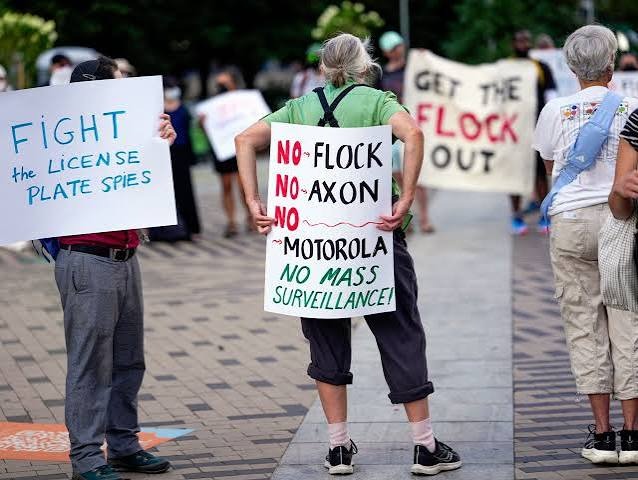
Automated license plate readers are becoming one of the most contested forms of modern surveillance as police departments, private businesses and technology companies build increasingly connected systems for identifying and tracking vehicles. The technology can help locate stolen cars and missing people, but recent cases of unauthorized law enforcement searches and controversial data sharing have intensified concerns about who can access vehicle location records and how those records can be combined with other digital information.
The debate has expanded beyond cameras mounted along roads. Tracking applications, private security systems, cloud databases and technology integrations can create networks in which information collected in one place becomes available somewhere else. For drivers, that raises an uncomfortable question: how much can a simple license plate reveal when it is repeatedly captured, stored and connected to other databases?
Automated License Plate Readers Can Create Detailed Movement Records
Automated license plate readers, commonly known as ALPR systems, use cameras and software to capture license plates and information about surrounding vehicles. Depending on the system, a record can include the plate number, an image of the vehicle, the date, time and location of the observation.
The technology has legitimate law enforcement uses. Police can use an alert to help locate a stolen vehicle, identify a vehicle associated with a serious investigation or find a missing person. The International Association of Chiefs of Police has said ALPR technology can support public safety when it is used lawfully, ethically and with appropriate safeguards. :contentReference[oaicite:0]{index=0}
The privacy concern begins when the same infrastructure creates a historical record of where vehicles have been. A single camera capture may appear insignificant. Thousands of captures over weeks or months can create a much more revealing picture of a person’s movements.
Why the Data Sharing Question Is Becoming So Controversial
The most difficult issue is not simply whether a camera records a vehicle. It is what happens after the record is created.
ALPR information can be stored in cloud databases and searched by authorized users. Some networks connect cameras operated by different agencies or private organizations, creating much broader pools of information. When agencies share those records across jurisdictions, the geographic reach of a search can expand dramatically.
A Congressional Research Service report published in September 2026 says law enforcement use of ALPR technology has become commonplace in many jurisdictions and notes heightened scrutiny following reports of misuse. The report also outlines congressional proposals and oversight questions surrounding how these systems are operated. :contentReference[oaicite:1]{index=1}
Privacy advocates argue that this creates a fundamental difference between traditional policing and automated mass collection. An officer once needed a specific reason to follow a vehicle. A network of cameras can record thousands of vehicles automatically, including people who are not suspected of committing any crime.
Recent Misuse Cases Have Deepened Public Distrust
The strongest arguments for tighter safeguards are often found in individual cases. When surveillance technology is misused by someone with authorized access, the consequences can become intensely personal.
In San Jose, California, a police officer was terminated after investigators found that he had improperly used Flock license plate tracking technology to help a suspect in a domestic abuse case. The officer reportedly accessed the system through his personal phone, tracked a woman and shared her location with the alleged abuser. The case has become another example of why access controls and auditing matter even when a surveillance system is operated by a legitimate law enforcement agency. :contentReference[oaicite:2]{index=2}
Another case in Pennsylvania involved an officer who used ALPR technology to monitor his estranged wife. Reporting on the case described hundreds of scans involving her vehicle and additional scans involving a vehicle belonging to her mother. Such incidents are especially disturbing because the technology can turn an ordinary police database into a tool for personal stalking.
These cases do not prove that every officer or agency will misuse ALPR systems. They do demonstrate something more basic: technical access is not the same thing as lawful access, and policies are only meaningful when violations can be detected and punished.
Private Cameras Add Another Layer to the Privacy Debate
Public police cameras are only part of the surveillance ecosystem. Businesses, residential communities and private property owners can also operate license plate reader systems. Those systems may collect vehicle information even though the driver has no direct relationship with the company operating the camera.
That creates a complicated question about consent. A driver may understand that a police vehicle can record a license plate while driving on a public road, but may not realize that a private parking lot, retail property or residential community is also collecting vehicle information and potentially storing it in a searchable system.
The Brennan Center for Justice has previously warned that when police seek information from privately operated ALPR systems, the decision to share data can depend on the private owner or company. The people whose vehicles are recorded may have little or no opportunity to object to those arrangements. :contentReference[oaicite:3]{index=3}
The concern becomes greater when private data and government data can interact. A camera owned by a business may appear unrelated to police surveillance until an agency requests access to the information or a technology platform makes the records available through an integration.
Social Media Connections Could Make Surveillance More Powerful
The phrase social media network can make this issue sound as though platforms such as Facebook or Instagram are directly collecting every license plate seen by roadside cameras. The reality is more complicated. The larger concern is the growing ability of surveillance systems to connect different categories of digital information.
License plate records can provide a location and time. Other databases can provide additional context. Social media monitoring tools can potentially identify online activity associated with a person or place. Facial recognition systems can contribute another layer. When these technologies are connected, information that appears harmless in isolation can become considerably more revealing.
Researchers have described ALPR networks as part of a broader surveillance infrastructure involving cameras, databases, cloud systems, police access and institutional oversight. A 2026 academic analysis specifically examined the relationship between ALPR networks and large scale data infrastructure, warning that the combination can create significant privacy and civil liberties challenges. :contentReference[oaicite:4]{index=4}
That does not mean every social media company has access to police ALPR databases. It means policymakers increasingly need to examine how surveillance information can move between systems rather than regulating each technology as though it exists alone.
Law Enforcement Agencies Say the Technology Has Real Benefits
There is a legitimate public safety argument on the other side of the debate. A stolen vehicle can cross several jurisdictions quickly. A missing person may be in immediate danger. Investigators working on a serious crime may need information that can establish where a vehicle traveled at a particular time.
ALPR systems can provide investigative leads without requiring officers to manually watch hours of video. That can save time and potentially help police respond more quickly.
The International Association of Chiefs of Police has argued that ALPR technology can improve investigations, locate missing people and recover stolen property when used responsibly. :contentReference[oaicite:5]{index=5}
The privacy debate therefore should not be reduced to a simple choice between public safety and privacy. The more practical question is how governments can retain legitimate investigative capabilities without creating unrestricted databases of ordinary people’s movements.
Communities Are Beginning to Demand Stronger Restrictions
The political response is becoming more visible across the United States. Florida recently moved to prohibit local police from using highway license plate reading cameras on state highways, citing concerns involving privacy, misuse and excessive surveillance. Texas has also taken action affecting funding for Flock camera systems. :contentReference[oaicite:6]{index=6}
Connecticut has adopted another approach. A new law scheduled to take effect October 1, 2026, places restrictions on ALPR use and limits how long agencies can retain the information except under specified circumstances. The law also restricts certain uses and establishes requirements for contracts involving private vendors. :contentReference[oaicite:7]{index=7}
These different approaches demonstrate why a nationwide debate is becoming unavoidable. One state may restrict data retention, another may limit sharing and another may prohibit certain camera placements. For technology companies and law enforcement agencies operating across state boundaries, the resulting legal landscape could become increasingly complex.
New Safeguards Are Being Introduced, but Critics Want More
Technology companies are also responding to criticism. Flock announced changes in August after reporting documented cases of police officers misusing its camera network. The company said officers would be required to associate searches with criminal case numbers and that automated systems would review searches for unusual activity. :contentReference[oaicite:8]{index=8}
Those measures could make abuse easier to identify, but critics argue that auditing after a search is not enough. The central concern is whether a system should permit certain searches in the first place and whether data should exist for long periods when it is not connected to a legitimate investigation.
A strong privacy framework therefore needs several layers of protection. Access should be limited. Searches should have documented purposes. Sensitive uses should require additional authorization. Data should not be retained indefinitely. Independent audits should be possible, and people should have meaningful avenues to challenge unlawful surveillance.
What Responsible ALPR Regulation Should Include
We believe the most effective rules would focus on purpose, necessity and accountability rather than simply banning every camera. A well designed system can preserve legitimate investigations while placing meaningful limits on mass tracking.
- Require a clearly defined law enforcement purpose for searches.
- Set strict retention limits for information that is not connected to an active investigation.
- Require additional legal authorization for sensitive searches.
- Maintain detailed and independently reviewable access logs.
- Restrict sharing with agencies or organizations that cannot demonstrate a lawful purpose.
- Provide public reporting about the scale and use of ALPR systems.
These protections would also help responsible police departments. Clear rules reduce uncertainty for officers and create stronger evidence that surveillance tools are being used for legitimate public safety purposes rather than personal investigations.
The Public Wants Security Without Permanent Tracking
The emotional core of this debate is easy to understand. Most people want stolen cars recovered and missing children found. They want serious crimes investigated efficiently. But they also want to drive to work, visit a doctor, attend a religious service, meet a friend or travel across town without creating a permanent record that can later be examined by an unknown person.
That expectation of ordinary privacy becomes harder to maintain when cameras are everywhere and databases communicate with one another. The technology does not need to identify a person’s name immediately to create a meaningful record. A repeated pattern of vehicle locations can reveal where someone lives, works, shops and spends time.
The Next Fight Will Be Over Who Controls the Data
The controversy surrounding automated license plate readers is likely to continue as surveillance networks become larger and more connected. The technology itself is not standing still. Artificial intelligence can make searches faster, identify patterns across enormous databases and allow investigators to retrieve information using increasingly sophisticated tools.
That makes governance more important, not less. A database capable of answering almost any question about where a vehicle has been requires stronger controls than a single camera that stores a short record.
For technology companies, the lesson is that privacy cannot be treated as a secondary feature added after a surveillance network is deployed. For police departments, access must be tied to legitimate investigative needs. For lawmakers, the challenge is to establish rules that remain effective even as surveillance technologies change.
The central question is ultimately simple: should the ability to record where millions of vehicles travel automatically create the ability to search those movements whenever someone with access wants to look?
As recent misuse cases and new state restrictions demonstrate, an increasing number of communities are answering no. The next stage of the debate will determine whether governments and technology companies can build a system in which public safety benefits remain available without turning everyday travel into a searchable history of private life.