International real estate capital is increasingly following the infrastructure that keeps modern economies moving. Across Europe and South Asia, logistics facilities, industrial properties and data centers are drawing greater attention from institutional investors as supply chains, cloud computing and artificial intelligence reshape the physical demand for land and buildings. While the available market evidence does not establish one single coordinated reallocation by all sovereign funds and international REITs on September 16, 2026, it does show a clear investment trend toward infrastructure linked property assets.
Why Infrastructure Is Becoming Central to Real Estate Investment
For decades, commercial real estate investment was often associated with offices, shopping centers and conventional residential development. Today, the physical requirements of digital commerce and computing are changing that equation. A warehouse near a major transport corridor can be critical to a retailer’s delivery network, while a data center can become essential infrastructure for cloud services, artificial intelligence applications and financial systems.
We are seeing investors pay closer attention to what sits behind the property itself. Access to electricity, transport networks, fiber connectivity, industrial land and reliable tenants can matter as much as the building. This is particularly visible in European logistics markets, where recent research points to stronger demand for facilities connected to nearshoring, advanced manufacturing and automation.
CBRE’s 2026 European logistics outlook expects moderate growth in logistics demand while noting that speculative development remains constrained. The firm also identifies a widening gap between high quality logistics properties and less efficient facilities, suggesting that investors and occupiers are becoming more selective about the physical characteristics of industrial assets.
Europe’s Logistics Hubs Draw Institutional Attention
European logistics property remains an important destination for institutional capital. Germany, the Netherlands, the United Kingdom, France, Spain, Italy and Central and Eastern Europe all have significant industrial and distribution networks, although market conditions vary substantially from one country to another.
Recent research from Colliers describes industrial and logistics assets as a cornerstone of EMEA real estate investment. The report points to continued activity in established markets while noting growing interest in Central and Eastern Europe, where investors are examining access to land, pricing and supply chain expansion.
Poland and other Central European markets have benefited from manufacturing investment and changing supply chains. Warehouses close to major highways, rail connections and population centers can serve both domestic consumption and international distribution. For investors, this creates an opportunity to participate in the physical infrastructure supporting trade without relying entirely on traditional office demand.
Power Is Becoming a Property Issue
One of the most significant changes is the growing importance of electricity. Modern warehouses increasingly depend on automation, robotics and advanced information systems. Data centers require vastly greater amounts of power for computing, cooling and networking.
A September 2026 analysis from the GRI Institute found that high voltage power availability and energy self sufficiency have become increasingly important considerations in European logistics markets. Developers are also looking at existing properties that can be upgraded with solar generation, additional power capacity and automation infrastructure.
This changes how a property is evaluated. A building with excellent road access may have limited expansion potential if the surrounding electrical grid cannot support additional demand. Conversely, an industrial site with secure power and strong connectivity can become more attractive even when it is outside a traditional prime location.
Data Centers Are Moving Further Into Mainstream Real Estate
The growth of artificial intelligence is accelerating demand for data center capacity. Cloud computing, enterprise software, streaming services and AI workloads all require physical facilities filled with servers, networking equipment and cooling systems.
Colliers reported in January 2026 that data centers had become a mainstream target for EMEA investors, with the sector accounting for 31 percent of global capital raised during the first three quarters of 2025, compared with an average of 15 percent since 2020. The figures illustrate how quickly digital infrastructure has moved into institutional real estate discussions.
European data center development is nevertheless constrained by the availability of electricity and the time required to secure grid connections. Colliers reported in its first half 2026 market review that power availability, grid connection timelines and planning constraints were increasingly determining where new capacity could be delivered.
That reality is pushing investors to examine infrastructure alongside property. A data center is not simply a building that happens to contain computers. Its commercial usefulness depends on power, connectivity, cooling, planning approvals and the ability to operate reliably around the clock.
South Asia Emerges as a Major Digital Infrastructure Market
India is becoming one of the most closely watched data center markets in Asia. Its large population, expanding digital economy, cloud adoption and growing AI requirements are creating demand for additional computing capacity.
Cushman and Wakefield reported in September 2026 that India’s operational data center capacity had reached nearly 1.8 gigawatts, compared with roughly 400 megawatts in 2019. The firm also identified a development pipeline of almost 3.9 gigawatts, with Mumbai remaining the country’s largest data center market and Hyderabad, Chennai and Delhi NCR strengthening their positions.
The expansion is not confined to the traditional technology centers. New projects are also emerging in locations where land, electricity and connectivity can support large facilities. Visakhapatnam, for example, has attracted attention for AI focused data center investment.
The scale of this opportunity has also encouraged major real estate companies to commit significant capital. Reuters reported in June 2026 that Indian real estate company RMZ was planning a substantial expansion of its data center capacity, with a proposed investment program of $35 billion over five years.
Industrial Property and Data Centers Are Becoming Connected
The distinction between industrial real estate and digital infrastructure is becoming less clear. A logistics operator may require sophisticated software, automated sorting equipment and reliable power. A data center may need industrial land, transmission infrastructure and access to construction supply chains.
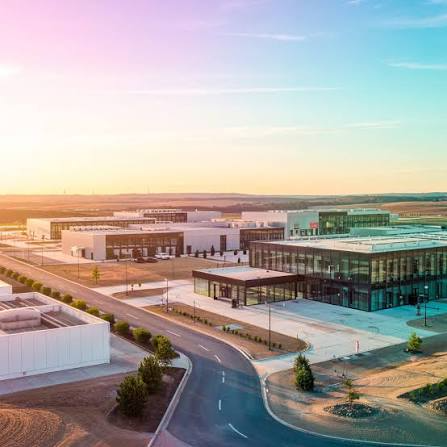
This creates opportunities for property owners that can provide more than basic floor space. Industrial parks with strong electrical connections, fiber networks and transport access may be positioned to support several types of technology intensive tenants.
We can also expect greater interest in locations where multiple infrastructure advantages overlap. A site near a major city with highway access, available electricity, fiber connectivity and industrial zoning can serve a broader range of future uses than a conventional property with only location advantages.
Sovereign Investors Face a Different Set of Considerations
Sovereign wealth funds and other large institutional investors typically have long investment horizons. That can make infrastructure linked property particularly relevant because data centers and logistics facilities may support essential economic activity over many years.
Recent transactions also show sovereign capital participating in broader infrastructure strategies. Reuters reported in September 2026 that Norges Bank Investment Management, which manages Norway’s sovereign wealth fund, joined a consortium with EQT in a bid for renewable energy company Acciona Energia. Although that transaction is not itself a real estate investment, it illustrates the wider interest of major institutional capital in assets connected to energy and infrastructure.
For property investors, the implication is straightforward. Real estate is increasingly being assessed as part of a larger infrastructure system rather than as an isolated building. The financial characteristics of a warehouse or data center depend heavily on the networks surrounding it.
Risks Could Limit the Speed of the Capital Shift
The infrastructure theme does not remove the traditional risks of real estate investing. Higher construction costs, financing conditions, planning delays and changing tenant demand can still affect project economics.
Data centers face an additional challenge because electricity demand is growing faster than infrastructure can always be delivered. European markets are particularly sensitive to grid constraints, while large AI facilities can require enormous power connections.
Industrial property also faces a risk of overbuilding in locations where developers respond too aggressively to expected demand. A facility may look attractive on paper but struggle if transportation infrastructure is weak, labor is unavailable or competing properties enter the market simultaneously.
Environmental considerations are also becoming increasingly important. Data centers consume substantial electricity and require cooling, while logistics facilities can increase pressure on land and transportation systems. Investors therefore have to consider energy efficiency, renewable power availability and the long term resilience of physical assets.
What the New Investment Pattern Means for Property Markets
The growing focus on infrastructure hubs could gradually reshape commercial real estate geography. Cities that already have strong transport networks, power infrastructure and digital connectivity may attract additional capital. Secondary locations could also benefit when they offer cheaper land and reliable access to essential infrastructure.
For developers, the message is that construction alone is not enough. Securing power, planning permission, connectivity and credible long term tenants can determine whether a project becomes a valuable institutional asset.
For investors, the shift creates a more detailed underwriting process. They may need to examine grid capacity, fiber availability, transport links, tenant technology requirements and the potential cost of future upgrades alongside conventional measures such as rent, vacancy and capitalization rates.
A Real Estate Market Built Around Infrastructure
The evidence emerging across Europe and South Asia points toward a real estate market increasingly shaped by the infrastructure economy. Logistics facilities support changing trade patterns and manufacturing networks, while data centers provide the physical foundation for cloud services and artificial intelligence.
The strongest assets will not necessarily be the buildings with the most impressive architecture. Their value may increasingly depend on less visible features beneath the surface: a reliable power connection, a fiber route, a highway interchange, a nearby workforce or a planning framework capable of supporting future expansion.
That is changing the conversation around cross border property investment. Capital is still looking for income, growth and diversification, but the physical systems supporting modern commerce are becoming part of the investment thesis itself.
As institutional investors continue assessing Europe and South Asia, the next phase of global real estate may be defined less by traditional property categories and more by the infrastructure networks that make those properties useful. For logistics operators, technology companies, developers and communities, that shift could bring new investment and employment opportunities while also making power, land use, connectivity and sustainable development central questions for the years ahead.