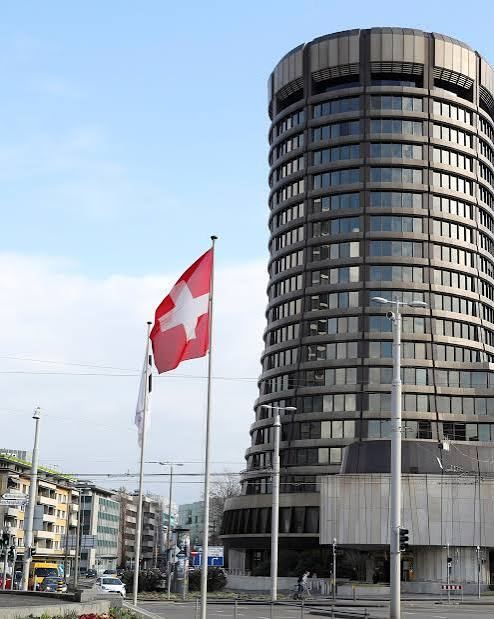
Central banks are moving closer to a new model for international payments in which digital central bank money, tokenized deposits and programmable financial infrastructure could work together across currencies. As of September 16, 2026, there is no verified announcement of a single new global blueprint jointly enforcing cross border CBDC settlements through decentralized finance networks. The documented direction, however, is significant. The Bank for International Settlements and participating central banks have been testing shared platforms, automated foreign exchange mechanisms and tokenized settlement systems designed to reduce the cost, delay and complexity that still surround international financial transactions.
Why Cross Border Payments Are Being Rebuilt
For a business sending money across a border, the payment can feel surprisingly old fashioned. A transaction that looks almost instant on a phone screen may still pass through several banks, currency accounts, messaging systems and compliance checks before the recipient receives final settlement.
Those layers exist for important reasons. Banks must manage liquidity, verify transactions, comply with financial regulations and maintain confidence in the monetary system. Yet they can also create delays, additional costs and fragmented information. The Bank for International Settlements has repeatedly identified these structural problems as major obstacles to more efficient international payments.
CBDCs could address part of that problem because they can represent central bank money in a digital form. The more difficult question is what happens when one country’s digital currency needs to interact with another country’s currency. That requires interoperability, foreign exchange mechanisms, legal coordination and rules governing access by institutions outside the issuing jurisdiction.
Project Agorá Points Toward a Shared Digital Settlement Model
The most significant current development is Project Agorá, a public and private collaboration convened by the Bank for International Settlements and the Institute of International Finance. The project brings together seven central banks and more than 40 regulated financial institutions to examine how tokenization and programmable technology can improve wholesale cross border payments.
In May 2026, the project published results from its prototype. The system demonstrated that tokenized commercial bank deposits could operate alongside tokenized central bank reserves on a shared platform. It also demonstrated atomic settlement across currencies and jurisdictions, meaning connected transaction steps can be completed together rather than leaving one side exposed while another remains unfinished.
The Bank for International Settlements describes Agorá as an ongoing project rather than a universal payment network already adopted by central banks worldwide. Its findings nevertheless provide a concrete demonstration of how future international settlement infrastructure could work.
CBDCs Could Change the Way Foreign Currency Liquidity Moves
Liquidity is one of the most important issues behind the push toward digital settlement. Banks involved in international transactions need access to different currencies at the right time and in the right amounts. Traditional arrangements can require institutions to maintain balances across multiple jurisdictions or depend on intermediary relationships.
A multi currency digital settlement platform could allow participating institutions to interact with tokenized forms of different currencies through a shared infrastructure. That does not mean central banks surrender control of their national currencies. Instead, the architecture being explored by international projects is intended to preserve domestic monetary authority while allowing regulated institutions to transact across borders.
This distinction is crucial. A shared technological platform does not necessarily mean a shared currency or a single global central bank. Each participating authority can retain responsibility for its own monetary system while agreeing on technical and operational standards that allow different systems to communicate.
What DeFi Has to Do With Central Bank Money
The connection between CBDCs and decentralized finance requires careful explanation. Decentralized finance generally refers to financial applications that use distributed ledger technology and smart contracts to automate transactions without relying entirely on traditional intermediaries.
Central banks have explored selected DeFi concepts without necessarily endorsing the broader cryptocurrency ecosystem. Project Mariana, completed by the BIS Innovation Hub with the central banks of France, Singapore and Switzerland, tested automated market makers for foreign exchange transactions involving hypothetical wholesale CBDCs.
The experiment showed how an automated market maker could provide liquidity between different tokenized currencies and execute foreign exchange transactions automatically. The project was experimental and did not indicate that participating central banks intended to issue wholesale CBDCs or adopt DeFi as a complete financial system.
This distinction remains important in 2026. The technology can be tested without governments committing to unrestricted public financial networks.
From Automated Foreign Exchange to Atomic Settlement
Foreign exchange is at the center of the challenge. A company in one country may need to pay a supplier in another currency, while banks on both sides must ensure that the exchange happens securely and with final settlement.
Traditional foreign exchange arrangements can involve multiple stages. A programmable digital system could instead coordinate the exchange and settlement process through smart contracts and shared infrastructure.
Why Atomic Settlement Matters
Atomic settlement is important because it can reduce the risk that one party completes its side of a transaction while the other side does not. If the conditions of a transaction are met, the relevant transfers can occur as one coordinated process.
Project Agorá demonstrated the technical possibility of atomic settlement involving tokenized central bank reserves and tokenized commercial bank deposits. The project also examined how compliance requirements and transaction conditions could be incorporated directly into programmable financial workflows.
For banks and large corporations, the potential benefit is not simply speed. Better synchronization could reduce reconciliation work, manual intervention and uncertainty around when funds have actually settled.
CBDC Interoperability Is Still a Major Challenge
Creating a digital currency inside one country is fundamentally different from creating a system that works across several countries. Every central bank has its own legal framework, payment infrastructure, monetary policy responsibilities and financial stability concerns.
A joint report from the BIS, the International Monetary Fund, the World Bank and the Committee on Payments and Market Infrastructures previously identified interoperability and international cooperation as prerequisites for CBDCs to improve cross border payments. The report also concluded that there is no single solution that will work for every jurisdiction.
That finding remains relevant. Some countries may choose direct interoperability between CBDC systems. Others may use shared platforms, intermediary arrangements or systems that connect domestic payment networks without requiring a digital currency to leave its home environment.
Financial Regulation Cannot Be Left Behind
The technological architecture is only one part of the challenge. Regulators must also determine how international digital transactions will be monitored and governed.
Cross border CBDC systems will need mechanisms for preventing money laundering, terrorist financing and sanctions violations. They will also need rules governing access, privacy, data protection, foreign exchange controls and the responsibilities of participating financial institutions.
Central banks face another delicate issue: monetary sovereignty. A digital currency that becomes widely used outside its issuing country could influence liquidity conditions, capital flows and financial stability in other jurisdictions. Any international settlement framework therefore has to balance efficiency with the authority of individual monetary systems.
Privacy and Transparency Must Work Together
Digital settlement can potentially provide better transaction visibility than traditional systems, but greater visibility also creates difficult questions about privacy.
Financial institutions need enough information to meet regulatory obligations. At the same time, businesses and individuals should not automatically expose every financial detail simply because the underlying payment infrastructure becomes digital.
Project Agorá has explored privacy protection at both transaction and balance levels while maintaining regulatory compliance. That work illustrates the broader challenge facing digital finance: regulators want transactions to be traceable when legitimate investigations require it, while participants need safeguards against unnecessary disclosure.
What This Could Mean for International Business
If these technologies eventually move from experimental systems into production infrastructure, businesses could experience changes in how international payments are processed.
Payments could potentially settle outside traditional banking hours. Foreign exchange conversion could become more closely connected to the payment itself. Treasury departments could receive better visibility into international liquidity, while programmable transactions could automatically trigger payments when contractual conditions are satisfied.
For smaller companies, the benefits would depend heavily on whether financial institutions pass efficiency gains through to customers. A faster settlement system does not automatically guarantee cheaper banking services, particularly when compliance and foreign exchange costs remain significant.
The Road From Experiments to Real Transactions
One of the clearest signs that this work is progressing is the move from theoretical research toward increasingly sophisticated prototypes. Project Agorá has indicated that its next stage will involve testing real value transactions with selected currencies and participants.
That step matters because experimental systems can operate under controlled conditions that do not necessarily reflect the complexity of real financial markets. Real transactions introduce operational risks, regulatory requirements, liquidity constraints and unexpected interactions between institutions.
The transition will therefore require careful testing rather than a sudden replacement of existing payment networks.
A Global CBDC Network Is Not Here Yet
We should resist describing the September 2026 landscape as the arrival of a single worldwide CBDC settlement system. The evidence instead shows a collection of interconnected experiments and policy discussions moving toward common objectives.
Project mBridge reached a minimum viable product stage in 2024 after testing multi currency central bank digital settlement. Project Mariana demonstrated how automated market makers could support foreign exchange involving hypothetical wholesale CBDCs. Project Agorá is now exploring a broader shared programmable platform combining tokenized central bank reserves with tokenized commercial bank deposits.
These projects represent different approaches to the same underlying problem: how to make international financial transactions faster and more efficient without sacrificing the stability, oversight and trust provided by central bank money.
The Financial System Is Moving Toward Programmable Settlement
The significance of these developments extends beyond CBDCs. Tokenized deposits, digital securities, programmable contracts and distributed ledger infrastructure are increasingly being tested together rather than as isolated technologies.
The BIS has described a possible future financial architecture in which central bank money, commercial bank money and tokenized financial assets can operate on interconnected or shared infrastructure. Such a system could allow payment and settlement to happen together, reducing some of the separation that exists in traditional financial markets.
That future is still being tested. Questions about governance, legal responsibility, cybersecurity, monetary sovereignty and financial stability remain unresolved in many jurisdictions.
What Comes Next for Cross Border Digital Finance
For us, the most meaningful development is not the arrival of a new digital currency. It is the gradual redesign of the infrastructure underneath international finance.
Central banks are exploring whether digital forms of central bank money can move across jurisdictions without weakening national monetary systems. Regulators are examining how automated settlement can operate within established financial rules. Banks are testing whether tokenized deposits can interact safely with central bank reserves. Technology teams are exploring whether smart contracts can reduce manual processes without creating new systemic risks.
The September 2026 picture therefore points toward experimentation rather than a completed global mandate. A single international blueprint linking every CBDC to decentralized finance networks has not been verified. What has been demonstrated is more concrete and potentially more consequential: major financial institutions and central banks are testing shared programmable infrastructure capable of settling transactions across currencies and borders.
If these experiments succeed in real value environments, international payments could gradually become more synchronized, programmable and transparent. The difficult work will be ensuring that those gains arrive without compromising financial stability, privacy or the independence of national monetary authorities.