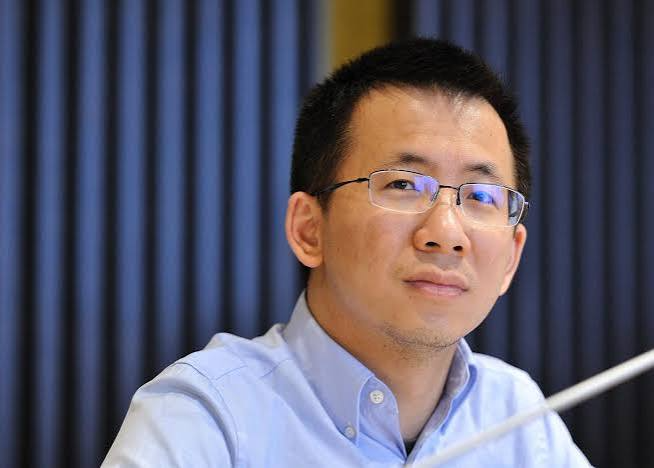
Zhang Yiming, the founder of ByteDance and the entrepreneur behind TikTok, has become Asia’s richest person, with his estimated fortune rising above $105 billion as of September 2026. The jump places him ahead of Indian industrialist Gautam Adani and reflects the extraordinary financial scale that ByteDance has built through social media, advertising, ecommerce and increasingly artificial intelligence. For us, the more revealing part of this wealth story is not simply the size of Zhang’s fortune, but how rapidly the economics of digital media and AI are reshaping the global billionaire rankings.
Zhang Yiming Moves to the Top of Asia’s Wealth Rankings
According to the Bloomberg Billionaires Index, Zhang’s fortune exceeded $105 billion in September, making him the wealthiest individual in Asia. Reuters reported that his fortune had surpassed those of Gautam Adani and Japan’s Masayoshi Son, while other reporting placed Zhang around 18th on the global billionaire ranking at the time of the latest estimate. :contentReference[oaicite:0]{index=0}
The change represents a remarkable increase from the estimated $13 billion fortune Bloomberg recorded when it began tracking Zhang in 2019. His wealth has therefore increased more than eightfold in roughly seven years. Recent private company valuation adjustments were a major factor behind the latest increase, with investment firms including BlackRock, Fidelity and T. Rowe Price contributing to higher implied valuations for ByteDance. :contentReference[oaicite:1]{index=1}
Because ByteDance remains a privately held company, Zhang’s estimated net worth does not move in exactly the same way as the wealth of founders whose companies trade publicly. His fortune depends heavily on estimates of ByteDance’s private valuation and his ownership stake. Bloomberg applies a risk discount to account for that private company structure. :contentReference[oaicite:2]{index=2}
From TikTok to a Much Larger ByteDance Business
When many people think of ByteDance, TikTok is the first name that comes to mind. The short video platform has become one of the most widely used social applications in the world, reaching more than a billion users globally according to Forbes. But ByteDance is much larger than TikTok alone.
The company operates Douyin in China, along with businesses spanning ecommerce, news, education, gaming and artificial intelligence. This broad portfolio has given ByteDance several sources of commercial growth and reduced its dependence on a single digital platform.
Advertising remains central to the company’s business model. Every time users scroll through personalized video feeds, the platform creates opportunities for advertisers to reach highly specific audiences. That enormous flow of user attention can be converted into advertising revenue at a scale that traditional media companies have struggled to match.
The result is a powerful economic cycle. More users generate more viewing activity, more viewing activity creates more opportunities for advertising and ecommerce, and stronger commercial performance can increase the value investors place on the company.
Artificial Intelligence Is Becoming a Major Source of Zhang’s Wealth
The latest increase in Zhang’s fortune is not simply a TikTok story. Artificial intelligence has become increasingly important to ByteDance’s growth strategy, and analysts cited by Reuters have identified the company’s AI investment as one of the major factors supporting its valuation. :contentReference[oaicite:3]{index=3}
ByteDance has developed AI products including Doubao, an AI assistant, and Seedance, a video generation system. These products place the company at the intersection of two rapidly expanding industries: social media and generative artificial intelligence.
That combination is particularly significant. ByteDance already possesses large consumer platforms, sophisticated recommendation systems and enormous experience in processing digital content. Its AI ambitions allow the company to apply that technological expertise to products that extend beyond short video.
Forbes reported that Doubao had reached 345 million monthly active users during the first quarter of 2026, making it China’s most popular AI powered application at that point according to data from QuestMobile. :contentReference[oaicite:4]{index=4}
Why Advertising Still Matters to the Wealth Story
The growth of digital advertising provides an important part of the explanation for how social platforms can create enormous private fortunes. Traditional media once depended heavily on newspapers, television schedules, radio audiences and physical distribution. Digital platforms operate differently.
TikTok and Douyin can collect information about how users interact with content and use recommendation systems to determine what appears in their feeds. That creates an advertising environment in which businesses can target consumers according to interests, behavior and other signals permitted by the platform.
For advertisers, the attraction is measurable reach. For ByteDance, the scale of its audience creates an enormous inventory of advertising opportunities. Ecommerce adds another layer because users can potentially move from watching content to discovering products and completing purchases within connected digital ecosystems.
This helps explain why a company that began with a recommendation focused content application has grown into a business whose valuation reflects far more than video views.
Private Valuations Make Billionaire Wealth Estimates Different
There is an important distinction between estimated billionaire wealth and money sitting in a bank account. Zhang does not have more than $105 billion in cash. Most of his estimated fortune is connected to his ownership of ByteDance and the valuation assigned to the privately held company.
When investors place a higher value on ByteDance, the estimated value of Zhang’s stake rises. If the company’s valuation falls, his estimated wealth can decline even without him buying or selling shares.
For readers following billionaire rankings, this distinction is crucial. The figures are useful indicators of ownership value, but they should not be interpreted as liquid personal wealth that can immediately be spent.
Zhang’s Rise Comes After Major TikTok Regulatory Pressure
Zhang’s rise in wealth is also notable because ByteDance has faced substantial regulatory and geopolitical pressure, particularly around TikTok’s operations in the United States.
Forbes reports that ByteDance ceded control of TikTok’s US business in 2026 to a consortium involving American investors including Oracle and Silver Lake, allowing the service to continue operating in the United States. :contentReference[oaicite:5]{index=5}
The development followed years of political and regulatory uncertainty surrounding TikTok’s ownership and data practices. Despite those challenges, ByteDance continued expanding in other areas, particularly artificial intelligence.
That diversification has become increasingly important. A company whose identity was once strongly associated with a single social video application is now being valued partly for its potential as an AI technology company.
A New Pattern in Asia’s Billionaire Rankings
Zhang’s rise also illustrates a broader change in the composition of extreme wealth in Asia. For decades, the region’s wealth rankings were heavily influenced by industrial conglomerates, energy businesses, manufacturing, property and infrastructure.
Zhang represents a different model. His fortune was created primarily through software, internet platforms, digital advertising and artificial intelligence. Reuters described his rise as an example of how AI investment, government support and the flexibility available to a private company have contributed to ByteDance’s growth. :contentReference[oaicite:6]{index=6}
This does not mean traditional industries have disappeared from the wealth rankings. Rather, the latest shift shows that digital technology can create fortunes on a scale once associated mainly with physical assets and large industrial groups.
What Zhang’s Fortune Says About the Media Industry
There is a deeper economic lesson in Zhang’s rise. Media consumption has become an increasingly valuable commercial asset because attention can be measured, segmented and monetized at enormous scale.
A person watching short videos on a phone may feel far removed from global financial markets, yet each viewing session contributes to an ecosystem connecting creators, advertisers, merchants, technology companies and investors. Millions of individual interactions can ultimately support a business valued in the hundreds of billions of dollars.
That connection between everyday entertainment and corporate valuation is one of the defining features of modern digital media. The smartphone screen may look small, but the economic network behind it is immense.
Why Artificial Intelligence Could Matter Even More
ByteDance’s future valuation will depend on whether its AI investments can become commercially significant while the company continues managing regulatory pressure and competition.
AI products require enormous computing resources, specialized talent and sustained investment. Reuters reported that ByteDance was expected to invest heavily in AI during 2026, while the company had also secured significant financing that supports its ability to fund expansion. :contentReference[oaicite:7]{index=7}
The opportunity is equally substantial. AI assistants, automated content creation, video generation and recommendation technology can connect naturally with ByteDance’s existing consumer platforms. If those businesses develop successfully, they could give the company additional revenue streams beyond advertising and ecommerce.
What Comes Next for Zhang Yiming and ByteDance
Zhang’s position at the top of Asia’s wealth rankings is based on a valuation that can change as private market estimates change. His standing therefore should not be treated as permanent. Billionaire rankings can shift quickly when company valuations, currencies, financial markets or ownership estimates move.
For now, however, the milestone demonstrates how far ByteDance has traveled since Zhang founded the company in a Beijing apartment in 2012. Forbes notes that the company began from a four bedroom apartment before developing into a global technology group whose best known products reach audiences across the world. :contentReference[oaicite:8]{index=8}
We can read Zhang’s rise as a story about much more than one entrepreneur. It reflects the enormous commercial value of global attention, the power of recommendation driven media and the growing financial importance of artificial intelligence. TikTok helped make ByteDance a household name, but AI may determine how the company is valued in its next chapter.
As global wealth rankings continue to change, Zhang Yiming’s ascent offers a clear snapshot of where technology, media and capital are converging. The fortune attached to his name may rise or fall with future valuations, but the larger economic trend is already visible: digital platforms that command attention and develop advanced AI capabilities can generate extraordinary financial value, reshaping the hierarchy of wealth across Asia and the wider global economy.