North Korea has moved its next international marathon from its traditional spring schedule to October 2027, offering foreign runners another possible opportunity to race through the streets of Pyongyang after the cancellation of this year’s event. The announcement, shared by Beijing based travel company Koryo Tours on November 21, marks a six month change to one of the country’s rare sporting events open to international participants. However, the exact race date has not yet been officially confirmed, and uncertainty remains over how many foreign visitors will be permitted to enter North Korea for the competition.
Pyongyang Marathon Expected to Return in October 2027
Koryo Tours, which describes itself as the exclusive partner of the Pyongyang International Marathon, said it had been informed by its contacts on the Pyongyang International Marathon Committee that the 2027 event would no longer take place in April. Instead, October is now considered the likely month for the race.
The company said October 3, 2027, was the date it currently expected, but stressed that confirmation was still pending. The distinction matters for runners considering international travel, accommodation and training schedules. At this stage, the announcement represents a change to the expected timing, not a fully confirmed event calendar.
The tour operator has also cautioned that bookings are not yet open. It is waiting for further information about travel arrangements, participant capacity and the conditions under which foreign visitors may be allowed into the country. Those who had registered for the cancelled 2026 marathon and retained their deposits are expected to receive priority when places become available.
For runners who had hoped to experience the unusual setting of a race in North Korea, the announcement offers a reason to remain interested, but not yet a reason to make nonrefundable travel arrangements.
A Marathon With a Long Political and Sporting History
The Pyongyang International Marathon has been held since 1981. Traditionally scheduled around April 15, the event is associated with the birthday of North Korea’s late founding leader, Kim Il Sung. It has served both as a domestic athletics competition and as a carefully organized international event through which the country can receive a limited number of foreign visitors.
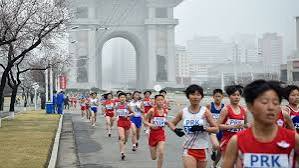
The race has taken place on streets in the North Korean capital, with participants running past major public buildings and landmarks before finishing at Kim Il Sung Stadium. Crowds have historically gathered inside the stadium to watch the final runners arrive, creating an atmosphere very different from that of most international road races.
For overseas participants, the appeal has never been limited to the athletic challenge. The marathon offers a rare opportunity to see parts of Pyongyang under organized visitor arrangements. At the same time, the experience takes place within a tightly controlled tourism environment. Foreign runners do not have the freedom to explore the country independently, and participation depends on government permission and approved travel arrangements.
The event is therefore unusual in the international sporting calendar. It combines distance running with a tightly managed visitor experience in a country where independent tourism remains highly restricted.
Why the Marathon Disappeared for Five Years
The marathon was suspended for five consecutive years beginning in 2020 as North Korea closed its borders during the COVID 19 pandemic. The restrictions sharply limited international travel and prevented foreign runners from attending the event.
The race returned on April 6, 2025, marking its first edition in six years. Around 200 foreign runners took part alongside more than 200 North Korean competitors. Local athletes won both the men’s and women’s races, while the presence of international participants restored an element of the event that had been absent throughout the pandemic period.
The 2025 return was significant because it suggested that North Korea was once again prepared to admit selected foreign visitors for a major sporting occasion. However, it did not signal a broad or unrestricted reopening of the country to international tourism.
The following year’s competition was expected to continue that return. Organizers had planned the 2026 marathon for April 5 and tour packages were promoted to attract overseas runners. Yet North Korean authorities cancelled the event approximately one month before it was due to take place.
The cancellation was confirmed through the country’s athletics association, but no detailed public explanation was provided. Koryo Tours said deposits from registered participants would be returned under its terms or could be retained for a future event. The lack of an explanation left runners and travel organizers uncertain about the reasons behind the decision.
Foreign Participation Remains Below Pre Pandemic Levels
Although the 2025 race marked an important return, international participation remained considerably lower than before the pandemic. Approximately 950 foreign runners competed in the 2019 event, compared with around 200 in 2025.
The difference reflects more than the popularity of the marathon. International participation depends on whether North Korea permits visitors to enter, which nationalities can obtain permission, how tour groups are organized and whether transportation links are operating. Even runners who are physically prepared and financially able to travel cannot participate unless the necessary approvals and arrangements are in place.
The number of places available in 2027 will therefore be an important detail. Koryo Tours has warned that demand could exceed supply, particularly among people who had already registered for the cancelled 2026 race. The company has indicated that those who retained their deposits are expected to receive priority before additional places are offered.
There is also the possibility that capacity could increase if international tourism resumes more broadly before October 2027. More available transport options and greater flexibility in approved travel arrangements could make it easier to accommodate participants. If restrictions remain in place, visitor numbers may continue to depend on the limits set by North Korean authorities.
What Runners Can Expect From the 2027 Event
Koryo Tours has indicated that the familiar race distances are expected to remain available. These include the full marathon, half marathon, 10 kilometer race and 5 kilometer event. This range would allow experienced distance runners and people seeking a shorter challenge to take part if the competition proceeds as expected.
The full marathon is the principal athletic challenge, requiring months of preparation and careful attention to endurance, nutrition and recovery. The shorter races provide alternatives for visitors who want to participate without undertaking the demands of a full 42.195 kilometer course.
However, runners should distinguish between the distances currently expected and details that have received final official confirmation. The precise schedule, entry conditions, course arrangements and travel packages remain subject to further announcements.
Anyone considering participation should also remember that the marathon is not a conventional independent running holiday. Travel is organized through approved channels, and visitors must follow local rules and instructions throughout their stay. The experience may be very different from attending a race in a country where tourists can move freely between neighborhoods, hotels and public attractions.
October Timing Raises Questions About the Change
The move from April to October is a notable departure from the marathon’s established calendar. The traditional spring timing connects the competition to April 15 commemorations, while an autumn race would place it in a different part of the country’s annual events schedule.
No official reason has been given for the change. It would therefore be premature to attribute the decision to weather, tourism policy, political developments or logistical problems. The available information confirms the expected new month, but not the authorities’ motivation.
Weather could be one practical consideration for runners planning an autumn competition, although the final course and conditions will depend on the confirmed date. Participants should wait for official event guidance before making assumptions about temperatures, race preparation or travel requirements.
The timing change also raises questions about whether the marathon is becoming less closely tied to its traditional April commemorations. For now, the available announcement establishes only that the 2027 event is expected in October. Any broader interpretation would require further information from the organizers or North Korean authorities.
Travel Restrictions Remain the Biggest Uncertainty
For many potential participants, the central question is not the distance they will run but whether they will be able to enter North Korea at all. The country maintains strict controls over foreign tourism, and access can change with limited public notice. A planned sporting event does not automatically mean that ordinary international travel has resumed.
Koryo Tours has said that future capacity will depend partly on the state of tourism and the transport options available closer to the event. If travel remains limited, visas, permitted lengths of stay, accommodation and transportation may all be subject to restrictions administered by North Korean authorities and the country’s athletics association.
Runners should monitor official announcements and guidance from their own governments before considering travel. They should also avoid treating an expected date as a guarantee that the competition will take place. The abrupt cancellation of the 2026 race is a clear reminder that event plans can change even after promotional activity and registration preparations have begun.
The Koryo Tours website is publishing updates about the 2027 marathon and is the most direct place for prospective participants to follow booking information from the event’s stated travel partner.
What the Postponement Means for North Korea’s International Sporting Calendar
The Pyongyang International Marathon occupies a distinctive position in North Korea’s limited engagement with international sporting visitors. Unlike major competitions that bring large delegations, media organizations and spectators into host countries, this event operates on a comparatively small scale and within strict travel arrangements.
Its return in 2025 showed that selected foreign sporting visitors could again be admitted after years of pandemic related restrictions. The cancellation in 2026 demonstrated that access remained uncertain. The proposed October 2027 date now offers another possible opening, but the event’s future will depend on decisions that runners and tour operators do not control.
For international athletics, the marathon is also a reminder that sporting events can create rare points of contact between people who otherwise have few opportunities to meet. Local and foreign runners sharing a course can experience a common athletic challenge, even when their lives and circumstances are very different. Yet the value of that exchange depends on reliable arrangements, clear rules and the ability of participants to travel safely.
Runners Should Wait for Final Confirmation Before Booking
As of November 22, 2026, the expected October 2027 date is a significant update, but several important details remain unresolved. October 3 is a likely date rather than a confirmed race day. Public bookings have not opened, and the number of foreign places will depend on travel conditions and official permission.
Runners who previously registered for the cancelled 2026 competition should follow the deposit arrangements communicated by their tour operator. New participants should wait for confirmed dates, entry requirements and travel packages before paying for flights or other nonrefundable expenses.
The Pyongyang International Marathon may return next autumn after a difficult period marked by pandemic closures and an unexpected cancellation. For now, the announcement offers cautious hope rather than certainty. Whether hundreds of international runners will once again gather in the North Korean capital will depend on decisions still to come, making the months ahead just as important as the race itself.