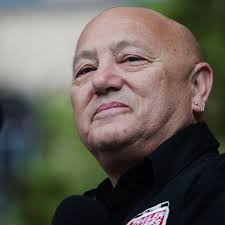
Australian rock music has lost one of its most recognisable voices. Gary “Angry” Anderson, the longtime frontman of Rose Tattoo, died on September 21, 2026, at the age of 79, surrounded by loved ones in Australia. His death closes a remarkable 50 year chapter in Australian music and marks the passing of the last surviving founding member of the internationally recognised hard rock band.
For generations of listeners, Anderson was more than a singer behind a microphone. With his tattooed arms, powerful voice and unmistakable stage presence, he became one of the defining figures of Australian pub rock. Yet his career extended far beyond loud guitars and packed venues. He was also an actor, television personality, youth advocate, charity ambassador and devoted father whose public life contained moments of both achievement and profound personal grief.
Angry Anderson Dies After Health Emergency During Rose Tattoo Tour
Anderson’s death came only weeks after he suffered a cardiac arrest while Rose Tattoo was touring Europe. He was admitted to hospital in Germany during the band’s 50th anniversary tour, forcing the cancellation of the remaining European performances and bringing the planned tour to an early end. His death was announced by his family and bandmates, who described him as a devoted father and a much loved member of the music and entertainment community.
The timing has added particular sadness for Rose Tattoo fans. The group had been preparing to continue its farewell performances, giving longtime followers an opportunity to see Anderson and the band once more on stage. Instead, those planned performances became part of the final chapter of his extraordinary career.
ABC News reported that Anderson died surrounded by his loved ones after spending five decades in the music industry. His death was also widely reported across Australian and international music media.
The Voice Behind Rose Tattoo
Rose Tattoo formed in 1976 and became one of Australia’s most influential hard rock acts. Anderson joined the group during its earliest years and remained its defining frontman for decades. The band’s music was rooted in blues and rock, but its sound was delivered with an intensity that made it stand apart from many of its contemporaries.
Songs including Rock ‘n’ Roll Outlaw, Bad Boy for Love, Nice Boys and We Can’t Be Beaten helped establish Rose Tattoo as a major force in Australian rock. The group eventually built an international following and influenced musicians well beyond Australia.
Anderson once described Rose Tattoo as a blues band that simply liked playing some songs very fast and very loudly. That description captures something essential about the group. Its music was direct, physical and built for the atmosphere of crowded Australian pubs, where musicians and audiences shared the same close, noisy space.
A Band That Became Part of Australian Rock History
Rose Tattoo’s influence was formally recognised when the band was inducted into the ARIA Hall of Fame in 2006. Its gritty guitar driven sound and hard edged image became closely associated with the Australian pub rock tradition.
The band’s history was also filled with moments that reflected Anderson’s larger than life personality. Early in its career, Rose Tattoo was banned from the ABC program Countdown after a performance involving Anderson and guitarist Mick Cocks was misunderstood by a television executive. What could have been a career setback instead became one of the memorable stories surrounding the band.
For further background on Australian recording history and major artists, the ARIA archive provides a useful reference point for the country’s recorded music industry.
From Gary Anderson to Angry
Born Gary Anderson in Melbourne on August 5, 1947, he grew up in Coburg in a working class environment. His childhood was difficult, and Anderson later spoke openly about violence in his home and the struggles he faced as a young boy.
He was also bullied at school and found himself struggling to fit into expectations surrounding what his future should look like. Music eventually became a place where he could channel frustration, energy and emotion. The nickname Angry Ant followed him into his early musical years before he became known nationally and internationally as Angry Anderson.
His early bands included Peace, Power and Purity and Buster Brown. These experiences helped prepare him for the role that would define his career when Rose Tattoo formed in the 1970s.
Anderson’s Career Extended Far Beyond Rock Music
Although Rose Tattoo remained the central musical force in his life, Anderson achieved a notable solo career as well. His best known solo song, Suddenly, revealed a very different side of the performer.
The emotional song became closely associated with the Australian television series Neighbours after it was used during the famous wedding of Scott Robinson and Charlene Mitchell, played by Jason Donovan and Kylie Minogue. The episode became one of the most memorable moments in Australian television history, and Anderson’s song reached audiences far beyond the traditional rock community.
He also performed Bound for Glory at the 1991 AFL Grand Final, further demonstrating how widely his public profile had expanded.
From Rock Star to Television Personality and Advocate
Anderson later became a familiar television personality through programs including Midday and A Current Affair. His television work often focused on youth issues, difficult social subjects and people facing serious challenges.
His willingness to discuss painful experiences was particularly striking. Anderson spoke publicly about his own childhood abuse and used his television platform to explore subjects that were uncomfortable and emotionally demanding. His approach helped create a public image that was considerably more complicated than that of the aggressive rock singer seen on stage.
He also worked extensively with charitable organisations and causes involving children, young people, cancer support, homelessness and community assistance. In 1993, he was appointed a Member of the Order of Australia for his work as a youth advocate.
A Life Marked by Family and Personal Loss
Away from the stage, Anderson’s role as a father became increasingly important to him. He had four children and often spoke about how becoming a parent changed his outlook on life.
He described the birth of his first daughter as a turning point, saying that fatherhood changed him from the wild rock performer of his younger years into someone deeply focused on family. He also made a conscious effort to give his children the affection he felt was missing from his own childhood.
That family life was later marked by devastating loss. In 2018, Anderson’s son Liam was killed in Sydney by a friend during a drug related hallucination. Anderson later spoke about the enormous emotional impact of his son’s death, an experience that remained part of his life for years afterward.
A Complicated Public Figure Remembered Through His Work
Like many prominent figures whose careers lasted for decades, Anderson’s public life included both admiration and controversy. He expressed strong political views at different points and unsuccessfully stood as a candidate in Australian elections. Some of his comments concerning immigration, refugees and Islam generated significant public criticism.
Those controversies form part of the historical record of his public life, but they exist alongside a much broader body of work in music, television, charity and youth advocacy. His career cannot be reduced to a single role or a single period.
The End of an Era for Australian Rock
Anderson’s death carries particular significance because of his connection to the earliest days of Rose Tattoo. The group survived changing musical fashions, personnel changes and decades of shifts in the recording industry while retaining its identity.
For fans, Anderson’s voice was inseparable from that identity. His delivery could sound confrontational and raw one moment and surprisingly vulnerable the next. That contrast helped make him distinctive. He could stand before a crowd as a larger than life rock performer while also speaking openly about family, grief, hardship and responsibility.
His final years remained closely connected to music. Even after half a century in the industry, Anderson was still performing with Rose Tattoo and preparing to meet audiences on another tour. The fact that he remained active on stage at 79 reflects the extraordinary longevity of his career.
Remembering Angry Anderson
When we look back at Angry Anderson’s career, the most lasting image may not be a single song or television appearance. It may be the combination of everything he became over five decades: a frontman who helped define Australian hard rock, a solo singer whose ballad reached millions of television viewers, an actor, a television personality, a charity worker and a father who carried both pride and grief throughout his life.
Rose Tattoo’s music will continue to introduce new listeners to the force of his voice, while longtime fans will remember the atmosphere of seeing him command a stage. His passing marks the end of a significant personal connection to the band’s founding era, but the recordings, performances and stories surrounding that era remain.
At 79, Angry Anderson leaves behind a musical legacy that stretches from the Australian pub rock scene of the 1970s to international stages and generations of rock listeners. His death is not simply the loss of a famous singer. It is the closing of a remarkable chapter in Australian rock history, one that began with a young musician named Gary Anderson and ultimately gave the world the unmistakable voice of Angry.